 Save to Pinterest
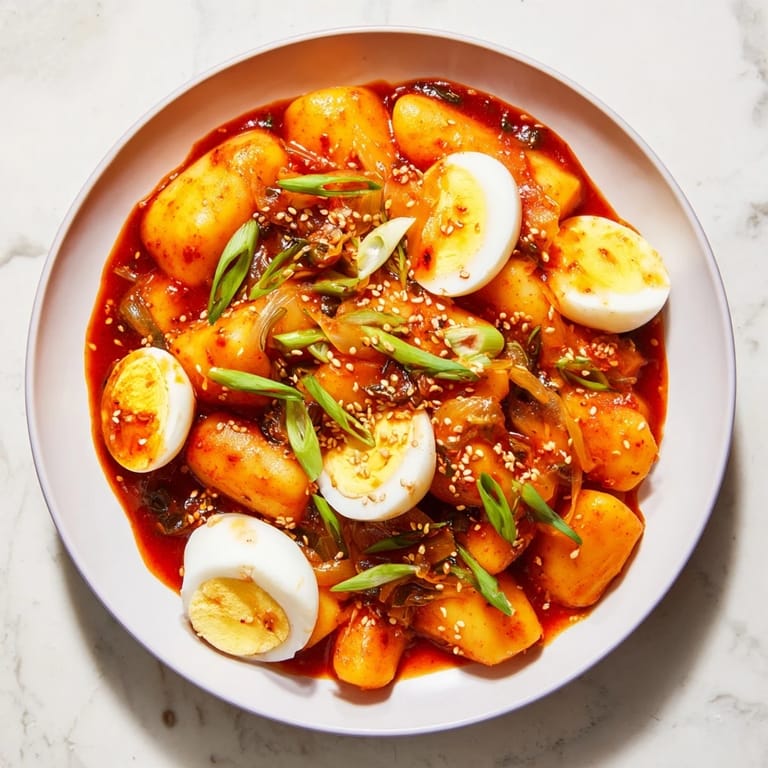
 My first bowl of tteokbokki came during a rainy Seoul afternoon when I ducked into a street vendor's tent and watched her stir a pot of glossy, crimson rice cakes with the kind of confidence that only comes from making something a thousand times. The aroma hit me before I even sat down—gochujang, garlic, and something deeper I couldn't name. I've been chasing that flavor ever since, and somewhere along the way, I figured out how to recreate it at home.
I made this for my roommate one winter evening when she came home looking defeated by her day, and watching her face transform after that first spoonful—from tired to genuinely alive—reminded me why comfort food matters. She called it my secret weapon, and honestly, she wasn't wrong.
Ingredients
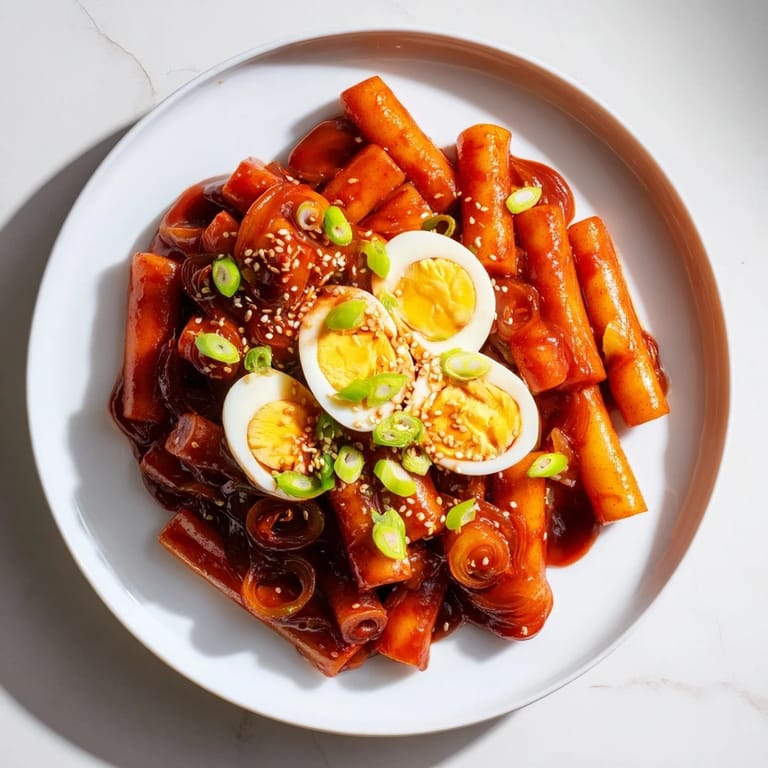
- Korean cylindrical rice cakes (tteok), 500 g: These chewy, slightly springy cakes are the heart of the dish; if you can only find flat or short varieties, they'll still work, but the cylindrical ones give you that signature texture that makes tteokbokki feel special.
- Gochujang (Korean chili paste), 3 tablespoons: This fermented paste is what gives the sauce its depth and complexity; don't substitute with regular chili powder or sriracha, as they'll make it taste completely different.
- Gochugaru (Korean chili flakes), 2 tablespoons: These are coarser and fresher-tasting than cayenne or red pepper flakes, adding texture and a brighter heat that lingers on your tongue.
- Soy sauce, 2 tablespoons: It's the backbone of umami that rounds out all the spice and keeps the sauce from being one-note.
- Honey or corn syrup, 1 tablespoon: A touch of sweetness balances the heat and makes you want to keep eating; it also helps the sauce coat the rice cakes beautifully.
- Garlic, 2 cloves minced: Fresh garlic adds sharpness that gets mellow as everything simmers together.
- Toasted sesame oil, 1 teaspoon: Just a whisper of this aromatic oil at the end elevates the whole bowl with a nutty sophistication.
- Dried kelp (kombu) and anchovies, for broth: Together they create a subtle, savory backbone that makes the sauce taste less like condiment and more like something that's been lovingly built; skip the anchovies for vegetarian, but don't skip the kombu.
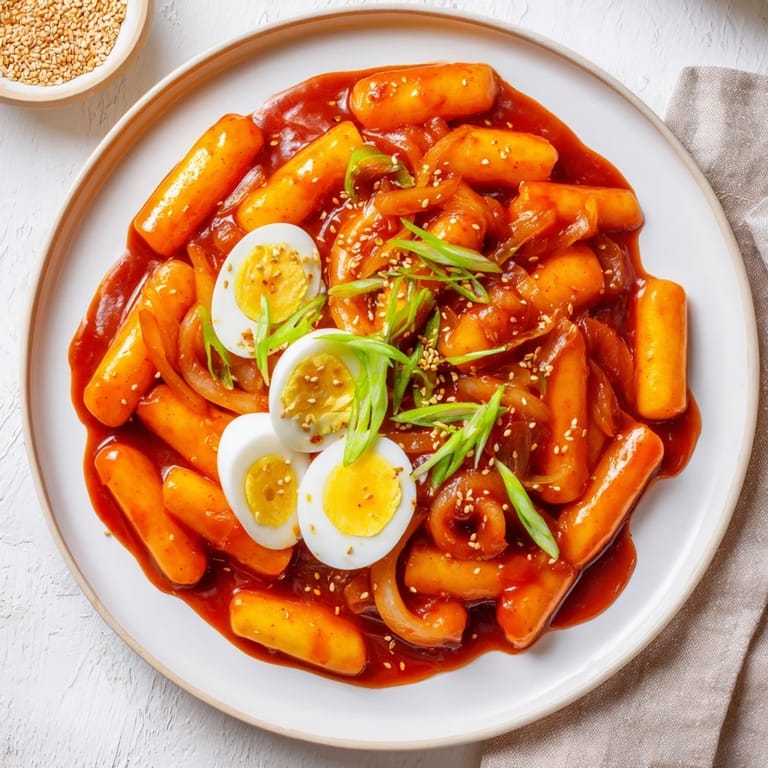
- Large eggs, 4: Soft boiled and silky inside, they're the creamy counterpoint to all that spice and chew.
- Onion and green onion, for freshness: The raw onion adds a slight bite while the green onion at the end brings a bright, clean finish.
- Toasted sesame seeds, 1 tablespoon: These aren't just garnish; they add a subtle nuttiness and visual warmth that signals this is something special.
Tired of Takeout? 🥡
Get 10 meals you can make faster than delivery arrives. Seriously.
One email. No spam. Unsubscribe anytime.
Instructions
- Soak the rice cakes:
- If they've been cold or sitting in a bag for a while, give them 10 minutes in warm water to wake them up and make them easier to work with in the hot sauce.
- Build your broth base:
- Simmer water with kombu and anchovies for 10 minutes—you're essentially making a light dashi-like stock that becomes the soul of your sauce. Once it's fragrant, strain it out and keep the liquid clean and clear.
- Prepare the eggs:
- Boil them for 8 to 9 minutes while you're building the broth; you want that creamy, just-set yolk that will be a small luxury in every spoonful.
- Create the sauce:
- Whisk your gochujang, gochugaru, soy sauce, sugar, honey, garlic, and sesame oil into that warm broth; the heat will help everything dissolve and meld together into something glossy and cohesive. Taste it now—this is your chance to adjust before everything comes together.
- Simmer everything together:
- Add your soaked rice cakes, onion, and any fish cake to the sauce and let it all bubble away for 10 to 12 minutes, stirring occasionally so nothing sticks; you'll notice the rice cakes softening and the sauce getting thicker and more clingy. Just before it gets too thick, add your halved boiled eggs to warm through for a couple of minutes.
- Finish with intention:
- A scatter of green onion and sesame seeds transforms it from a pot of food into something you want to photograph and share.
 Save to Pinterest
 I made a mistake once and added the eggs too early, and they disintegrated into the sauce while I wasn't looking; after that, I learned to treat them with respect and add them at the very end like the delicate treasure they are. That small failure taught me more about timing than any recipe instruction ever could.
The Magic of Gochujang
Gochujang isn't just hot; it's complex and slightly sweet from its fermented soybean base, which is why it works so differently than hot sauce you might reach for in other kitchens. The first time I understood this was when I tasted the difference between a batch made with actual gochujang and one I'd hastily improvised with chili powder, and the second batch tasted flat and one-dimensional in comparison. This isn't a shortcut situation—the ingredient actually matters in a way that transforms the entire dish.
Variations Worth Trying
I've added ribbons of cabbage and thin carrot slices when I wanted something lighter, and ramen noodles when I wanted to make it a more substantial dinner. The beauty of tteokbokki is that it's forgiving enough to welcome additions without losing its identity, as long as you're not changing the sauce itself.
Serving and Storage
This is best eaten immediately, while the rice cakes are still at their chewy best and the sauce is clinging to them with purpose. If you have leftovers, store them separately from the sauce and warm them gently together; the rice cakes will firm up slightly as they cool, but they'll soften right back up with gentle heat.
- Serve in bowls with plenty of sauce poured over so each spoonful gets that glossy, spicy coating.
- Have extra napkins nearby—this is not a neat food, and it shouldn't be.
- Offer rice on the side if anyone wants to tame the heat with something mild and absorbing.
 Save to Pinterest
 This bowl of spicy, chewy comfort has a way of turning an ordinary evening into something memorable, whether you're eating alone or sharing it with someone who needed exactly this kind of warmth. That's the real recipe—the food is just the vehicle.
Recipe Questions
- → What type of rice cakes are used?
Cylindrical Korean rice cakes, known as tteok, provide the chewy texture essential to this dish.
- → Can I make this dish vegetarian?
Yes, omit anchovies and fish cake, and substitute vegetable broth to keep it vegetarian-friendly.
- → How do I adjust the spiciness?
Modify the amount of gochugaru and gochujang to suit your preferred heat level.
- → What is the purpose of soaking rice cakes?
Soaking softens the rice cakes if they are hard or refrigerated, ensuring tender, chewy bites after cooking.
- → What garnishes complement this dish?
Fresh green onions and toasted sesame seeds add aroma and a subtle nutty crunch.