 Save to Pinterest
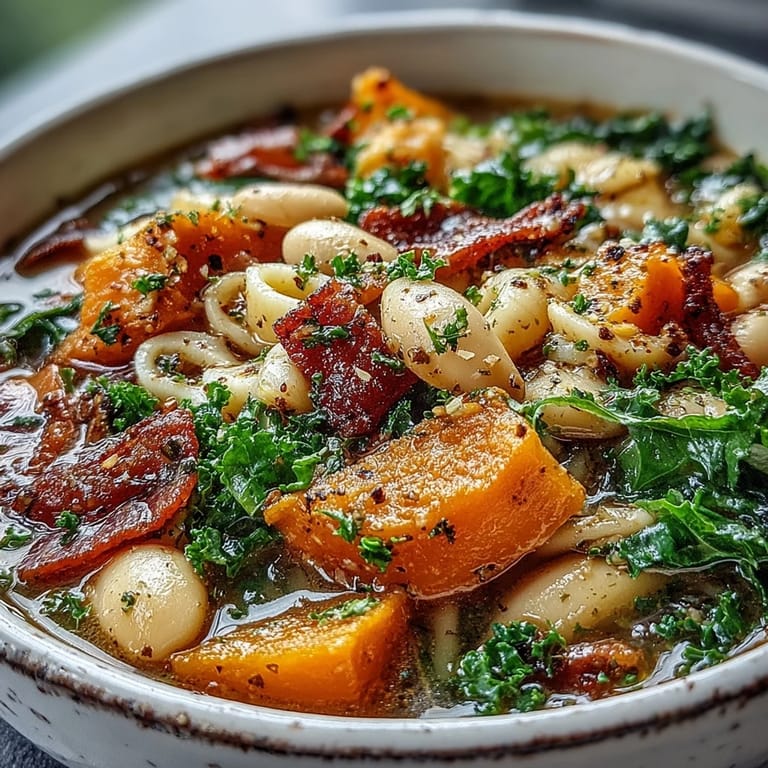
 October always catches me off guard with its chill, and one gray afternoon I found myself craving something that tasted like the season itself—warm, substantial, but not heavy. I pulled together what I had: butternut squash from the farmers market, a bunch of kale that needed using, and some pancetta that promised to add a whisper of smokiness to the pot. That first spoonful, with its creamy beans and tender pasta, felt like a small kitchen victory.
I made this soup for my sister the weekend she moved back to our city, and we sat at my kitchen counter spooning through bowls while she told me about her new apartment. The warmth of it, the way the Parmesan melted into the broth—it became less about feeding her and more about saying welcome home in the only language I really speak.
Ingredients
- Pancetta: Buy it sliced or ask the butcher to dice it for you; those little crispy bits become pockets of flavor throughout the soup and save you from needing cream.
- Butternut squash: If peeling feels impossible, poke holes in it, microwave for 2 minutes, then cut—it softens enough to peel without fighting.
- Onion, carrots, and celery: This is your base, and taking time to dice them evenly means they cook at the same pace and break down into silky threads.
- Kale: Tear out those tough stems and compost them; you only want the leafy parts, which wilt into tender submissions in hot broth.
- White beans: Canned ones are perfectly fine here—drain and rinse them to remove the starchy liquid that can make soup cloudy.
- Ditalini pasta: This small tube pasta holds broth beautifully, but any small shape works; just watch the cooking time so it doesn't turn to mush.
- Chicken or vegetable broth: Use what you prefer, or even simmer scraps of rotisserie chicken if you have them—it deepens the flavor naturally.
- Fresh thyme and bay leaf: These become the quiet backbone of the whole pot, so don't skip them even if you think they're understated.
Tired of Takeout? 🥡
Get 10 meals you can make faster than delivery arrives. Seriously.
One email. No spam. Unsubscribe anytime.
Instructions
- Start with the pancetta:
- Heat olive oil in your pot and let the pancetta render slowly over medium heat until it turns crispy and golden at the edges, about 5 minutes. This fat becomes your flavor base, so don't rush it.
- Build your aromatics:
- Scoop out the pancetta with a slotted spoon and add diced onion, carrots, and celery to the remaining fat. Let them soften for 5 minutes, stirring occasionally so they color slightly at the edges.
- Add squash and garlic:
- Stir in your cubed butternut squash and minced garlic, letting them sit for about 2 minutes until the whole pot smells like autumn. You'll know it's ready when the garlic stops smelling sharp and becomes something almost caramelized.
- Pour in the broth and aromatics:
- Add the canned tomatoes with their juice, white beans, broth, thyme, and bay leaf. Bring everything to a simmer, then lower the heat and cover—this is when the flavors start getting to know each other.
- Let squash become tender:
- Keep it at a gentle simmer covered for 20 minutes, until you can easily break a piece of squash with a spoon. Taste as you go; this is when you might nudge the salt up a touch.
- Finish with kale and pasta:
- Stir in your torn kale and ditalini, then let it simmer uncovered for 8 to 10 minutes. The pasta will soften, the kale will collapse into the broth, and everything becomes one cohesive bowl.
- Taste and adjust:
- Remove the bay leaf and season with more salt and pepper if needed. Sometimes a soup tells you exactly what it's missing—listen to it.
 Save to Pinterest
 My neighbor knocked on my door one evening while I was ladling this soup, and the smell must have escaped into the hallway because she asked if she could come in just to breathe it. We ended up sharing a bowl at my counter, and she's been making it ever since—that's when I knew I'd stumbled onto something worth keeping.
When to Make This
This soup is a September through November kind of dish, though I've made it in March when I was craving something that tasted like fall and nobody was judging me for it. It's perfect for those nights when the weather shifts and you want something that wraps around you like a sweater, substantial enough for dinner but light enough that you're not uncomfortable afterward.
Variations Worth Trying
Leave out the pancetta and use vegetable broth if you're cooking for vegetarians, then add a pinch of smoked paprika to fill the gap where the smoke used to be. You could also swap butternut squash for acorn or kabocha, trade kale for spinach or Swiss chard, or skip pasta entirely and add a handful of wild rice if you want something chewier and more substantial.
Serving and Pairing
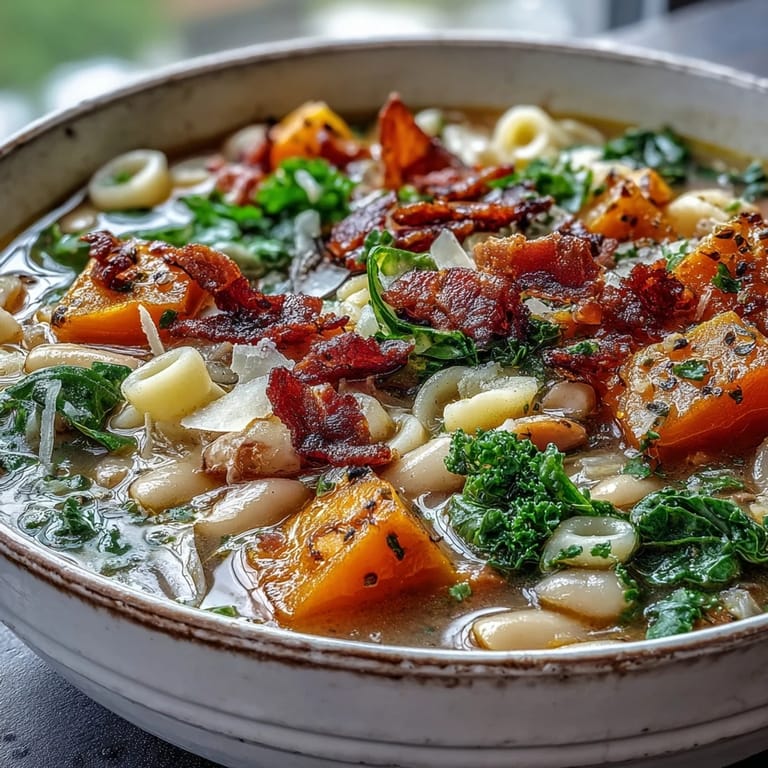
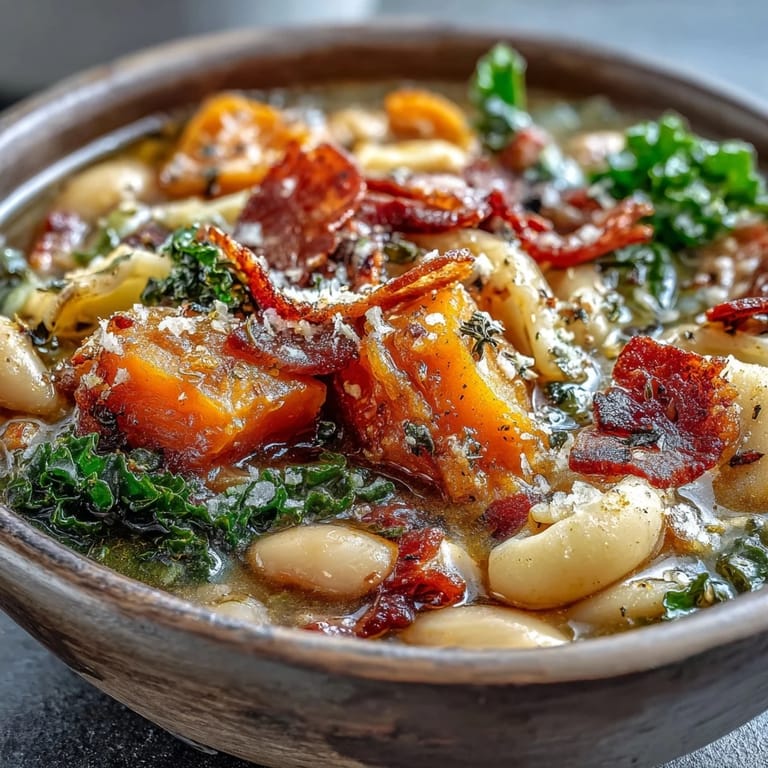
Ladle this soup into bowls and scatter the reserved pancetta across the top, then shower it with fresh parsley and a generous handful of Parmesan cheese—that last bit of finesse is what turns a bowl of soup into something you'll remember. Serve it with crusty bread for soaking up broth, and if you're feeling fancy, pair it with a light Pinot Noir that won't overpower the delicate sweetness of the squash.
- Make extra and freeze it without the pasta, then cook fresh pasta when you reheat it for better texture.
- If your soup thickens too much after sitting, thin it with more broth or a splash of water.
- Leftovers taste even better the next day when the flavors have had time to get properly acquainted.
 Save to Pinterest
 This soup has become my anchor in autumn, the thing I make when I want to slow down and remember that sometimes the best meals are the ones that ask very little of you except patience and good ingredients. Make it for people you love, or just for yourself on a quiet Tuesday.
Recipe Questions
- → Can I make this minestrone vegetarian?
Absolutely. Simply omit the pancetta and use vegetable broth instead of chicken broth. Add a pinch of smoked paprika during cooking to replicate the depth and smokiness that pancetta provides. The soup remains just as hearty and satisfying.
- → What pasta works best in this soup?
Ditalini, shells, or small elbow macaroni are ideal because they hold their shape well. Avoid delicate pasta that can become mushy. If cooking ahead, slightly undercook the pasta or store it separately to prevent it from absorbing too much broth.
- → How long does this soup keep in the refrigerator?
Store cooled soup in an airtight container for up to 4 days. The flavors actually develop and improve overnight. Reheat gently on the stovetop, adding a splash of water or broth if needed to adjust consistency.
- → Can I freeze this minestrone?
Yes, freeze for up to 3 months. For best results, slightly undercook the pasta or omit it entirely before freezing, then add freshly cooked pasta when reheating. This prevents the pasta from becoming overly soft.
- → What other vegetables can I add?
Fall vegetables like diced sweet potato, parsnips, or turnips work beautifully. Green beans, zucchini, or spinach can be added in the last few minutes of cooking. Adjust cooking times based on the vegetable's hardness.
- → Is it necessary to peel the butternut squash?
The skin becomes tough during cooking, so peeling is recommended for the best texture. Use a sharp vegetable peeler or chef's knife. If you prefer to leave the skin on, consider blending a portion of the soup for smoothness.