 Save to Pinterest
 There's something almost meditative about watching onions transform in a Dutch oven, their sharp bite slowly mellowing into something sweet and golden. I stumbled onto this version of French onion soup on a grey afternoon when I had nowhere to be but my kitchen, and the smell alone pulled my entire household to hover nearby like we were under a spell. What started as a simple craving for comfort became a lesson in patience—forty-five minutes of stirring, letting time do most of the work while I sipped coffee and listened to the quiet sizzle. By the time those caramelized onions hit the broth, I understood why this soup has survived centuries of cooking trends.
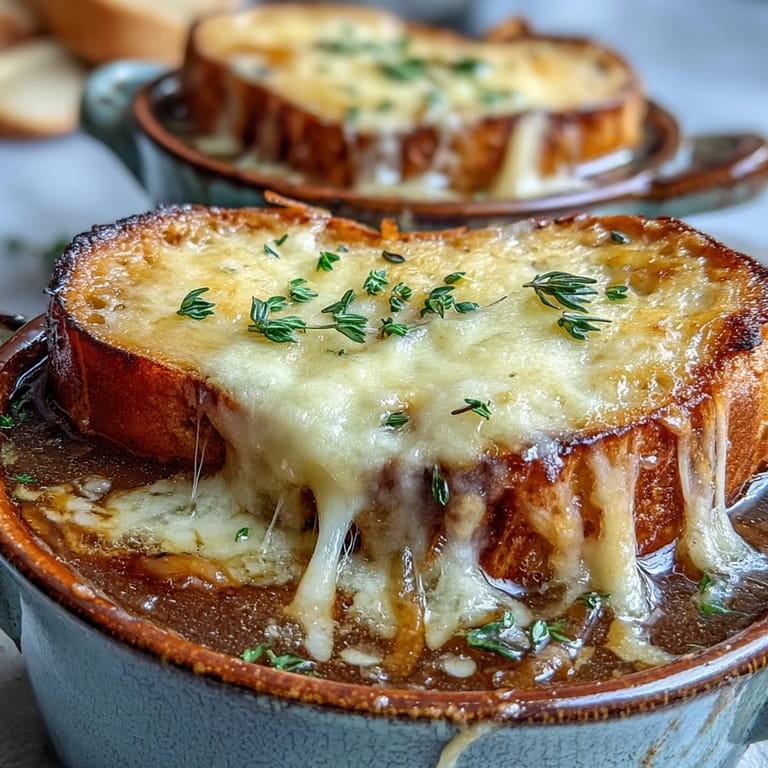
I made this for my partner on the first truly cold evening of the season, and watching them blow on a spoonful before tasting it, then just going quiet—that moment justified every minute of stirring. The melted cheese was so perfectly bubbling, almost bronzed on top, and we ended up making far more bread than necessary just to soak up every last bit of broth. It became our go-to when friends dropped by unexpectedly, because there's something about serving this that says you actually care.
Ingredients
- Yellow onions (5 large, thinly sliced): Yellow onions have natural sweetness that develops beautifully under slow heat—don't rush this step or substitute white onions, which caramelize differently and lack that honeyed depth.
- Unsalted butter and olive oil (3 tablespoons and 2 tablespoons): The butter brings richness while oil prevents browning at lower temperatures, creating those deep mahogany layers that make the difference.
- Garlic (2 cloves, minced): Add this after the onions soften or it'll burn and turn bitter—timing matters more than quantity here.
- Sugar (1 teaspoon): This small amount accelerates caramelization by encouraging browning without making the soup taste sweet, trust it.
- Beef broth (8 cups): Use homemade or high-quality store-bought; weak broth means a weak soup, so taste before adding and season accordingly.
- Dry white wine (1/2 cup): The acidity cuts through richness and adds complexity that lifts the entire bowl, so don't skip it.
- Fresh thyme and bay leaves: Fresh thyme is noticeably brighter than dried, but either works—bay leaves should be removed before serving without fail.
- Worcestershire sauce (1 tablespoon): This umami bomb sounds odd but creates savory depth; reduce or omit for vegetarian versions.
- Baguette (1, sliced into 1/2-inch rounds): Day-old bread toasts better than fresh and holds up to broiling without falling apart into the soup.
- Gruyère cheese (2 cups, grated): Gruyère melts smoothly and browns beautifully—Swiss works in a pinch but has a different flavor profile, so choose intentionally.
- Parmesan (1/2 cup, optional): This adds sharpness if you want it, but the soup is complete without it.
Tired of Takeout? 🥡
Get 10 meals you can make faster than delivery arrives. Seriously.
One email. No spam. Unsubscribe anytime.
Instructions
- Melt your fats and start the onions:
- In your Dutch oven over medium heat, let the butter and oil warm together until they're shimmering but not smoking. Add those sliced onions all at once—they'll look impossibly full, almost chaotic, but they'll collapse as they cook.
- Caramelize slowly and deliberately:
- Sprinkle the sugar over the onions and stir frequently, maybe every few minutes, scraping the bottom so nothing sticks or burns. This takes 40 to 45 minutes, and it's not fast, but watch how the color deepens from pale to golden to deep amber—this is where the magic happens.
- Introduce the garlic:
- Once your onions are properly soft and caramelized, add the minced garlic and cook for just one minute, enough to make your kitchen smell incredible but not long enough to brown it.
- Deglaze with wine:
- Pour in the white wine, and you'll hear it sizzle as it hits the hot pan. Use your wooden spoon to scrape up all those browned bits clinging to the bottom—that's concentrated flavor, not a mess.
- Build the broth base:
- Add the beef broth, thyme, bay leaves, and Worcestershire sauce, then bring everything to a gentle simmer. Reduce the heat and let it bubble quietly for 20 to 30 minutes, uncovered, so flavors can marry and deepen.
- Season and adjust:
- Taste the soup before serving and add salt and pepper gradually—remember the cheese will add saltiness too. Remove the bay leaves before ladling.
- Toast your bread rounds:
- While the soup simmers, preheat your oven broiler and arrange baguette slices on a baking sheet. Broil for about one minute per side until they're golden and crispy but not charred—they should still have some give when you bite them.
- Assemble and broil:
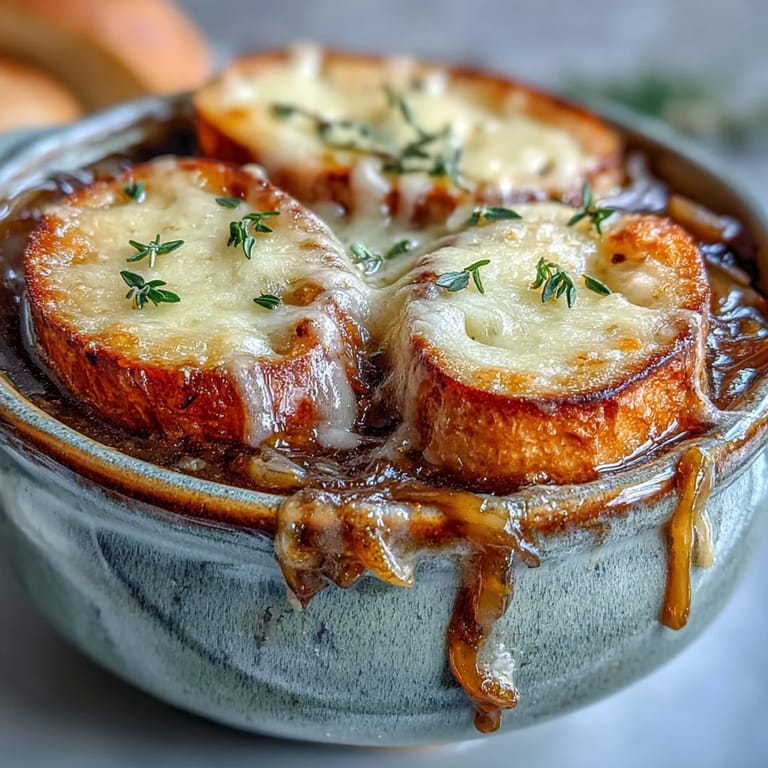
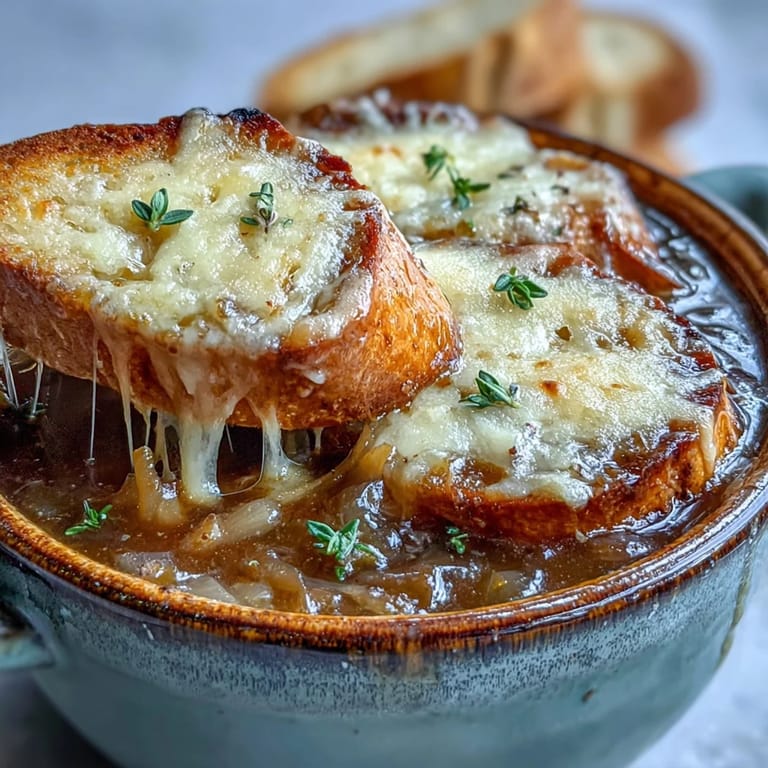
- Ladle soup into oven-safe bowls, top each with a toasted bread round, then pile on generous handfuls of Gruyère. Place the bowls on a baking sheet and slide them under the broiler for 2 to 4 minutes, watching carefully until the cheese is melted and the edges are bubbling with little brown spots.
- Serve hot and immediately:
- Pull those bowls out carefully—they're dangerously hot—and place them on serving plates or wooden boards. A few fresh thyme leaves on top look lovely and taste even better.
 Save to Pinterest
 This soup became the thing I made when someone I cared about was going through something, when words felt insufficient but showing up with a Dutch oven full of comfort did the talking. There's a generosity baked into serving this—the effort invisible but the care unmissable.
The Art of Caramelization
Caramelizing onions isn't complicated, but it requires presence—you can't walk away and ignore them for twenty minutes, expecting the same result. The difference between good caramelized onions and truly exceptional ones is attention: stirring when they start to stick, scraping the bottom where the deepest color develops, adjusting heat when they threaten to scorch. I learned this by rushing once, turning up the heat to speed things along, and ending up with onions that tasted burnt rather than sweet. Now I treat those 45 minutes as meditation time, checking in every few minutes, letting the process unfold at its own pace. That patience translates into a soup that tastes like you actually know what you're doing.
Why Dutch Oven Matters Here
A Dutch oven's heavy bottom and high sides create an environment where heat distributes evenly and moisture gathers just right, preventing scorching while encouraging that deep caramelization. The oven-to-stovetop transition is seamless too—you can start cooking on the burner and finish under the broiler without transferring anything, which means fewer dishes and less chance of something going wrong. I've made this soup in regular pots out of necessity, and while it still worked, the result never had quite the same depth or richness. Once you've used a Dutch oven for this, you'll understand why they've been kitchen workhorses for generations.
Variations and Personal Touches
This soup is flexible enough to adapt to what you have on hand and what you're craving. Some cooks swear by adding a splash of sherry or cognac instead of wine, which shifts the flavor toward something richer and more elegant. Others skip Worcestershire entirely and double down on thyme, creating a version that tastes lighter and more herbaceous. I've experimented with adding a splash of balsamic vinegar in the final minutes, which added a subtle sweetness and complexity that lingered pleasantly. The beauty of this recipe is that it's forgiving enough to handle these changes while staying fundamentally true to what makes French onion soup beloved.
- Try a combination of onion types—red, yellow, and white—for layered sweetness and subtlety.
- Swap half the beef broth for chicken broth if you want something lighter without sacrificing depth.
- Add crispy bacon bits or pancetta to the cheese topping for a smoky, salty contrast.
 Save to Pinterest
 This soup reminds me that some of the best things in cooking—and in life—require nothing more than time, attention, and good ingredients treated with respect. Make it, share it, and watch what happens when people taste something that tastes like care.
Recipe Questions
- → How long does it take to caramelize onions properly?
Onions need 40–45 minutes over medium heat to achieve proper caramelization. Stir frequently to prevent burning. They should turn deep golden brown and become very soft. This slow process develops the sweetness and depth that makes the soup exceptional.
- → Can I make this soup ahead of time?
Absolutely. The soup base actually improves after resting in the refrigerator for 1–2 days as flavors meld. Store the soup and toppings separately. Add the bread and cheese when reheating, then broil until bubbly and golden.
- → What's the best cheese for French onion soup?
Gruyère is the traditional choice for its nutty flavor and excellent melting properties. Comté or Emmental work well as substitutes. Adding Parmesan creates a nice salty contrast. Avoid pre-shredded cheese as it doesn't melt as smoothly.
- → Why use both butter and olive oil?
Butter provides rich flavor while olive oil prevents the butter from burning during the long caramelization process. This combination ensures the onions cook evenly without scorching while developing that characteristic deep sweetness.
- → Can I freeze this soup?
Freeze the soup base without the bread and cheese topping for up to 3 months. Thaw overnight in the refrigerator, reheat gently, and add fresh toppings when serving. The texture remains excellent, though you may want to adjust seasoning after reheating.
- → What wine works best in this soup?
A dry white wine like Sauvignon Blanc or Pinot Grigio adds brightness and helps deglaze the pan. Avoid sweet wines as they can make the soup cloying. If you prefer not to use wine, additional broth works fine too.