 Save to Pinterest
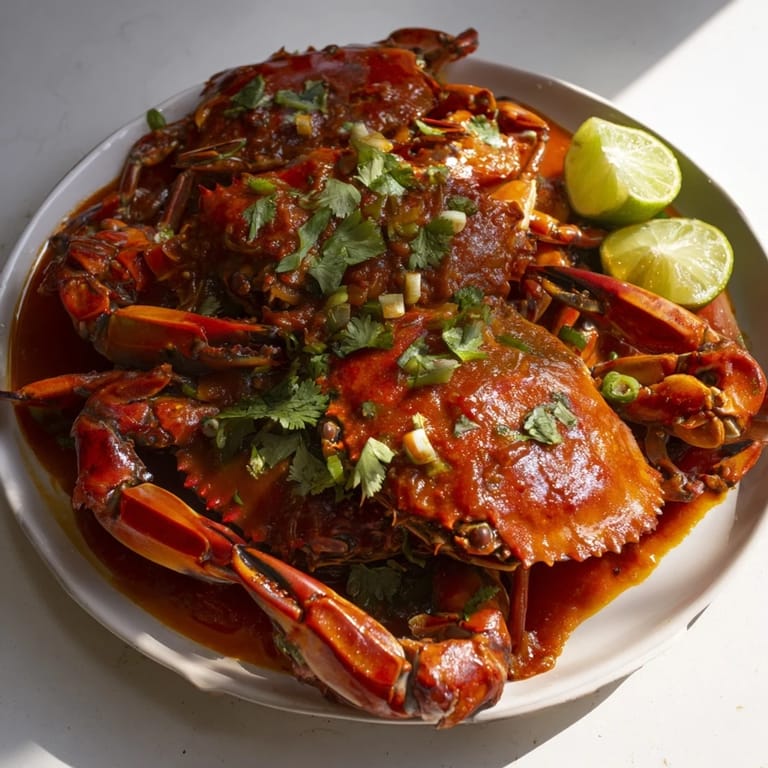
 The first time I ordered chili crab at a hawker center in Singapore, the plate arrived sizzling and glossy, and I watched a local woman next to me tear into it with such unselfconscious joy that I knew I had to learn how to make it. Years later, when I finally cracked the technique—getting the sauce to cling to the crab just right, adding those silky egg ribbons at the last moment—I understood why this dish has claimed a permanent spot on every Singaporean table. It's not fancy, but it's absolutely magnetic.
I remember cooking this for my partner on a weeknight when we were both craving something that tasted like travel, and somehow the smell of ginger and chilies hitting hot oil transported us instantly. The sauce bubbled and thickened while we stood there with cold beers, and when those beaten eggs cascaded in to create those delicate ribbons, I saw him actually pause mid-conversation to watch. That's when I knew this dish had the kind of magic that makes people stop talking and just pay attention.
Ingredients
- 2 whole live mud crabs (about 1.5 kg total), cleaned and cut into pieces: Mud crabs are the classic choice because their meat is sweet and their shells hold the sauce beautifully, but if you can't source them, blue swimmer crab or Dungeness work just as well.
- 3 tbsp vegetable oil: High heat oil keeps the aromatics from burning and gives the initial sear that deepens the flavors.
- 1 medium onion, finely chopped: This is your sauce base foundation, mellowing and sweetening as it cooks.
- 5 cloves garlic, minced: Garlic can scorch quickly, so mince it fine and watch it closely once it hits the oil.
- 3 red chilies, deseeded and chopped: Deseeding reduces intensity if you prefer less heat, but save some seeds if you like the burn.
- 2 birds eye chilies, chopped: These tiny ones pack serious punch—start with one if you're cautious, then adjust based on your heat tolerance.
- 2 cm piece fresh ginger, peeled and minced: Fresh ginger is non-negotiable; it cuts through the richness and adds a subtle sharpness that nothing else can replicate.
- 250 ml tomato ketchup: This is your sweet and tangy backbone—don't skip it or substitute with tomato paste, which tastes too concentrated and bitter.
- 2 tbsp chili sauce (such as Sriracha or sambal oelek): Your choice here shifts the personality slightly; sambal oelek gives a more authentic Southeast Asian edge.
- 1 tbsp sugar: Just enough to balance the heat and acidity without making it dessert.
- 1 tbsp soy sauce: Adds umami depth that makes the whole sauce feel rooted and complex.
- 1 tsp fish sauce: A small amount that you won't taste directly but absolutely feel—this is what makes it taste authentically Singaporean.
- 250 ml chicken or seafood stock: Stock lets the sauce marry together rather than sitting as separate ingredients; use seafood stock if you can find it.
- 1 tsp cornstarch mixed with 1 tbsp water: This slurry thickens the sauce just enough to coat the crab; too much and it becomes gluggy.
- 2 large eggs, lightly beaten: These create those silky ribbons that make the dish feel somehow both casual and elegant.
- 2 spring onions, sliced, and fresh cilantro, chopped: Garnishes aren't afterthoughts here—they add freshness and lift the richness of the sauce.
- Lime wedges, to serve: A squeeze of lime right before eating brightens everything.
Tired of Takeout? 🥡
Get 10 meals you can make faster than delivery arrives. Seriously.
One email. No spam. Unsubscribe anytime.
Instructions
- Get your aromatics ready:
- Have your onion, garlic, ginger, and chilies prepped and within arm's reach before you start the heat—once the oil is hot, everything moves fast and you won't have time to chop.
- Bloom the base:
- Heat oil in your wok over medium heat, add the onion, and let it soften for about 2 minutes until it starts to turn translucent and sweet-smelling. This is the flavor foundation.
- Wake up the spices:
- Add garlic, ginger, and both types of chilies, stirring constantly for 2-3 minutes until the mixture becomes incredibly fragrant and the garlic edges start to lighten in color. You'll know it's ready when the raw bite of the garlic mellows.
- Sear the crab:
- Toss in the crab pieces and stir everything together for 3-4 minutes, coating each piece in the aromatic oil. Watch the shells transform from dark green to bright red as the crab begins to cook through the residual heat.
- Build the sauce:
- Pour in the ketchup, chili sauce, sugar, soy sauce, fish sauce, and stock, stirring well to dissolve everything into a cohesive liquid. The sauce should smell both tangy and subtly sweet at this point.
- Simmer and tenderize:
- Bring to a boil, then reduce heat and let it bubble gently uncovered for 10-12 minutes, turning the crab pieces occasionally so the sauce coats them evenly. The crab meat will become tender and the sauce will concentrate slightly.
- Thicken with precision:
- Give your cornstarch slurry a quick stir (it separates easily) and drizzle it in while stirring gently, watching the sauce shift from loose to silky and clinging to the crab.
- Add the eggs:
- Slowly drizzle the beaten eggs into the bubbling sauce while stirring in a gentle circular motion, creating delicate ribbons rather than scrambled bits. This final step feels a bit magical.
- Finish and serve:
- Remove from heat immediately, scatter with spring onions and cilantro, and bring the whole wok to the table with lime wedges on the side. Serve with steamed mantou or rice to soak up every drop of sauce.
 Save to Pinterest
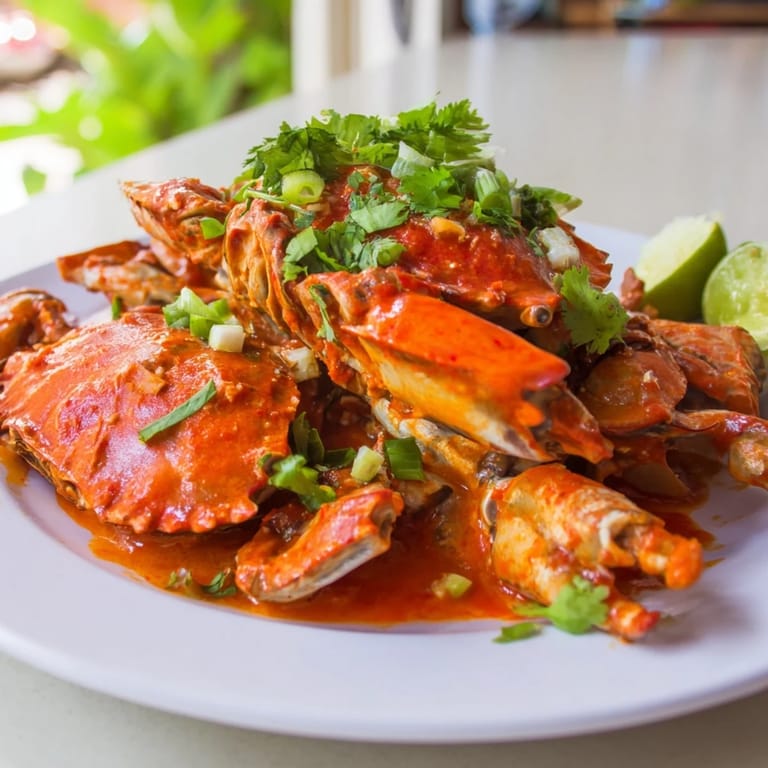
 There's something about this dish that transforms a regular dinner into an event, maybe because it demands attention and mess and participation. I made it once for friends who'd never had it, and watching them discover that combination of sweet, spicy, tangy, and savory all at once felt like sharing something precious.
Choosing Your Crab
Live crabs are ideal because the meat stays sweet and firm, but if your fishmonger only has frozen or pre-killed crabs, that works too—just let them thaw completely before cooking. Mud crabs are the gold standard in Singapore, but the technique translates beautifully to blue swimmer crabs or even Dungeness crab if that's what's available where you live. The sauce is forgiving enough to make any crab taste special, though the meat quality does matter.
Mastering the Sauce Balance
This sauce is all about harmony between competing flavors, and getting that balance right is what separates a good dish from an unforgettable one. The ketchup brings sweetness and body, the chili sauce brings heat and depth, the soy sauce and fish sauce add umami, and the lime at the end adds brightness that cuts through everything. If you taste it and it feels too acidic, add a tiny pinch more sugar; if it's too sweet, a few drops of fish sauce or soy sauce will anchor it immediately. The sauce should taste like a warm spice-filled hug, not like any single ingredient dominating.
Making It Your Own
The beauty of chili crab is that it adapts to your preferences without losing its identity. Some people add a splash of rice vinegar for extra tang, others swear by adding a tablespoon of oyster sauce, and a few brave souls add a bit of tamarind paste for deeper complexity. I've made it with extra birds eye chilies when I wanted to show off, and with just one when cooking for people who prefer milder flavors. The three-egg ribbon technique is optional too—some people skip it entirely and the dish is still glorious.
- If you want it spicier, add extra chilies or a pinch of cayenne pepper instead of removing seeds.
- For deeper umami, substitute half the chicken stock with additional seafood stock or even a bit of mushroom broth.
- Serve it family-style in the wok with crusty bread instead of rice if you want people to keep going back for more.
 Save to Pinterest
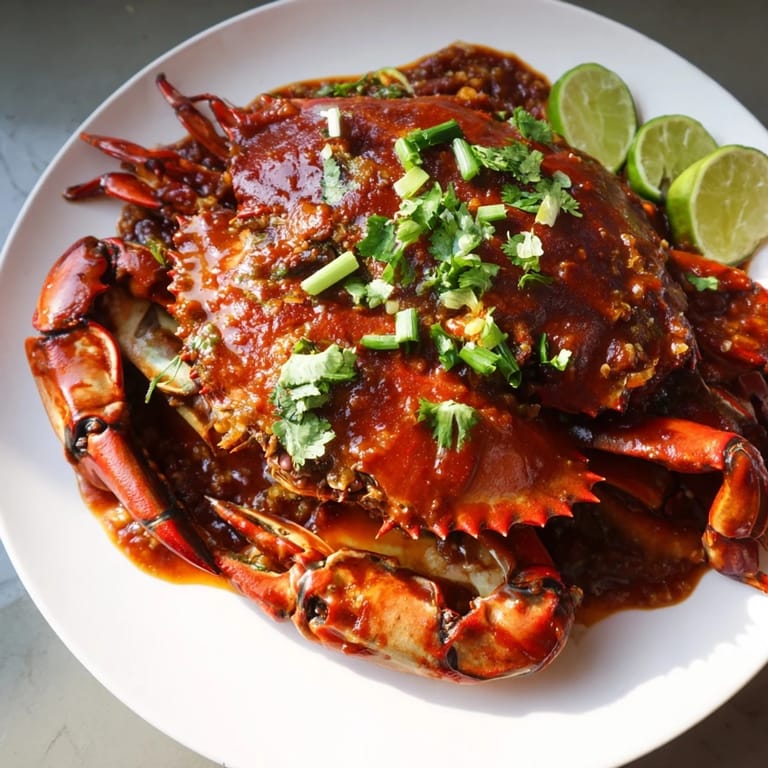
 Every time I make this, I remember why I love cooking for people—it's one of those dishes that transforms a regular evening into something worth remembering. Serve it hot, serve it in the wok if you can, and let everyone tear into it with complete abandon.
Recipe Questions
- → What type of crab is best for this dish?
Whole live mud crabs are preferred for their sweet meat and texture. Blue swimmer or Dungeness crabs can be used as alternatives.
- → How do I adjust the heat level?
Increase or reduce birds eye chilies based on your spice tolerance. Removing seeds from chilies also reduces heat.
- → What can I serve alongside this dish?
Steamed mantou (Chinese buns) or plain steamed rice complement the rich, saucy crab perfectly by soaking up the flavors.
- → How do you create the silky sauce texture?
Beaten eggs are gently drizzled into the bubbling sauce while stirring to form smooth egg ribbons that enrich the sauce.
- → Can this dish be made ahead of time?
It’s best enjoyed fresh to maintain the crab’s texture and vibrant sauce. Reheating may alter the sauce thickness and crab quality.