 Save to Pinterest
 My neighbor Maria taught me that minestrone isn't something you perfect, it's something you make with what's in your garden that week. One rainy October afternoon, she stirred hers with such ease while telling me about her childhood in Liguria, and I realized the magic wasn't in following rules but in understanding that soup grows as it simmers. I've made it countless times since, and each batch tastes like permission to improvise.
I made this for my friend's family on the first cold day of November, when the leaves were finally all down and the light turned golden at 4 in the afternoon. Her daughter, who usually picked at everything, asked for seconds, and her husband went quiet the way people do when they're genuinely enjoying something. That's when I knew this soup had earned its place in my regular rotation.
Ingredients
- Olive oil (2 tablespoons): Use good quality extra virgin for the final drizzle, but regular olive oil works perfectly for the initial sauté without the cost.
- Onion, carrots, and celery (1 large, 2 medium each): This is your flavor foundation, so dice them fairly uniform in size so they soften at the same pace.
- Garlic (2 cloves, minced): Add it after the softer vegetables so it doesn't burn and turn bitter in the pot.
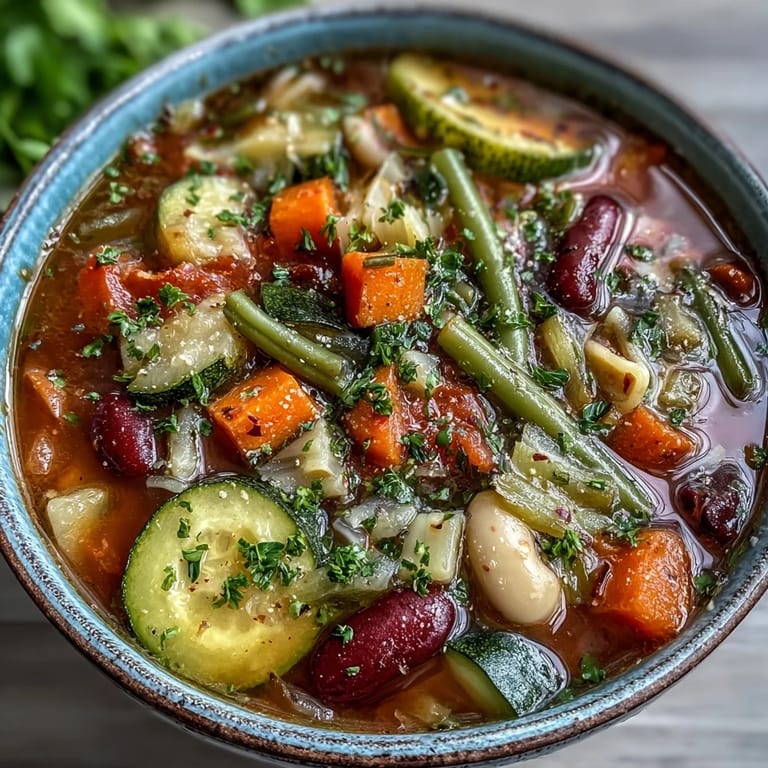
- Zucchini and green beans (1 medium, 1 cup): These keep their shape better if you don't add them until later, giving the soup better texture.
- Spinach or kale (2 cups chopped): Either works beautifully, though kale holds up slightly better if you're planning to reheat this soup multiple times.
- Diced tomatoes (1 can, 14 oz): The acidity balances everything, so don't skip the canned version even if fresh tomatoes seem appealing.
- Vegetable broth (6 cups): Taste it first if you can, because some brands run quite salty and you'll want to adjust your seasoning accordingly.
- Dried oregano, basil, and thyme (1 teaspoon, 1 teaspoon, 1/2 teaspoon): These three together create that unmistakable Italian warmth without overpowering anything else.
- Bay leaf (1): A small gesture that adds so much quiet depth, but remember to fish it out before serving or warn people it's in there.
- Cannellini and kidney beans (1 can each, drained and rinsed): The two types add different textures, but if you only have one kind, use 2 cans of it without hesitation.
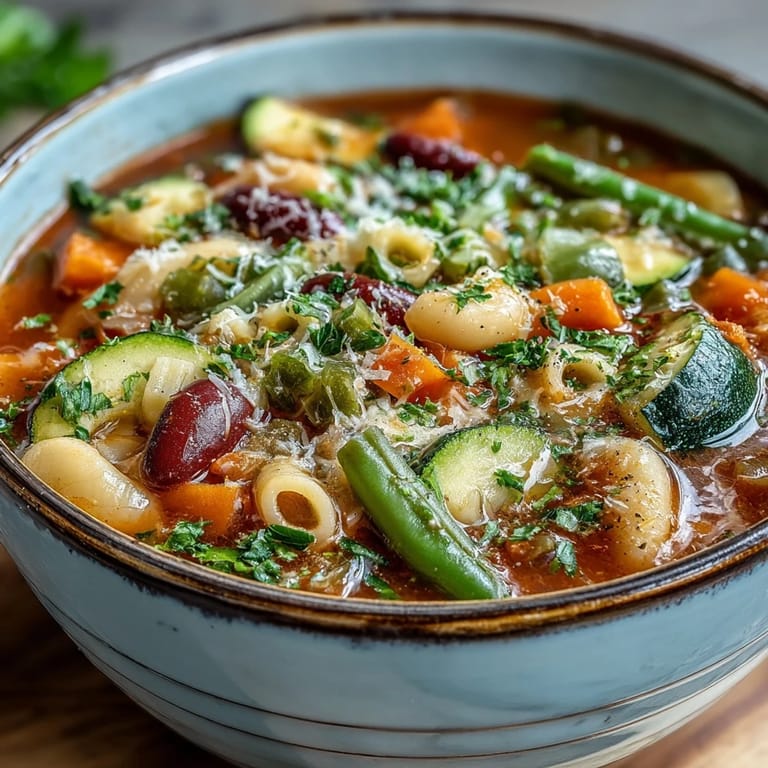
- Small pasta (3/4 cup, ditalini or similar): Don't use anything too large because it gets lost in the broth, and avoid adding it until the last minutes or it becomes mushy.
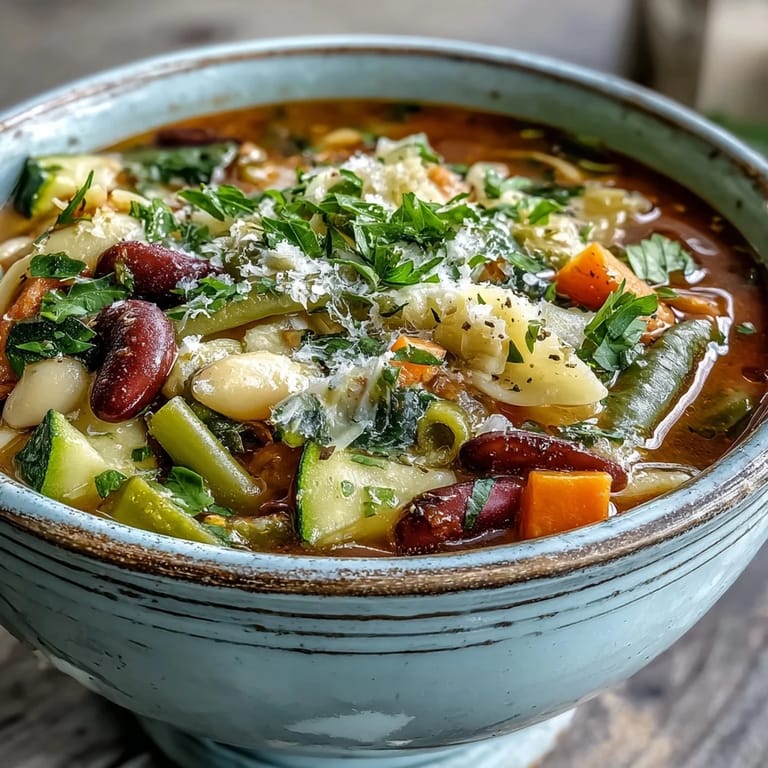
- Parmesan cheese and fresh parsley (for garnish): A generous handful of each makes people feel cared for, even if the soup was simple to make.
Tired of Takeout? 🥡
Get 10 meals you can make faster than delivery arrives. Seriously.
One email. No spam. Unsubscribe anytime.
Instructions
- Build your flavor base:
- Heat the olive oil over medium heat and add the diced onion, carrots, and celery together. Listen for that gentle sizzle and watch as the vegetables start to soften and turn slightly golden, which takes about 5 to 6 minutes.
- Layer in more vegetables:
- Stir in the minced garlic, zucchini, and green beans, stirring frequently so nothing sticks to the bottom. After 3 or 4 minutes, the garlic will smell incredibly fragrant and your kitchen will start to smell like something wonderful.
- Add the wet ingredients and seasonings:
- Pour in the tomatoes, broth, and all the dried herbs along with the bay leaf. Season with salt and pepper, then bring the whole thing to a rolling boil, which usually takes about 5 minutes from a full heat setting.
- Let it simmer and develop:
- Lower the heat, cover the pot, and let it bubble gently for 15 minutes so all those flavors can start dancing together. You'll see the vegetables soften more and the broth deepen in color as the herbs release their essence.
- Add the pasta and beans:
- Uncover the pot and stir in the pasta and both types of drained beans, then let everything simmer uncovered for 10 to 12 minutes. Keep an eye on the pasta by tasting a small piece to ensure it reaches that tender but still slightly firm al dente stage.
- Finish with greens:
- Add the spinach or kale and let it wilt for 2 to 3 minutes, stirring occasionally so it breaks down into the broth. Before serving, remember to remove the bay leaf by fishing it out with a spoon.
- Taste and adjust:
- This is your moment to be honest about the seasoning. Add more salt if it tastes flat, more pepper if it needs brightness, or a pinch more dried basil if you want to emphasize that Italian character.
 Save to Pinterest
 There's a moment in late afternoon when I'm alone in the kitchen and a pot of minestrone is quietly simmering that feels like a small gift to myself. The world outside is rushed and complicated, but in here, everything is gentle and predictable, and I remember why people have made versions of this soup for generations.
The Beauty of Flexible Ingredients
Minestrone is essentially permission to cook what makes sense for your week and season. When zucchini disappears from the market in winter, I add diced potatoes or cabbage instead, and the soup shifts but never disappoints. I've learned to think of the ingredient list as a template rather than a contract, which takes some pressure off and makes cooking feel more like invention than obligation.
Making It Your Own
One evening I stirred in a handful of fresh basil instead of relying only on dried, and the soup became something entirely different, brighter and more alive. Another time I added a parmesan rind while the broth simmered, and it deepened the whole thing in ways I couldn't quite name. These small experiments taught me that good cooking is about paying attention to your instincts rather than strict adherence to steps.
Storage and Reheating Wisdom
Minestrone tastes better the next day, something about how the flavors meld and the broth absorbs into everything, making it feel more cohesive and developed. It keeps beautifully in the refrigerator for up to 5 days, and you can freeze it in portions for those moments when you need comfort but have no time to cook. When reheating, add a splash of water or broth if the soup has thickened too much, and taste for seasoning because sometimes the flavors concentrate and become saltier than you remember.
- Add fresh herbs like parsley or basil after reheating rather than before, so they stay bright and don't wilt into invisibility.
- If you're freezing this soup, leave the pasta out and cook it fresh when you thaw and reheat, which prevents it from turning to mush.
- A crusty piece of Italian bread and a grater of fresh Parmesan are the only accessories this soup truly needs to feel complete.
 Save to Pinterest
 This soup proves that the most nourishing meals don't require complexity or performance, just good ingredients and the willingness to let them become something warm and welcoming. Make it once and you'll find yourself returning to it again and again, each time finding something new to appreciate.
Recipe Questions
- → What vegetables work best in minestrone?
Traditional minestrone includes onions, carrots, celery, zucchini, green beans, and leafy greens like spinach or kale. You can also add potatoes, cabbage, or peas based on seasonality and preference.
- → What type of pasta should I use?
Small pasta shapes like ditalini, elbow macaroni, or small shells work perfectly as they cook evenly and hold their shape in the broth. Use gluten-free pasta if needed.
- → Can I make this vegan?
Absolutely. Simply omit the Parmesan cheese garnish or use a plant-based alternative. The soup itself is naturally vegan with vegetable broth as the base.
- → How long does minestrone keep in the refrigerator?
Stored in an airtight container, minestrone keeps well for 4-5 days. The flavors often deepen and improve after a day or two. Add fresh pasta when reheating if it becomes too soft.
- → Can I freeze minestrone soup?
Yes, freeze for up to 3 months. Consider undercooking the pasta slightly before freezing, as it will soften during reheating. Add fresh garnishes after thawing and heating.
- → What should I serve with minestrone?
Crusty Italian bread is ideal for soaking up the flavorful broth. A light red wine like Chianti complements the tomato base. A simple green salad makes it a complete meal.