 Save to Pinterest
 The first time I really understood laksa was sitting in a tiny hawker stall in Kuala Lumpur, watching an elderly woman ladle the golden broth into a bowl with the kind of practiced ease that comes from doing something a thousand times. The aroma hit me before the spoon touched my lips—coconut, lemongrass, and something deeper I couldn't name. Years later, I tried to recreate that moment in my own kitchen, and what surprised me most wasn't how complex it tasted, but how manageable it became once I stopped overthinking it. Now this dish feels like home cooking that just happens to be extraordinary.
I made this for my friend Jo on a rainy Tuesday, and she sat at my kitchen counter watching the broth simmer, breathing in the steam with her eyes closed. When I placed the bowl in front of her, she took one quiet sip and said, "This is the thing I've been craving without knowing it." That's when I realized laksa isn't just food—it's a moment where someone feels understood through flavor.
Ingredients
- Vegetable oil: Use a neutral oil so the aromatics shine—coconut oil adds extra flavor, but it can overpower the delicate balance.
- Onion, garlic, ginger, and lemongrass: This quartet is non-negotiable; they're the backbone that makes laksa taste like laksa and not just any curry.
- Laksa paste: A good paste does half the work—look for brands that list actual spices, not just fillers, and taste it before you commit to a whole pot.
- Coconut milk: Full-fat is essential; the watery kind won't give you that creamy mouthfeel that makes the dish memorable.
- Vegetable broth: Quality matters here since it's a main component—homemade is lovely, but a good store-bought broth works beautifully too.
- Rice noodles: Thicker ones hold the broth better, but use what you find; the texture difference is subtle enough that either type works.
- Firm tofu: Pressing it gently beforehand helps it crisp up instead of releasing water into the pan.
- Fresh vegetables: Bean sprouts, carrots, bell pepper, and snow peas add freshness and crunch—don't skip them or you'll miss that living quality that balances the richness.
Tired of Takeout? 🥡
Get 10 meals you can make faster than delivery arrives. Seriously.
One email. No spam. Unsubscribe anytime.
Instructions
- Build Your Aromatics:
- Heat the oil over medium heat and add your onion, garlic, ginger, and lemongrass, letting them soften and release their fragrance—you'll know it's right when the kitchen smells like something special. This takes about 3 to 4 minutes, and patience here makes everything that follows taste better.
- Deepen with Paste:
- Stir in the laksa paste and let it cook for 2 minutes—this toasting step mellows out any sharp edges and melds the spices into something cohesive. You'll notice the color shifts and the smell becomes almost intoxicating.
- Create the Broth:
- Pour in the coconut milk and vegetable broth, stirring gently to break up any paste lumps, then bring it to a soft simmer. The surface will shimmer with tiny bubbles and the whole thing will smell like an adventure.
- Season and Infuse:
- Add the soy sauce, sugar, and salt, then let the broth simmer uncovered for 10 minutes—this time lets the flavors marry and any harsh edges round out. You're building depth here, not rushing.
- Prepare Your Components:
- While the broth simmers, cook or soak your rice noodles according to the package, then set them aside. In a separate nonstick skillet, gently fry your tofu cubes until they're golden on all sides—listen for that soft sizzle that tells you they're crisping up.
- Add Vegetables with Intent:
- Slide the carrots, bell pepper, and snow peas into the simmering broth and let them cook for just 3 to 4 minutes—they should still have some snap when you taste them. Overcooked vegetables make the whole dish feel tired.
- Assemble with Care:
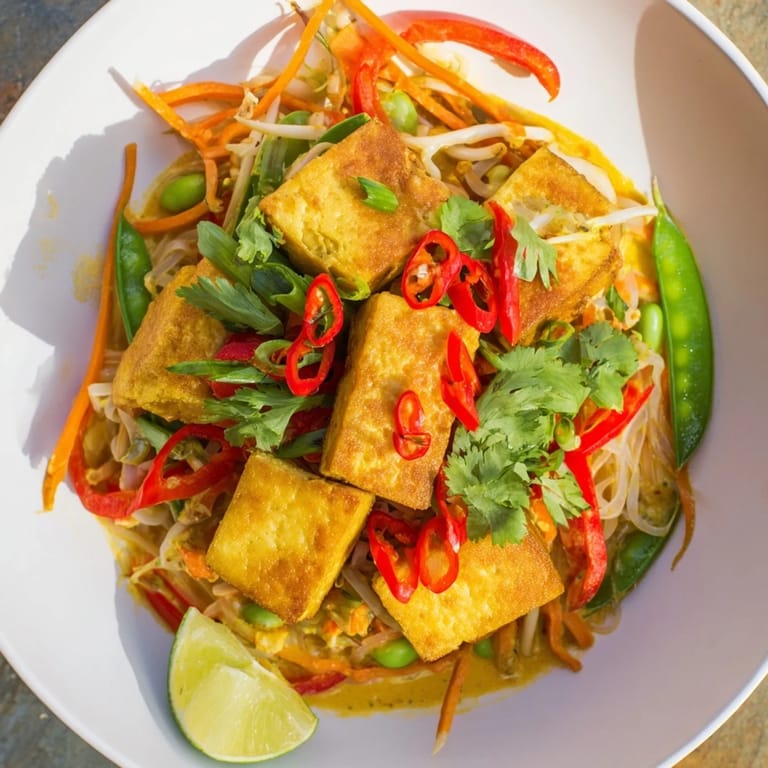
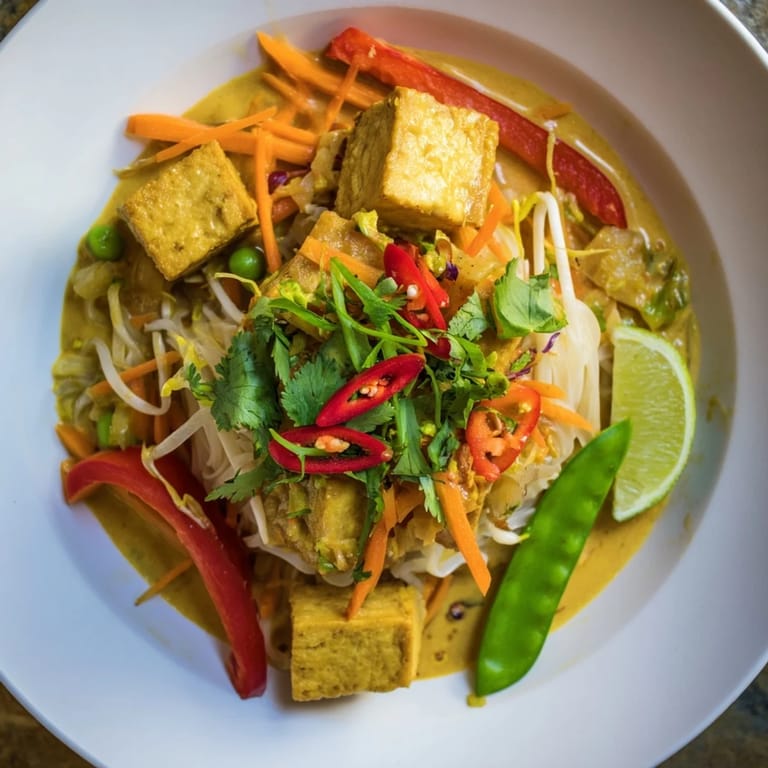
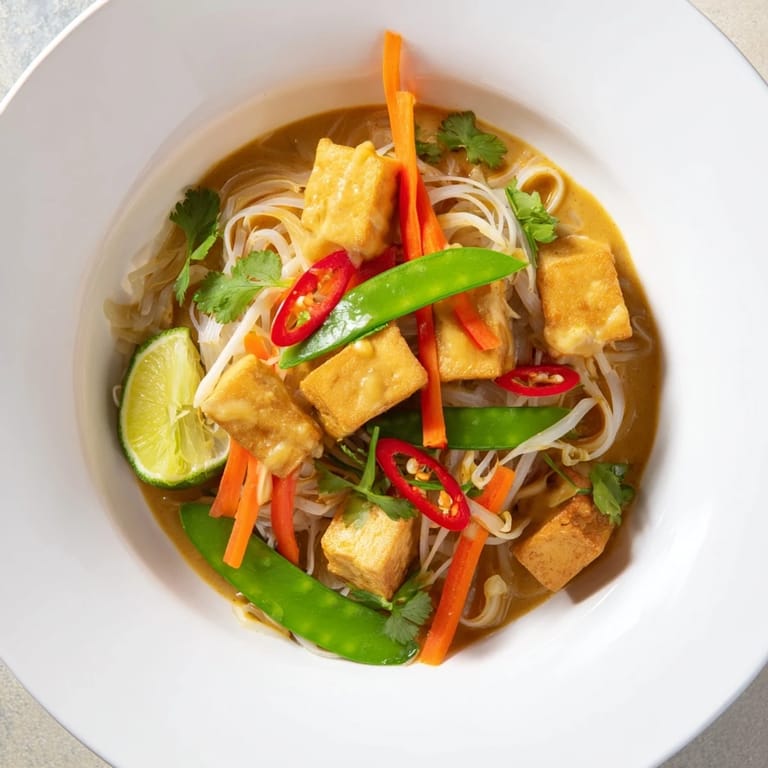
- Divide the noodles among your bowls, then ladle the broth and vegetables over top, making sure everyone gets both the vegetables and the liquid. Crown each bowl with fried tofu, bean sprouts, spring onions, cilantro, and a few red chili slices if you like heat.
 Save to Pinterest
 What moves me most about laksa is how it invites people to customize their own bowl—adding lime juice, adjusting the chili, choosing how much cilantro feels right. It's a dish that respects your preferences while still showing its soul.
The Art of Balancing Heat and Creaminess
Laksa walks a beautiful line between heat and comfort, and that balance is what makes it so craveable. The coconut milk isn't there just to soften the spice; it's a counterpoint that makes each sip more interesting. When the broth tastes only hot, it's one-dimensional, but when you have that creamy backdrop with bright hits of lemongrass and ginger, suddenly you're tasting in layers. The squeeze of lime at the end cuts through everything and wakes it all back up, which is why those wedges are never optional in my kitchen.
Tofu as the Quiet Star
I used to think tofu in curry was just a protein filler, something to make the dish more substantial. But crispy, golden tofu in laksa is actually a textural anchor—it gives you something substantial to bite into while the noodles slide around and the vegetables add their own softness. The outside gets just crunchy enough to make a small sound when your spoon cuts through, while the inside stays creamy. That contrast is what makes people come back for another spoonful, even when they think they're full.
Making It Your Own
The beauty of laksa is that the base is flexible enough to welcome whatever vegetables you have on hand or whatever you're craving that day. Some people add mushrooms for earthiness, others slip in bok choy or baby corn for different textures. I once added thinly sliced radish on a whim and loved how it added a peppery snap.
- Hard-boiled eggs transform this into something more substantial if you want to make it less vegetarian.
- A splash of lime juice in the broth itself (not just on the side) changes everything—try it next time.
- Leftover broth keeps in the fridge for three days and actually tastes better the next day as flavors settle.
 Save to Pinterest
 Every time I make laksa, it feels like I'm trying to capture that moment in a tiny hawker stall, and somehow in my own kitchen, with my own hands, I get close enough. That's the magic of this dish.
Recipe Questions
- → What ingredients give the laksa its unique flavor?
Fresh aromatics like lemongrass, ginger, garlic, and laksa paste combine with coconut milk to create the distinctive rich and spicy flavor of this laksa.
- → Can I use other proteins besides tofu?
Yes, you can substitute tofu with cooked chicken, shrimp, or add hard-boiled eggs for extra protein and variety.
- → How can I make the broth spicier or milder?
Adjust the amount of laksa paste or add fresh chili slices to suit your preferred spice level while maintaining balance with the creamy coconut base.
- → What type of noodles work best in this dish?
Thick rice noodles or vermicelli both absorb the flavorful broth well; soak or cook according to package directions for best texture.
- → Is this dish suitable for vegetarians and vegans?
Yes, using vegetable broth and ensuring the laksa paste is free from shrimp or fish ingredients makes it suitable for both vegetarians and vegans.