 Save to Pinterest
 I was fifteen when I first tried to crack KFC's secret formula, armed with nothing but a notebook and a friend's older brother who worked at the counter. He'd slip us extra crispy pieces during our study breaks, and I became obsessed with understanding how they made chicken taste like that—how every bite delivered both that golden crunch and those impossible layers of savory spice. Years later, I finally figured it out, and now I make this at home whenever I want that exact feeling of biting into fried chicken that tastes like a memory.
I made this for my sister's surprise birthday dinner last spring, and she actually cried—not because it was perfect, but because she said it tasted like the KFC she remembered from road trips with our grandpa. That's when I realized this recipe isn't just about nailing a flavor; it's about recreating a feeling someone carries with them.
Ingredients
- Chicken (8 pieces, skin-on and bone-in): The skin-on, bone-in pieces are non-negotiable—they crisp up in ways boneless chicken never will, and the bones add so much more flavor to the final bite.
- Buttermilk (250 ml): This isn't just a tenderizer; it's the glue that helps the coating stick and gives the chicken a subtle tang that makes everything taste richer.
- All-purpose flour (200 g): The base of your coating, and it needs to be mixed thoroughly with every single spice listed below.
- Paprika (2 tsp): Use the good stuff—it's what gives the chicken that warm, slightly smoky color and taste.
- Garlic powder, onion powder, dried thyme, basil, oregano (1 tsp each): These four create the savory backbone; don't skip or substitute any of them.
- Celery salt, white pepper, black pepper (½ tsp each): The celery salt is the secret weapon that makes people ask what your special ingredient is.
- Mustard powder, ground ginger, cayenne, sage (½ tsp each): These are the whispers—individually small, but together they're what make this taste like you know something other people don't.
- Salt (1 tsp): Split between the buttermilk and the flour for balanced seasoning.
- Vegetable oil (1 liter for frying): Use something neutral that can handle high heat; peanut oil works beautifully if you have it.
Tired of Takeout? 🥡
Get 10 meals you can make faster than delivery arrives. Seriously.
One email. No spam. Unsubscribe anytime.
Instructions
- Mix your buttermilk bath:
- Whisk together the buttermilk, salt, and black pepper in a large bowl until the salt dissolves. This is your tenderizer and adhesive all in one.
- Submerge the chicken:
- Add all eight pieces to the buttermilk, turning each one so every surface gets coated, then cover and refrigerate for at least an hour—overnight is genuinely better, even though I rarely have that kind of patience.
- Build your spice blend:
- In a separate bowl, combine all the flour and spices, then whisk like you're trying to break through the bottom of the bowl—you want those spices distributed so evenly that every bite tastes the same.
- Dredge with intention:
- Pull a piece of chicken from the buttermilk (let some drip back into the bowl), press it firmly into your seasoned flour, and make sure you're working it so the coating really adheres. Set each piece on a wire rack and wait ten minutes—this resting time is what separates crispy from just coated.
- Get your oil ready:
- Heat one liter of vegetable oil in a deep fryer or heavy-bottomed pot until it reaches 170°C (340°F); use a thermometer because eyeballing this is how you end up with burnt edges and raw insides.
- Fry in batches:
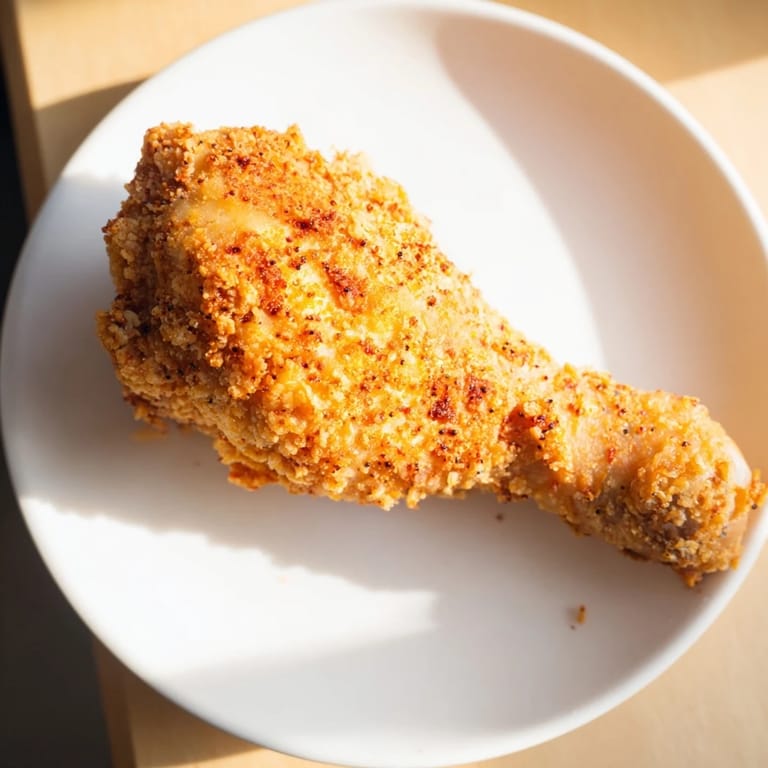
- Working in groups so you don't overcrowd the pot, carefully lower the chicken into the hot oil and listen for that satisfying sizzle—it should sound angry and alive. Fry for twelve to fifteen minutes, turning occasionally, until the coating is deep golden and the internal temperature hits 75°C (165°F).
- Rest and serve:
- Drain each piece on a wire rack or paper towels, then let it sit for five minutes so the steam escapes and the coating stays crispy.
 Save to Pinterest
 My neighbor once told me that the reason she keeps coming back to eat at chain restaurants isn't the food itself, it's that the consistency makes her feel like she's not alone—like millions of people are eating the same thing she is. That's what cracked the code for me about this recipe: it's not really about recreating a flavor, it's about capturing a moment that tastes like belonging.
The Secret to Crispy Coatings
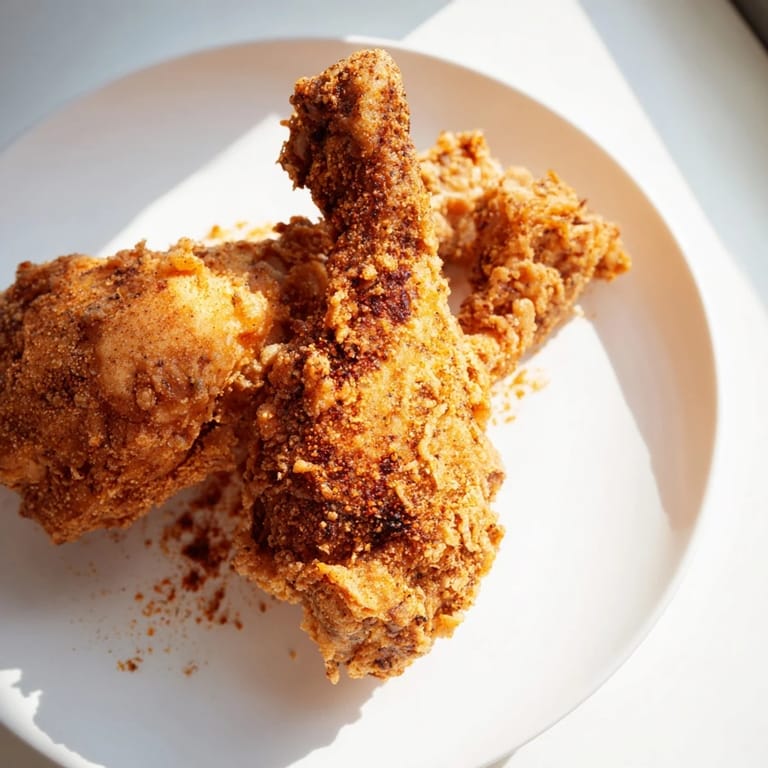
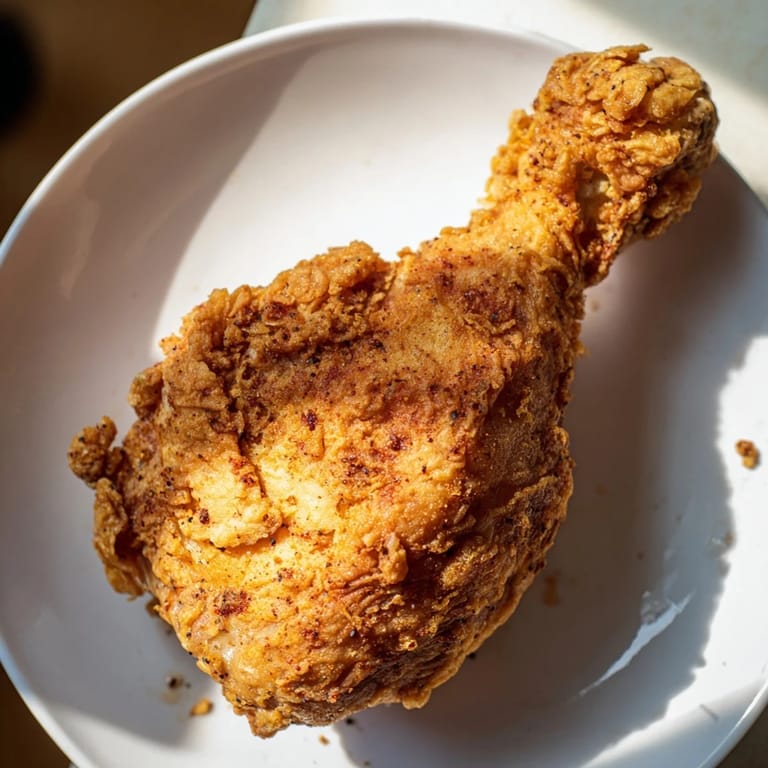
The difference between good fried chicken and the kind you remember comes down to three things: the resting time between dredging and frying, the oil temperature, and trusting the process even when it feels like you're waiting too long. I used to rush, but every time I did, the coating either slipped off or stayed pale. The ten-minute rest after dredging is when the flour actually bonds with the buttermilk; the oil at exactly 170°C creates the Maillard reaction that makes everything taste caramelized; and patience is what separates street food from home cooking.
Building Flavor Without Complexity
What feels overwhelming at first—all those individual spices—actually works because of how they layer. The paprika and cayenne give you color and heat, the garlic and onion create savory depth, the herbs add earthiness, and the celery salt, mustard powder, and ginger are the surprise elements that make people taste something familiar but can't quite name it. I learned this the hard way by trying shortcuts, and every single time I skipped even one spice, someone would bite into a piece and say it tasted like something was missing.
Making It Your Own
Once you nail the base recipe, the fun starts—this is where cooking stops being about following orders and becomes about listening to what you actually want to taste. Some mornings I crave more garlic and less herb; sometimes I bump up the cayenne because the weather feels spicy. The structure is solid enough to handle your tweaks, which is what makes this feel like a recipe you discover rather than one you're told to follow.
- Try serving it with tangy coleslaw to cut through the richness and match that classic restaurant experience.
- If you're avoiding deep frying, the air-fryer method works better than you'd expect—same spice blend, just a different tool.
- Leftover fried chicken becomes incredible fried chicken sandwiches the next day if you don't eat it all in one sitting, which is easier said than done.
 Save to Pinterest
 Fried chicken is one of those dishes that brings people together without trying—it doesn't ask for anything except your appetite and a willingness to eat with your hands. I hope this recipe becomes something you make over and over, not because it's perfect, but because it's yours.
Recipe Questions
- → What gives the chicken its crispiness?
The seasoned flour coating combined with a buttermilk marinade helps create a crunchy, golden crust when deep fried.
- → Can I adjust the spice level?
Yes, modifying the amount of cayenne pepper in the spice blend allows you to control the heat level.
- → Is double-dipping necessary?
Double-dipping in buttermilk and flour adds extra layers, making the coating thicker and crispier.
- → Can this be made using an air fryer?
Air frying is possible for a lighter version, though it may alter the classic crispy texture slightly.
- → What cuts of chicken work best for this?
Skin-on, bone-in pieces like drumsticks and thighs are preferred for moisture retention and flavor.