 Save to Pinterest
 The first time I made okonomiyaki, I was standing in a tiny Osaka street stall watching the cook work with one hand tied behind her back—not literally, but it felt that way with how efficiently she moved. Years later, in my own kitchen, I finally understood the magic: it's not about precision, it's about the smell of cabbage hitting hot oil and the way those bonito flakes start to curl and dance from the residual heat. This Japanese pancake became my answer to the question of what to cook when I wanted something that felt both humble and celebratory.
I remember making a batch of these for my neighbor on a rainy afternoon, and she stood at my kitchen counter watching the bonito flakes vibrate on top of the warm pancakes like tiny seaweed ghosts. She'd never had okonomiyaki before, and when she took that first bite, her eyes widened in that specific way that tells you a food has just changed something. That moment taught me that okonomiyaki isn't just a recipe—it's a small cultural exchange that fits on a plate.
Ingredients
- All-purpose flour: The foundation that holds everything together; I use it because it's forgiving and creates that perfect tender crumb without being dense.
- Dashi stock: If you can find it, use it—the umami base makes the difference between a pancake and something that tastes like Japan in your mouth; water works but loses the soul.
- Eggs: Two large ones bind everything and add richness that makes the interior silky.
- Finely shredded green cabbage: This is the star and should be shredded thin enough that it wilts into the batter; I learned the hard way that chunky pieces don't cook through evenly.
- Green onions: Their mild bite cuts through the richness and adds a fresh note.
- Okonomiyaki sauce: Bottled is fine, but a quick homemade version of Worcestershire, ketchup, and soy tastes brighter and more alive.
- Japanese mayonnaise (Kewpie): The egg yolk base makes it tangier and richer than American mayo; don't skip this detail because it genuinely matters.
- Bonito flakes: These paper-thin dried fish curl and wave from the heat like they're alive, and their smoky flavor is irreplaceable.
- Aonori: The bright seaweed powder adds color and a subtle oceanic note that feels authentic.
Tired of Takeout? 🥡
Get 10 meals you can make faster than delivery arrives. Seriously.
One email. No spam. Unsubscribe anytime.
Instructions
- Build your batter:
- Whisk flour, dashi, eggs, salt, and baking powder in a large bowl until you have a smooth, pourable base. The batter should be thicker than crepe batter but thinner than typical pancake batter.
- Fold in the vegetables:
- Add the shredded cabbage, green onions, carrot, and your choice of shrimp or bacon, stirring gently until everything is distributed evenly. Don't overmix or you'll develop gluten and lose that tender texture.
- Heat your pan:
- Place a nonstick skillet over medium heat and let it warm for a minute until a drop of water sizzles gently across the surface. Add about 1/2 tablespoon of oil and let it shimmer.
- Scoop and shape:
- Pour about 1 cup of batter onto the pan and use the back of your spatula to gently shape it into a thick round pancake about 6 inches wide. Don't press too hard or you'll squeeze out the moisture.
- First side:
- Cook for 4 to 5 minutes without moving it; you're looking for the bottom to turn golden brown and slightly crispy. You'll smell the change when it's ready.
- The flip:
- This is the moment that requires a bit of confidence—slide your spatula underneath, take a breath, and flip it in one smooth motion. Cook the second side for another 4 to 5 minutes until it's golden and cooked through.
- Top it all:
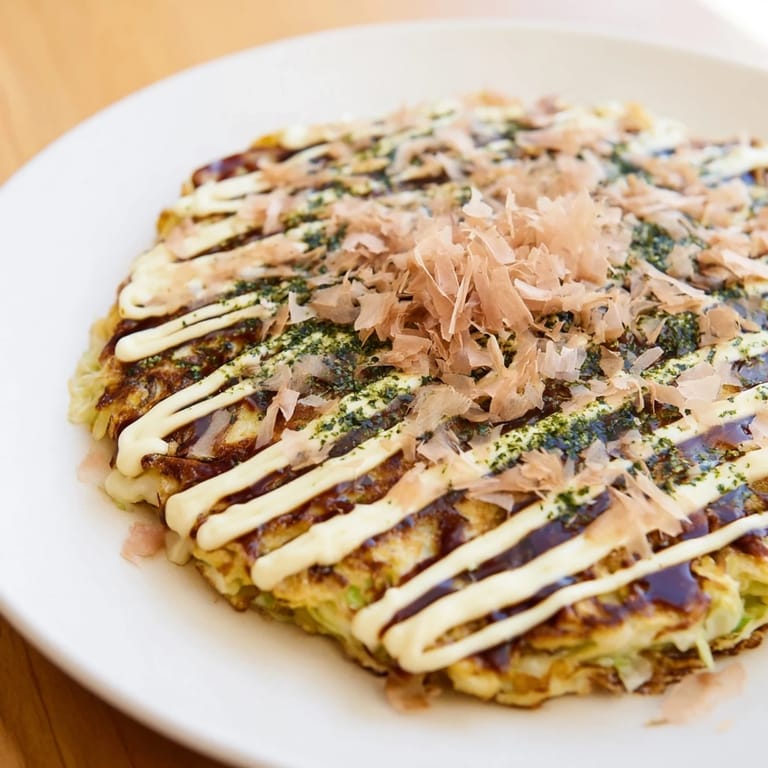
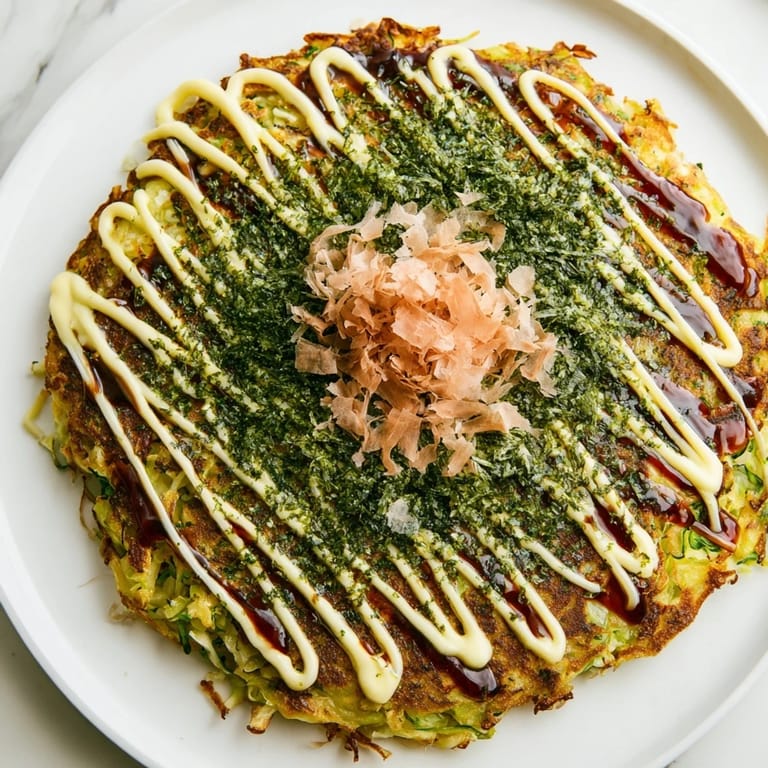
- Transfer each hot pancake to a plate and drizzle the okonomiyaki sauce and mayo in a crisscross pattern. The heat will keep everything warm and slightly melty.
- The final flourish:
- Sprinkle bonito flakes, aonori, and pickled ginger across the top while the pancake is still steaming. The bonito will dance from the heat, and that visual moment is half the joy.
 Save to Pinterest
 One evening, I made okonomiyaki for a friend who was visiting from out of town, and she said it was the most comforting thing she'd eaten in weeks. That's when I realized this dish bridges cultures in the way only food can—it's Japanese, but also somehow universal in its ability to make you feel cared for. That's the real magic of okonomiyaki.
The Cabbage Question
The cabbage is truly the heart of this dish, and how you prepare it changes everything. I learned to shred mine using the julienne blade on my mandoline because I got tired of my hands cramping from knife work, but a box grater works just as well. The key is that you want thin, delicate strands that will soften and almost melt into the batter as it cooks, creating those pockets of tender vegetable throughout.
Playing with Proteins
The shrimp and bacon are optional, but they add a layer of smokiness and richness that makes the dish feel more substantial. I've made versions with both, versions with neither, and versions with crispy mushrooms when I was cooking for vegetarians. The pancake is forgiving enough to let you make it your own, whether you stick to vegetables or load it up with seafood.
Sauce and Topping Strategy
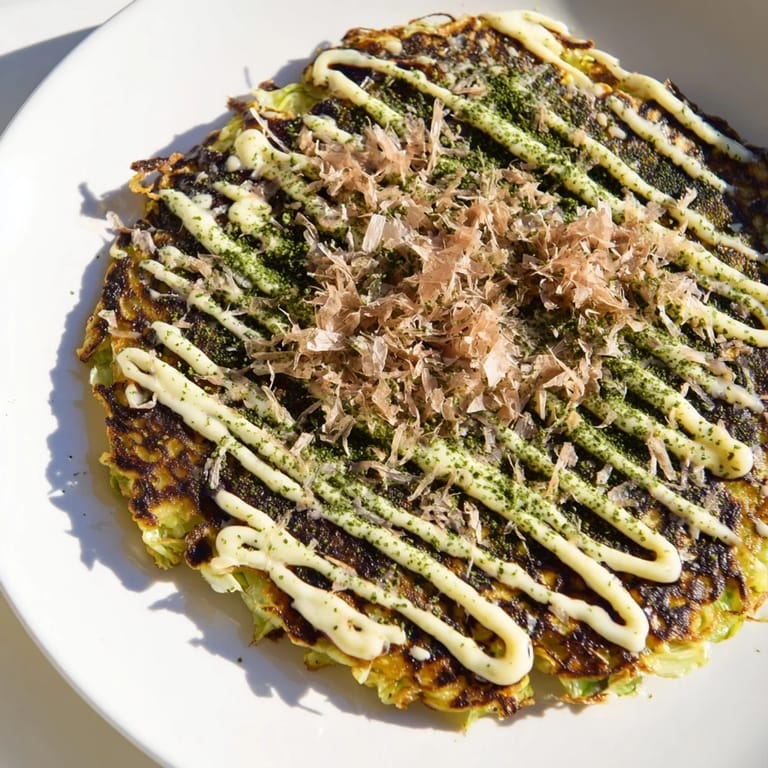
The fun part is getting creative with how you dress these pancakes. I've learned that less sauce is actually more—too much and it drowns out the delicate pancake flavor. Use a squeeze bottle if you have one, or a spoon for those elegant zigzag patterns. The bonito flakes and aonori are where you add that final whisper of umami and authenticity.
- If store-bought okonomiyaki sauce is hard to find, mix Worcestershire sauce, ketchup, and soy in equal parts for a quick substitute that tastes surprisingly close.
- Let the topped pancakes rest for 30 seconds before eating so the bonito flakes fully curl and the flavors meld.
- Serve these immediately and hot—they're best eaten fresh from the pan when everything is still steaming and crispy.
 Save to Pinterest
 Okonomiyaki is the kind of dish that makes you feel like you've traveled somewhere without leaving your kitchen. Each time you make it, you're practicing a small piece of Japanese cooking tradition, and that feels worth celebrating.
Recipe Questions
- → What is okonomiyaki sauce made of?
Okonomiyaki sauce typically combines ingredients like Worcestershire sauce, ketchup, soy sauce, and sometimes sweeteners to create a tangy and savory topping.
- → Can I substitute shrimp with other proteins?
Yes, cooked bacon or other seafood can be used as alternatives, or omitted entirely for a vegetarian variation.
- → How do you achieve crispy edges on the pancakes?
Cooking the batter in a well-oiled skillet over medium heat until golden brown on both sides helps develop crispy edges.
- → What is the purpose of bonito flakes in this dish?
Bonito flakes add a smoky, umami-rich flavor and a distinctive visual effect as they move slightly from the heat.
- → Can these pancakes be made ahead and reheated?
They are best enjoyed fresh but can be gently reheated in a skillet to preserve texture and flavor.