 Save to Pinterest
 My neighbor Maria taught me that minestrone isn't about following rules, it's about whatever's sitting in your crisper drawer on a chilly Wednesday. She'd invite me into her kitchen where the smell of sautéed onions filled every corner, and we'd improvise together, laughing when I'd accidentally grab basil instead of oregano. That soup became our ritual, a way to transform ordinary vegetables into something that warmed us from the inside out. Now whenever I make it, I hear her voice saying soffritto first, everything else follows.
I once made this for a potluck where half the guests were picky eaters, and somehow everyone came back for seconds. There was something about the way the pasta softened into the broth, how the beans added gentle protein without heaviness. By the end of the night, three people were asking for the recipe, and I realized minestrone has this quiet magic where it feels like comfort without being fussy or pretentious.
Ingredients
- Olive oil: Use good quality here because it's one of the few things tasted directly, and it sets the Mediterranean tone for everything else.
- Onion, celery, carrots: This is your soffritto base, the flavor foundation that takes five minutes but teaches you patience in the best way.
- Garlic: Minced fine so it dissolves into the soup and becomes almost invisible but absolutely essential.
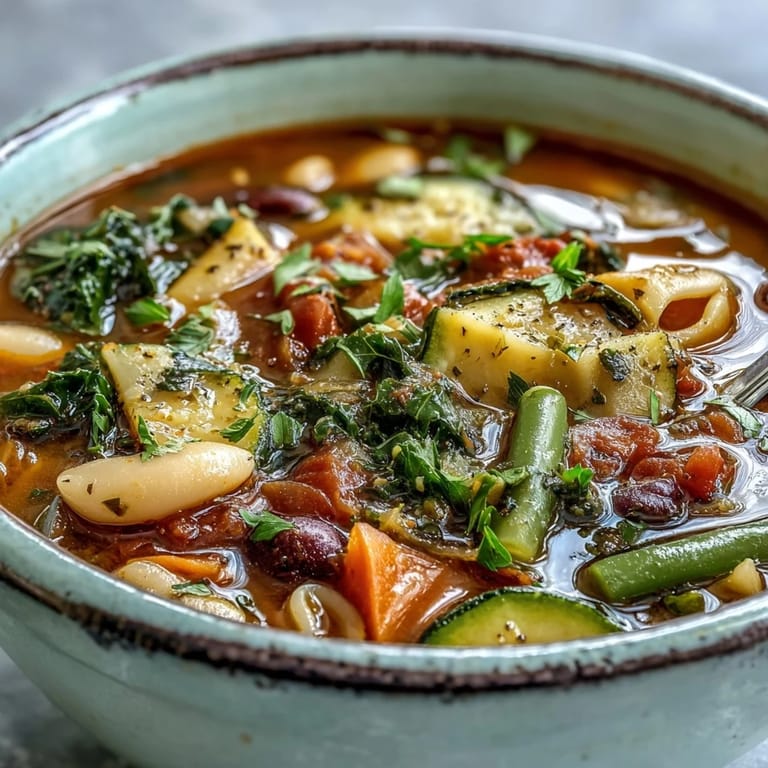
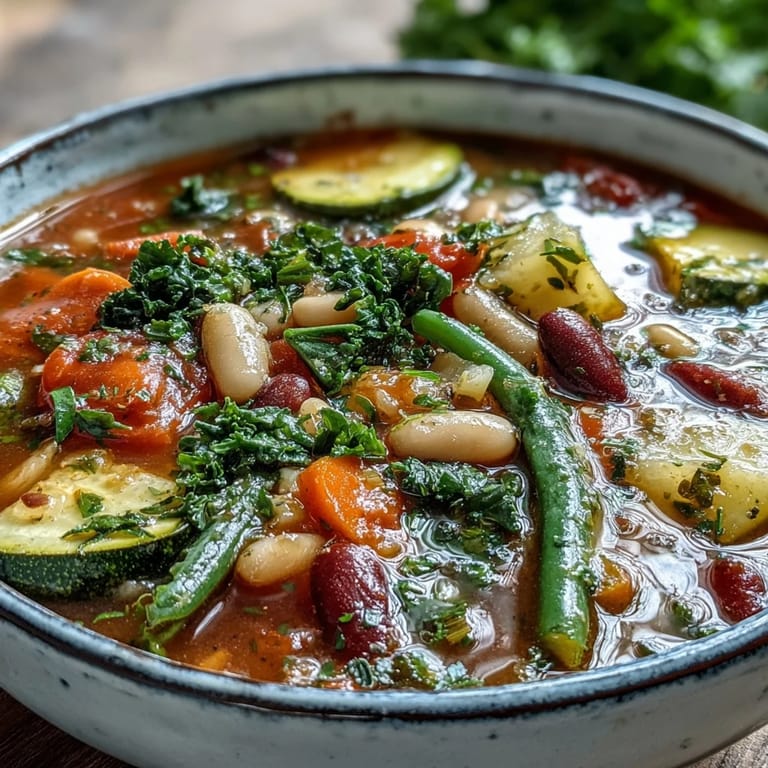
- Zucchini and green beans: These add texture and freshness, keeping the soup from feeling heavy even though it's deeply satisfying.
- Baby spinach or kale: Stir this in at the very end so it stays bright green and keeps its subtle earthiness.
- Diced tomatoes and tomato paste: The tomato paste is concentrated flavor magic, just two tablespoons wakes up the whole pot.
- Vegetable broth: The quality matters because this is your liquid foundation, so choose one you'd actually drink on its own.
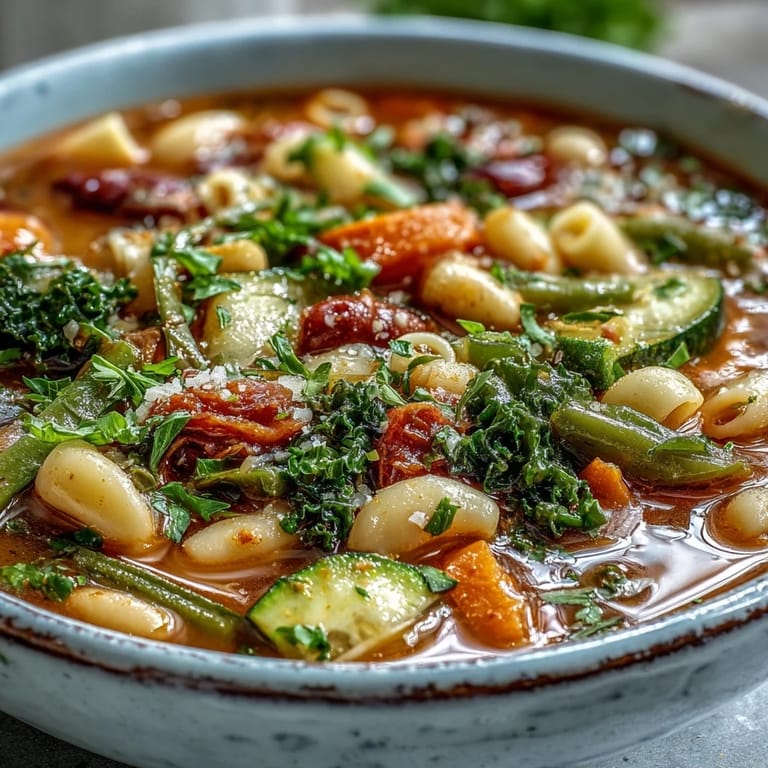
- Small pasta: Ditalini or elbow pasta gets tender without turning mushy, holding their shape just right in the broth.
- Cannellini or kidney beans: Rinse them well so you don't get that starchy, cloudy broth, then they add creaminess naturally.
- Dried oregano, basil, thyme: These three herbs together create that authentic Italian garden flavor that makes people close their eyes while eating.
- Bay leaf: One single leaf perfumes the whole pot, then you fish it out before serving like a little treasure hunt.
- Fresh parsley: Stir some in while cooking and save the rest for garnish, where its freshness brightens every spoonful.
Tired of Takeout? 🥡
Get 10 meals you can make faster than delivery arrives. Seriously.
One email. No spam. Unsubscribe anytime.
Instructions
- Build your flavor base:
- Heat the olive oil in a large pot over medium heat and add your diced onion, celery, and carrots together. Listen for that soft sizzle and let them cook for five minutes until the edges turn translucent and the kitchen starts smelling like something good is happening.
- Deepen with garlic:
- Stir in the minced garlic along with the zucchini and green beans, cooking for three to four minutes until everything becomes fragrant and slightly softened. The garlic should smell sweet and cooked, never sharp or burnt.
- Combine the broth and aromatics:
- Pour in your diced tomatoes, tomato paste, and vegetable broth, then add the oregano, basil, thyme, and bay leaf. Bring everything to a rolling boil, then lower the heat and let it simmer gently for fifteen minutes while the flavors meld together.
- Add pasta and beans:
- Stir in the pasta and drained beans, cooking for about ten minutes until the pasta reaches that perfect al dente texture where it still has a tiny bit of resistance when you bite it. Taste a piece of pasta before moving forward so you know exactly when it's ready.
- Finish with greens and herbs:
- Stir in your spinach or kale along with the fresh parsley, letting everything simmer for just two to three minutes until the greens wilt into tender ribbons. You want them cooked through but still vibrant green, not faded or mushy.
- Season and serve:
- Fish out the bay leaf with a spoon, then taste your soup and adjust the salt and pepper until it tastes just right to you. Ladle it into bowls, add a shower of fresh parsley on top, and serve while it's steaming hot with crusty bread on the side.
 Save to Pinterest
 There was an afternoon when I made this soup for my sister who was going through a rough time, and she sat at my kitchen table with a bowl in both hands, just breathing in the steam. She didn't say much, but the way she came back for another bowl told me that sometimes food is the conversation we need when words aren't enough.
The Rhythm of Minestrone
Making this soup teaches you something about cooking that goes beyond recipes. You learn that the first five minutes of sautéing vegetables aren't wasted time, they're when the foundation of flavor builds. You discover that good soup isn't rushed, it's the kind of patient cooking that fills your home with warmth while you do other things. There's something meditative about standing at the stove, stirring occasionally, letting the pot do the real work while you just tend it gently.
Customizing Your Soup
The beautiful thing about minestrone is that it genuinely welcomes substitutions. In summer I've made it with fresh tomatoes and whatever vegetables were at the farmer's market that week. In winter I lean into root vegetables and hardier greens. The soup doesn't have an ego about it, it just wants to nourish you with what you have on hand. One friend of mine adds a dash of red wine vinegar at the end, and now I can't make it without it.
Serving and Storage
This soup is one of those dishes that actually improves the next day when flavors have more time to get to know each other. Store it in the refrigerator for up to four days, or freeze it in portions for up to three months, though add the pasta fresh when reheating if you're planning ahead. It reheats beautifully on the stove with a splash of water or broth to loosen it back up, and it tastes even better than it did the first time.
- Serve with crusty bread for soaking up the broth and turning an already satisfying soup into a complete meal.
- Top with freshly grated Parmesan cheese if you're not keeping this vegetarian, or a drizzle of good olive oil for richness.
- Make a big batch on Sunday and you'll have lunch sorted for half the week, which is a gift you give to your future self.
 Save to Pinterest
 Minestrone is the kind of soup that proves you don't need complicated techniques or fancy ingredients to make something people genuinely want to eat. It's honest food, the kind that fills you up and makes you feel cared for all at once.
Recipe Questions
- → What vegetables work best in minestrone?
Traditional minestrone includes onions, celery, carrots, zucchini, and green beans. You can also add seasonal vegetables like Swiss chard, cabbage, or peas depending on what's available.
- → Can I make minestrone ahead of time?
Yes, minestrone actually develops more flavor when made ahead. Store it in the refrigerator for up to 4 days. The pasta will absorb some liquid, so you may need to add extra broth when reheating.
- → How do I prevent pasta from getting mushy?
Cook the pasta separately and add it to individual bowls when serving, or slightly undercook the pasta in the soup since it will continue to soften as it sits in the hot broth.
- → Can I freeze minestrone soup?
Yes, freeze the soup without the pasta for best results. The pasta can become mushy when frozen and reheated. Add freshly cooked pasta when you reheat the thawed soup.
- → What type of pasta is traditionally used?
Small pasta shapes like ditalini, elbow macaroni, shells, or small tubes work perfectly. These shapes hold up well in liquid and are easy to spoon up with the vegetables.
- → Is minestrone suitable for vegetarians?
This version uses vegetable broth, making it naturally vegetarian. For a vegan option, simply omit the Parmesan garnish or use a plant-based alternative.