 Save to Pinterest
 My tita taught me chicken adobo in her kitchen on a humid Manila afternoon, and honestly, I burned the first batch because I got distracted telling her about my week. She laughed and said that's how you learn—the smell of caramelized soy and vinegar sticking to the walls for days is the real teacher. Now when I make it, that exact smell brings me straight back to her tiny stove, and I swear the chicken tastes better because of those memories seasoning it.
I made this for my roommate's family on a weeknight, and watching them eat without saying much—just focused, quiet satisfaction—reminded me why Filipino food matters. There's something deeply comforting about serving something that doesn't need to be fancy to feel like love on a plate.
Ingredients
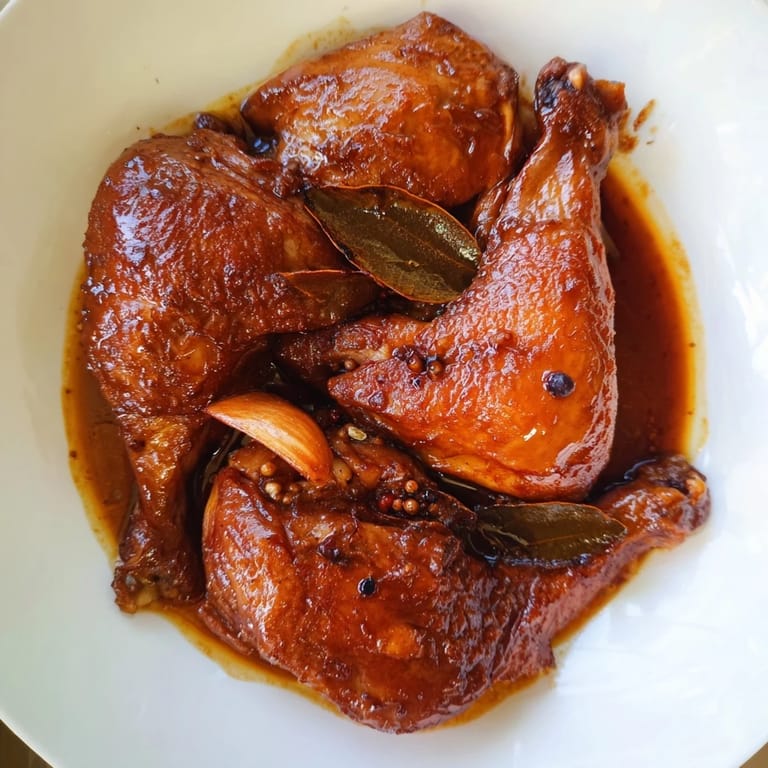
- Bone-in, skin-on chicken thighs and drumsticks (1.5 lbs): The dark meat stays tender and flavorful through braising, and the skin crisps up in the pan before it softens again in the sauce—that contrast is everything.
- Soy sauce (1/3 cup): Use a full-bodied one if you can; it's the umami backbone that makes this dish taste complete and makes you want to wipe your plate clean with rice.
- Cane vinegar (1/3 cup): This is what gives adobo its signature tang; white vinegar works but cane vinegar has a slightly rounder flavor that feels more authentic.
- Garlic (6 cloves, smashed): Smashing them releases the oils and lets them infuse the whole dish without overpowering it.
- Bay leaves (2): They add a subtle herbal whisper that you can't quite identify but absolutely miss if you skip them.
- Black peppercorns (1 teaspoon whole): Whole peppercorns are gentler than ground pepper and float through the sauce like little flavor bombs.
- Brown sugar (1 tablespoon, optional): A tiny bit rounds out the sharp flavors and makes the sauce slightly glossy.
- Water (1/2 cup): This extends the sauce and keeps the chicken from drying out while it braises.
- Cooking oil (2 tablespoons): Whatever neutral oil you have—vegetable, canola, or even coconut oil works beautifully.
Tired of Takeout? 🥡
Get 10 meals you can make faster than delivery arrives. Seriously.
One email. No spam. Unsubscribe anytime.
Instructions
- Marinate the chicken:
- In a bowl, toss the chicken with soy sauce, vinegar, smashed garlic, bay leaves, peppercorns, and brown sugar. The marinade does the heavy lifting here, so let it sit at least 30 minutes—overnight is even better if you have the time.
- Dry the chicken:
- Pat the chicken dry with paper towels before cooking; this helps it brown instead of steam in the pan, which matters more than you'd think.
- Brown the chicken:
- Heat oil in a large skillet over medium-high heat and add the chicken skin-side down. You're looking for a golden crust, about 3–4 minutes per side, which gives the sauce something rich to cling to.
- Add the braising liquid:
- Pour in the reserved marinade and water, then bring everything to a boil. The sizzle and smell at this moment is when you know you're doing it right.
- Simmer covered:
- Lower the heat, cover, and let it bubble gently for 25 minutes, turning the chicken once halfway through so it cooks evenly and stays moist.
- Reduce the sauce:
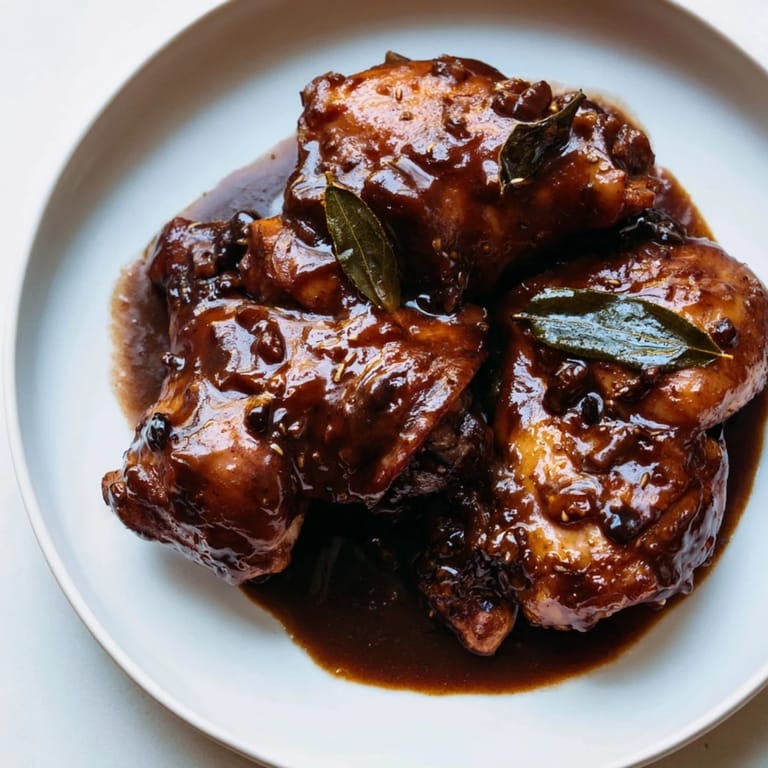
- Uncover and simmer another 10–15 minutes until the sauce thickens and becomes glossy, concentrating all those flavors. If there's excess fat on top, skim it off with a spoon.
- Taste and finish:
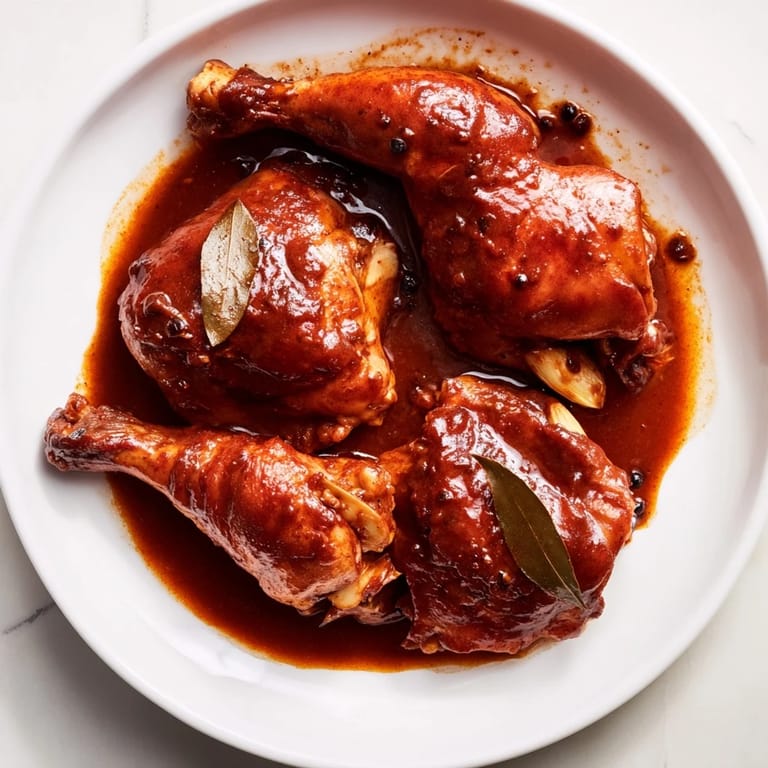
- Fish out the bay leaves, taste a spoonful of sauce, and adjust the salt or vinegar to your preference. Then serve it hot over rice while everything is still steaming.
 Save to Pinterest
 There's a moment about halfway through cooking when you lift the lid and the steam hits your face—that's when I know the kitchen is about to smell unforgettable. That's also when my younger cousins used to wander in from the living room and just wait by the stove, knowing good things were coming.
Why This Dish Deserves Your Attention
Chicken adobo feels simple on paper, but it's actually a masterclass in balance—acidic vinegar, salty soy, sweet undertones, and peppery spice all negotiating space in one pot. Filipino home cooks have been perfecting this for generations, and there's wisdom in that simplicity. Every component plays a role, and no single ingredient overpowers the others unless you let it.
Making It Your Own
The beauty of adobo is that it's flexible without losing its identity. I've seen people add a splash of coconut milk to make it richer, or toss in dried chilies for heat, or even a tablespoon of fish sauce for depth. Some Filipino families do it with pork instead of chicken, and it's equally delicious. The core—that soy, vinegar, garlic combination—is what makes it adobo, and everything else is just you leaving your fingerprints on it.
The Perfect Accompaniments and Timing
Adobo was born to live on a bed of steaming white rice, but it also works beautifully with warm flour rolls or even over mashed potatoes if you're feeling adventurous. The sauce is loose and flavorful, so it needs something to soak into. Timing-wise, this is a weeknight dinner that tastes like you fussed over it for hours—active time is barely 20 minutes if you marinate ahead of time.
- Serve it with simple steamed rice and a squeeze of lime if you want brightness on the side.
- Leftover adobo tastes even better reheated the next day, so make extra without guilt.
- If you end up with extra sauce, strain out the solids and drizzle it over fresh rice bowls—nothing goes to waste here.
 Save to Pinterest
 This dish has fed my family through breakups, celebrations, quiet Sundays, and busy weeknights. It's the kind of food that doesn't ask for credit—it just shows up and does its job perfectly.
Recipe Questions
- → What cut of chicken works best?
Bone-in, skin-on thighs and drumsticks offer the richest flavor and tenderness in this dish.
- → Can I adjust the tanginess of the sauce?
Yes, altering the vinegar amount allows you to balance the tang according to taste preferences.
- → Is marinating necessary?
Marinating helps infuse the chicken with savory and tangy notes but can be shortened if time is tight.
- → How do I achieve a thicker sauce?
Simmer uncovered at the end to reduce the liquid and concentrate the flavors for a glossy finish.
- → What are good garnishes to complement the dish?
Chopped scallions add a fresh contrast, and a sprinkle of black pepper enhances the aroma.