 Save to Pinterest
 The first time I made this baked feta pasta, I wasn't expecting much—just a quick weeknight dinner with ingredients already scattered around my kitchen. But when I pulled that golden, creamy block from the oven, tomato juices pooled around it like liquid gold, something clicked. The smell alone stopped me mid-step: warm feta, sweet burst tomatoes, and that herbaceous olive oil hitting the hot pan. I tossed it all together with pasta and suddenly understood why this dish had taken over every cooking feed I scrolled through.
I remember making this for a friend who'd been through a rough few weeks, and watching her take that first forkful and just pause—no words, just a smile—told me everything. She went back for seconds before I'd even sat down, and by the end of the meal, she was already asking how to make it herself. That's when I knew this wasn't just a recipe that worked; it was one that could turn an ordinary Tuesday into something memorable.
Ingredients
- Feta cheese (200 g block): Don't crumble it—keep it whole so it softens into a creamy sauce that coats every strand of pasta like a dream.
- Cherry tomatoes (500 g): They burst into themselves in the oven, releasing their water and concentrating their sweetness; use the smallest ones you can find for faster roasting.
- Sun-dried tomatoes (100 g in oil): The secret weapon that makes people ask "what is that flavor?" They bring umami and a tangy sweetness that lifts everything else.
- Garlic (3 cloves, thinly sliced): Slice it thin so it melts into the oil rather than turning chunky or burnt.
- Red onion (1 small, optional but recommended): It adds a whisper of sharpness that balances the richness without being overpowering.
- Short pasta (350 g): Penne, fusilli, or rigatoni work best because their shapes grab and hold the creamy sauce better than long noodles would.
- Extra-virgin olive oil (4 tbsp): This is where quality matters—your best bottle, not the cooking one, because it's tasted raw and roasted.
- Dried oregano and basil (1 tsp each): They soften and bloom in the heat, becoming almost floral rather than harsh and powdery.
- Red pepper flakes (½ tsp): A tiny whisper of heat that doesn't scream but makes your mouth remember.
- Fresh basil (½ cup): Torn by hand at the end, never cut with a knife—it bruises less and tastes fresher.
- Parmesan and lemon zest (garnish): The sharpness and brightness they add at the table makes a real difference in the final bite.
Tired of Takeout? 🥡
Get 10 meals you can make faster than delivery arrives. Seriously.
One email. No spam. Unsubscribe anytime.
Instructions
- Heat your oven and build the base:
- Preheat to 200°C (400°F). Throw the cherry tomatoes, sun-dried tomatoes, sliced garlic, and red onion into a large baking dish—nothing fancy needed. Drizzle 3 tbsp of olive oil over everything and season generously with oregano, basil, red pepper flakes, salt, and pepper, then toss until every tomato glistens.
- Crown it with feta:
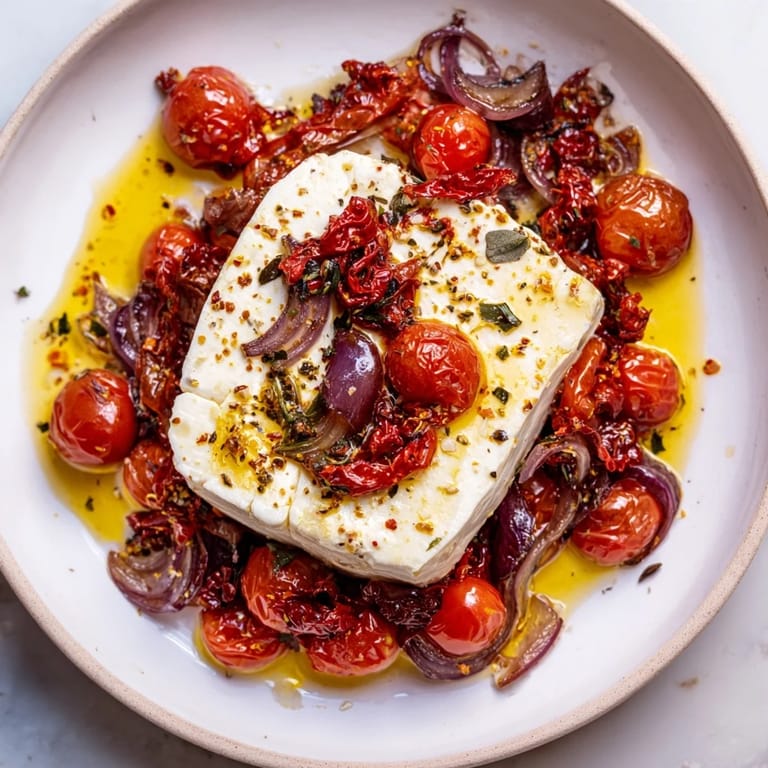
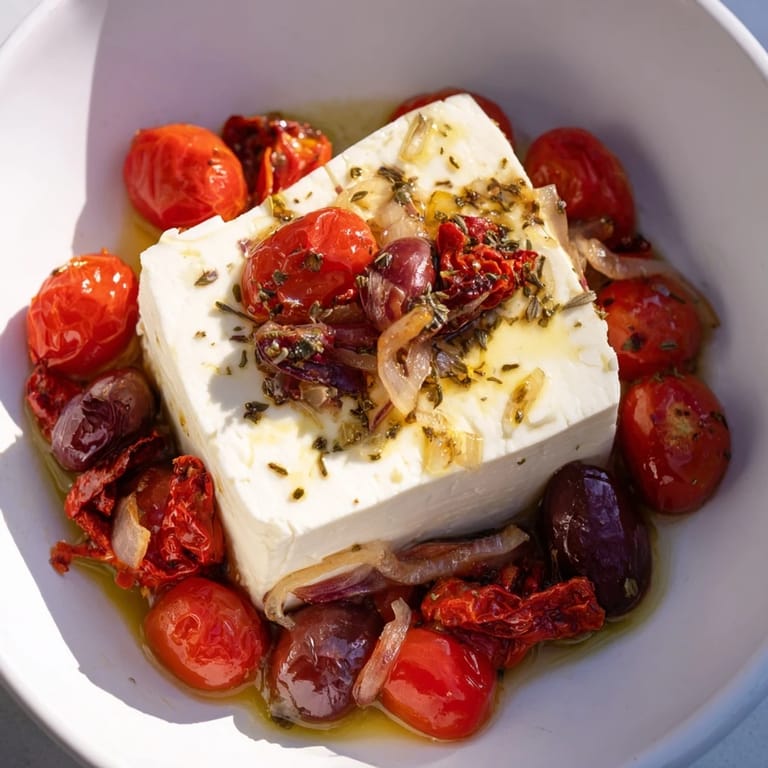
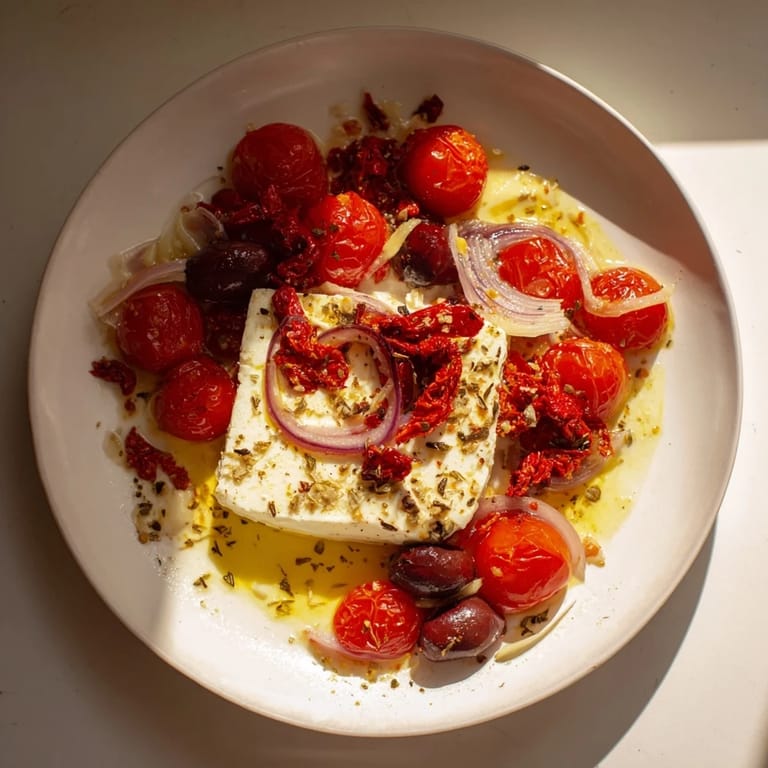
- Place the whole feta block right in the center like you're giving it the spotlight it deserves. Drizzle the remaining 1 tbsp of olive oil on top and let it catch the heat.
- Bake until golden and soft:
- Pop it in the oven for 30–35 minutes, until the tomatoes have burst open and are releasing their juices, and the feta is turning golden at the edges with soft, melting insides. You'll know it's ready when the kitchen smells like a Mediterranean dream.
- Cook your pasta at the same time:
- While the oven works, salt your water aggressively and get it to a rolling boil. Add your pasta and cook until it's just past al dente—you want it to have a slight chew but not crunch. Before draining, scoop out and reserve about ½ cup of the starchy water; you'll thank yourself in a moment.
- Mash and combine:
- Pull the baking dish from the oven and let it cool for just a minute—the hot oil will still be bubbling. Using a fork or spoon, break up the feta block and mash it together with all those roasted tomatoes and their juices until it looks like a chunky, creamy sauce. Add the hot, drained pasta directly to the dish.
- Bring it together with pasta water:
- Pour in some of that reserved pasta water—it's starchy and magic, helping to bind everything into a silky sauce. Toss gently but thoroughly, adding more water if it looks dry. This is the moment where everything becomes one rather than separate components.
- Finish with fresh basil and taste:
- Tear in the fresh basil leaves and taste—adjust the salt and pepper because now you're seasoning pasta that will absorb more than the raw components did.
 Save to Pinterest
 There was an afternoon when my nephew watched me cook this and asked if making food could be a superpower, because it felt like magic the way plain ingredients became something he couldn't stop eating. In that question, I realized why this dish matters—it's not complicated or pretentious, but it transforms and astounds, which might be the real definition of cooking well.
Why Roasting Makes All the Difference
The oven is doing something gentle but powerful here—it's not scorching your ingredients into bitterness but slowly coaxing out their natural sugars and concentrating their flavors. The cherry tomatoes soften and burst, the garlic turns sweet and jammy rather than sharp and raw, and the feta slowly relaxes from a firm block into something that wants to melt. If you tried to make this on the stovetop instead, rushing the process in a pan, you'd end up with something closer to soup than this luxurious, creamy pasta. The slowness is part of the magic.
The Pasta Water Secret
Pasta water isn't just liquid to me anymore—it's a chef's trick that separates okay dishes from ones that feel properly finished. That starchy water emulsifies with the oil and softens feta into something velvety, coating every strand evenly. It sounds small, but it's the difference between a dry mixture and a sauce that actually clings and builds flavor with each bite. I always reserve more than I think I'll need because you can always add more, but you can't take it back.
Variations and Additions That Work
This recipe is a foundation, not a strict rule—I've added toasted pine nuts for crunch and richness, scattered Kalamata olives for a briny note that plays beautifully against the sweet tomatoes, and even thrown in some roasted red peppers for a deeper color and smoky edge. Some nights I add a touch of balsamic vinegar right before the pasta goes in, letting it catch in the heat. The constants are the feta and the roasted tomatoes; everything else is you making it your own.
- Kalamata olives or capers add a salty, briny element that brightens everything.
- Toasted pine nuts or walnuts bring texture and a buttery richness.
- A glug of balsamic vinegar stirred in at the end adds depth that people can't quite name.
 Save to Pinterest
 This dish sits at the intersection of being impressively simple and somehow making you look like you know what you're doing in the kitchen. Make it for people you care about, and watch how a plate of pasta becomes a moment they remember.