 Save to Pinterest
 The first time I made pho on a weeknight, I wasn't trying to recreate some restaurant masterpiece—I just wanted something warm and alive in a bowl, fast. My neighbor had raved about finding star anise at the corner market, and I was curious enough to give it a shot. Thirty-five minutes later, I was stirring raw beef into a broth so fragrant it had filled my whole kitchen, and suddenly the thing that felt impossible before felt easy. This Vietnamese Pho Express is that moment bottled—all the soul of the real thing, none of the hours.
I made this for my partner on a cold Tuesday when they came home exhausted from work, and watching them slow down with each spoonful—the way the heat and the basil seemed to reset them—I understood why pho exists. It's not just food; it's a gesture, a moment where everything stops and tastes like care.
Ingredients
- Low-sodium beef or chicken broth (8 cups): The foundation of everything—use good broth because there's nowhere for it to hide, and it makes the difference between okay and remarkable.
- Fresh ginger and onion: These two are the aromatic backbone; peeling and halving them (rather than mincing) lets them flavor the broth without clouding it.
- Star anise, cinnamon stick, and cloves: The holy trinity of pho spice—don't skip any of them, and don't be tempted to add more than called for or the broth turns medicinal.
- Fish sauce and soy sauce: Fish sauce smells fierce in the bottle but becomes the umami whisper that makes people say 'what is that incredible flavor?'
- Flat rice noodles (bánh phở): These are thinner and wider than regular rice noodles, and they drink up the broth perfectly—fresh noodles are ideal but dried work beautifully too.
- Beef sirloin or eye round, thinly sliced: Slice against the grain when the meat is cool or slightly frozen; it cooks in seconds from the hot broth, staying tender and rare.
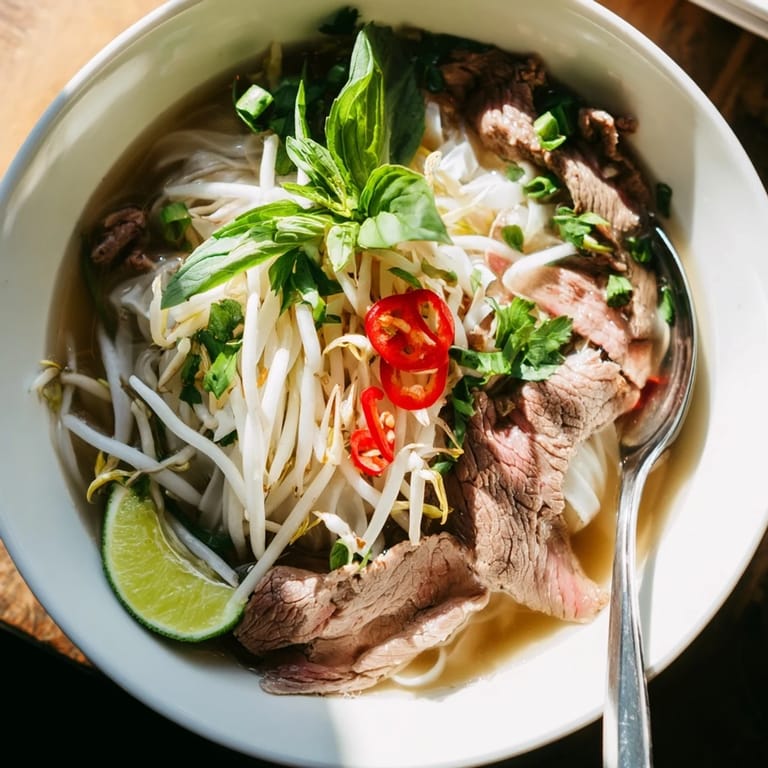
- Fresh herbs and garnishes: Thai basil, cilantro, bean sprouts, scallions, and lime are non-negotiable—they're not decorations, they're flavor.
Tired of Takeout? 🥡
Get 10 meals you can make faster than delivery arrives. Seriously.
One email. No spam. Unsubscribe anytime.
Instructions
- Build the flavor base:
- Combine broth, peeled onion, sliced ginger, and all the whole spices in a large pot. Bring to a rolling boil so the kitchen fills with that distinctive pho aroma, then drop the heat and let it simmer uncovered for twenty minutes—this gives the spices time to infuse without any steam escaping.
- Season and strain:
- Stir in fish sauce, soy sauce, sugar, and salt, then let it breathe for five more minutes. Pour everything through a fine mesh strainer to catch the solids, leaving you with crystal-clear, fragrant broth that you'll keep on low heat, ready and waiting.
- Cook the noodles:
- While the broth works, follow the package directions for your rice noodles—they should be tender but not falling apart. Drain them well and divide evenly among four generous bowls.
- Arrange the protein:
- Lay thin slices of raw beef directly over the warm noodles in each bowl—don't crowd them, keep them in a single layer so the heat can reach every slice.
- The magic happens here:
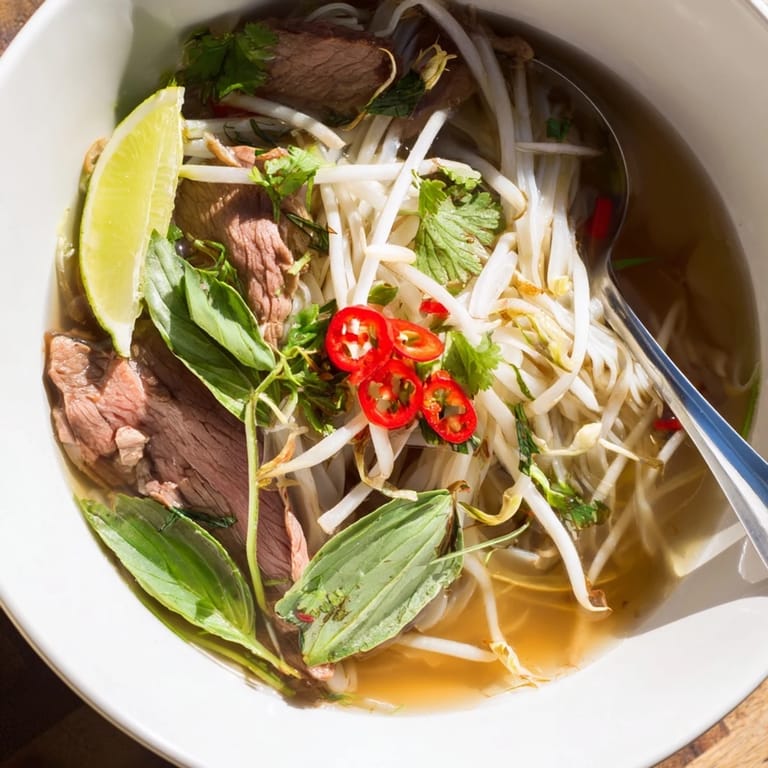
- Ladle the hot broth directly over the beef; it will cook the meat in seconds from the residual heat, turning it from raw to tender pink. You want to hear the sizzle.
- Top and serve:
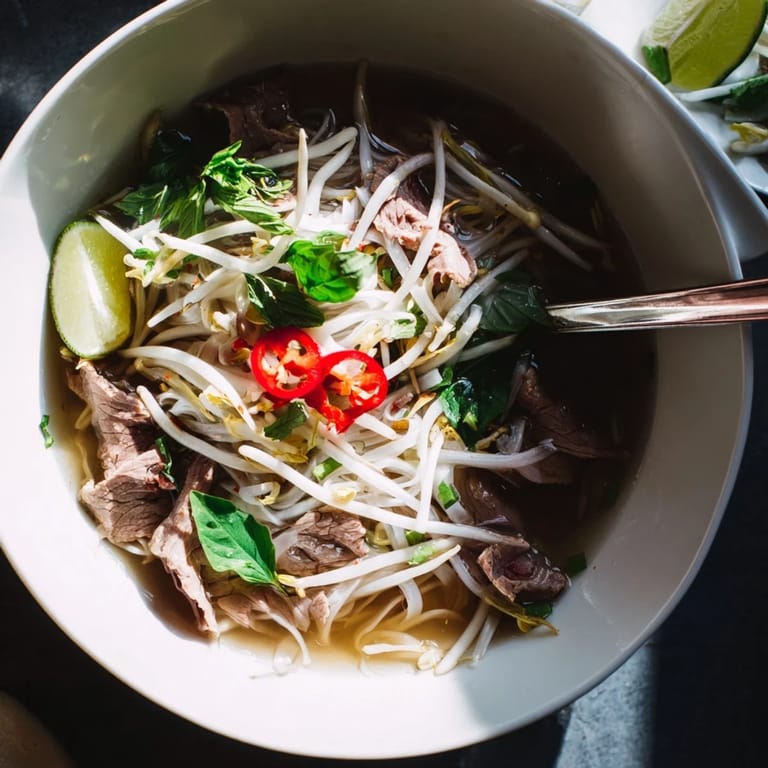
- Pile on the bean sprouts, basil, cilantro, scallions, and chili slices, then set lime wedges, hoisin sauce, and sriracha on the side so everyone can adjust their own bowl to taste.
 Save to Pinterest
 There's a moment right when you pour that steaming broth over the meat and you watch the transformation happen in real time—raw to cooked, gray to blushed pink—and it feels like a small kitchen magic trick. That's when you know why people gather over pho, and why making it yourself, even fast, tastes like you care.
Charring for Extra Depth
If you have an extra two minutes, char the onion halves and ginger slices in a dry skillet over high heat until they're blackened on the edges, then add them to the broth. This brings a subtle smokiness and caramelized sweetness that makes the broth taste even more complex without adding time—it's a small move with a big payoff.
Making It Your Own
Pho is endlessly flexible, and the beauty of doing it this way is that you can pivot based on what you have and who you're cooking for. Use chicken breast instead of beef, swap in tofu and vegetable broth for vegetarian, or add mint and fried shallots if someone at your table loves those flavors more than basil. The broth stays the star, and the toppings let everyone make it feel personal.
Timing and Temperature
The whole point of express pho is that it comes together without fuss, but timing matters—make sure your noodles are cooked and your broth is hot before you slice the beef, so that everything hits the bowl at once and the beef cooks properly in those final seconds. Serve immediately, straight from the stove to the table while the steam is still rising, because pho is meant to be eaten hot and felt all the way through.
- If your broth cools while you're prepping, just bring it back to a simmer before ladling.
- Set out the lime, hoisin, and sriracha on the side so people can balance the flavors to their taste.
- This feeds four comfortably, but you can easily double it if you're feeding a crowd.
 Save to Pinterest
 Quick pho might sound like a contradiction, but it's actually the version that reminds you why this bowl has fed people through cold months and tough times. Make it tonight and taste the difference between rushing and actually caring.
Recipe Questions
- → How can I make the broth more aromatic?
Lightly charring the onion and ginger before simmering enhances the depth of the broth’s flavor.
- → What are good protein alternatives in this dish?
Chicken breast works well instead of beef, and tofu offers a vegetarian-friendly option.
- → How do I cook the rice noodles properly?
Follow package instructions carefully, typically soaking or boiling briefly until tender but still firm.
- → Can I adjust the spice level?
Adding thinly sliced red chili or adjusting Sriracha allows control over the heat intensity.
- → What garnishes best complement the flavors?
Fresh herbs like Thai basil and cilantro, along with bean sprouts and scallions, provide fresh, vibrant notes.