 Save to Pinterest
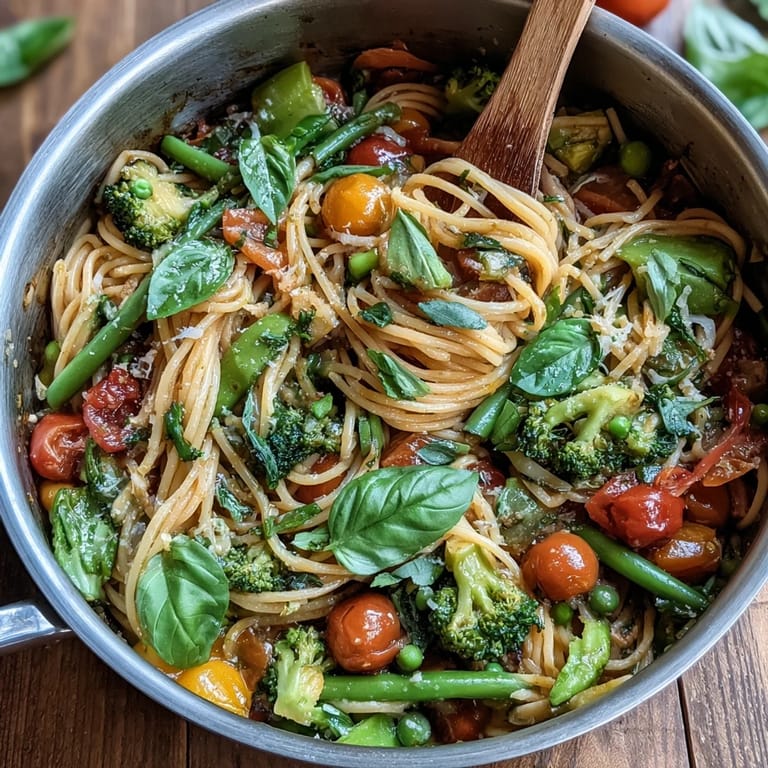
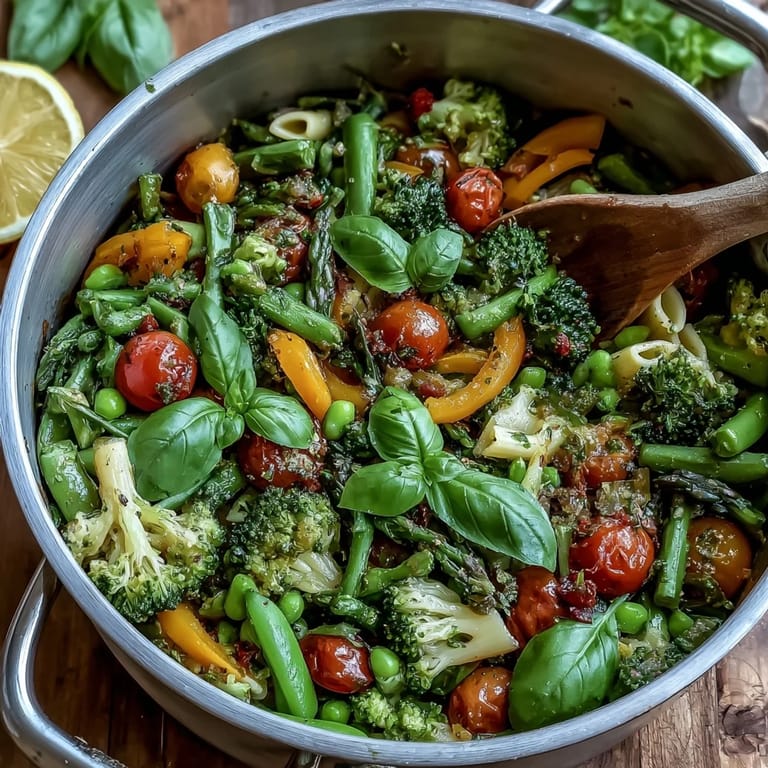
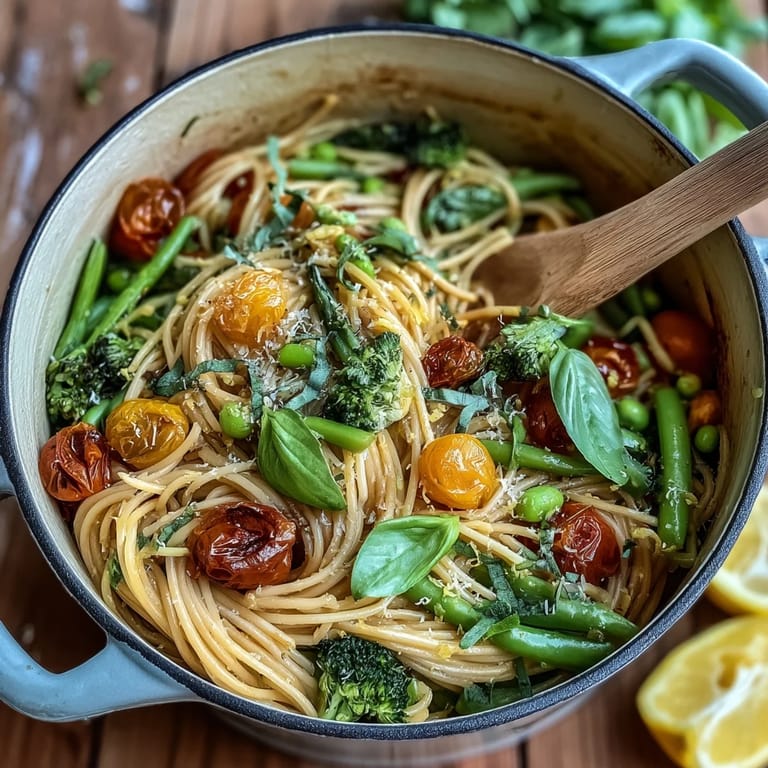
 There's something magical about watching a single pot transform into a complete meal right before your eyes. One afternoon, I was craving something bright and satisfying but absolutely dreading the mountain of dishes waiting in the sink. That's when I threw together everything I had—vibrant bell peppers, tender zucchini, a handful of cherry tomatoes—along with pasta and vegetable broth, and let the pot do the heavy lifting. What emerged was this stunning vegan pasta primavera, with lemon and basil singing through every bite, and somehow, just one pot to wash.
I made this for a friend who had just gone vegan and was worried she'd be eating sad, boring food forever. When she took that first bite and her eyes lit up, something shifted in that kitchen—she realized this wasn't about sacrifice at all. Now she texts me photos of her own versions, each one slightly different, and I love that this dish became her confidence builder.
Ingredients
- Dried penne or fusilli, 340 g (12 oz): Make sure you grab the vegan-certified box—most regular pastas are, but it's worth a quick label check since some manufacturers use egg.
- Red onion, 1 small, thinly sliced: Red onions stay slightly sweet and tender when they soften, adding a gentle color and flavor that complements the brightness ahead.
- Garlic, 2 cloves, minced: The minced pieces distribute flavor evenly through the broth rather than sitting in chunks.
- Red and yellow bell peppers, 1 small each, sliced: The mix of colors isn't just pretty—each brings slightly different sweetness levels that balance each other.
- Zucchini, 1 medium, sliced into half-moons: Half-moon shapes cook more evenly than chunks and won't turn into mush by the time the pasta is ready.
- Cherry tomatoes, 1 cup (150 g), halved: Halving them lets their juices release into the broth, creating a natural sauce without any cream.
- Snap peas or green beans, 1 cup (120 g), trimmed: These add a pleasant snap and keep their structure even in the simmering liquid.
- Broccoli florets, 1 cup (100 g): Small florets work best so they cook through without falling apart; save the stems for soup if you like.
- Low-sodium vegetable broth, 900 ml (4 cups): Low-sodium lets you control the saltiness and taste the vegetables themselves.
- Extra-virgin olive oil, 2 tbsp: Good olive oil makes itself known in the final dish, so don't skimp or use cooking spray here.
- Sea salt and freshly ground black pepper to taste: Taste as you go because the broth contributes saltiness too.
- Red pepper flakes, a pinch (optional): Just a whisper for those who like a tiny heat kick without overwhelming the delicate lemon flavor.
- Lemon, 1 (zest and juice): The zest goes in at the end for brightness; the juice adds acidity that makes everything taste more alive.
- Fresh basil leaves, ½ cup (15 g), torn by hand: Tearing rather than cutting prevents bruising and keeps the basil's color vibrant.
- Nutritional yeast, 2 tbsp (optional): A savory, almost cheesy background note that deepens flavor without dairy—try it once and you'll understand why some people swear by it.
Tired of Takeout? 🥡
Get 10 meals you can make faster than delivery arrives. Seriously.
One email. No spam. Unsubscribe anytime.
Instructions
- Heat the oil and build your flavor base:
- Pour olive oil into your large pot over medium heat and watch it shimmer before adding the onion and garlic. Let them soften for 2 to 3 minutes, stirring occasionally, until the onion turns translucent and the kitchen fills with that unmistakable savory smell.
- Add the vegetables and let them start cooking:
- Toss in all your prepped vegetables—peppers, zucchini, tomatoes, snap peas, and broccoli—and stir them around for 3 to 4 minutes. They'll begin to soften at the edges while staying mostly firm, which is exactly what you want.
- Pour in the pasta and broth, then bring it together:
- Add the dried pasta directly to the pot along with the vegetable broth, salt, pepper, and red pepper flakes if using. Stir everything well so the pasta isn't sitting in clumps, then turn the heat up to get it boiling.
- Simmer gently until the pasta drinks up the broth:
- Once it boils, drop the heat to a gentle simmer and let it bubble away uncovered for 10 to 12 minutes, stirring frequently to prevent sticking. The pasta will gradually absorb the broth and soften while the vegetables release their juices, creating a light, flavorful sauce.
- Finish with brightness and herbs:
- Remove the pot from heat and stir in the lemon zest, lemon juice, fresh basil, and nutritional yeast if you're using it. Taste and adjust the salt and pepper because lemon and basil sometimes reveal that you want just a touch more seasoning.
- Serve while everything is warm and aromatic:
- Spoon it into bowls right away and drizzle with a little extra olive oil if you'd like, then scatter more basil on top.
 Save to Pinterest
 I realized while making this one winter evening that one-pot meals have a quiet power—they're not flashy or complicated, but they gather people around a table without all the fuss. There's something honest about a dish like this.
When to Use Seasonal Vegetables
Summer begs for snap peas and cherry tomatoes that taste like pure sunshine, while spring might call for tender asparagus and fresh peas. In autumn, try roasted root vegetables or kale, and winter welcomes hearty broccoli and Brussels sprouts. The beauty of this pot is its flexibility—just keep your vegetables in roughly the same size range so they cook evenly, and remember that delicate greens like spinach should go in during the last minute so they don't turn into sad strings.
Making It Your Own
One friend always adds a handful of white beans for extra protein and heartiness, which turns the whole thing into something closer to minestrone. Another swears by a splash of white wine instead of a portion of the broth for a more wine-bar vibe. You could toast some pine nuts or sprinkle vegan parmesan on top if you want richness and texture, or keep it simple and let the vegetables be the stars. The point is that this recipe is a canvas more than a rulebook.
Pairing and Serving Ideas
A crisp Sauvignon Blanc pairs beautifully if you enjoy wine with dinner, and sparkling water with fresh lemon feels equally celebratory. This dish loves company—serve it in shallow bowls so the broth pools slightly and the lemon aroma wafts up as people lift their spoons. A simple side salad with mustard vinaigrette cuts through the richness, or just serve it on its own because honestly, everything you need is already in that pot.
- Pour a little extra-virgin olive oil and fresh basil on top just before serving for a restaurant-quality finish.
- Leftovers taste even better the next day as flavors meld, though you might need to add a splash of vegetable broth if the pasta has absorbed everything.
- This meal comes together fastest when you prep all your vegetables while the onion and garlic soften, so gather everything before you start cooking.
 Save to Pinterest
 This pasta reminds me that the best meals don't demand much, just good ingredients and a little attention. It's become the recipe I reach for when I want to feel nourished without feeling burdened.
Recipe Questions
- → Can I use different vegetables?
Yes, substitute seasonal vegetables like asparagus, peas, spinach, or green beans based on what's available. The cooking method works well with most quick-cooking vegetables.
- → Is this pasta gluten-free?
The dish can be made gluten-free by using gluten-free pasta. Always check that your vegetable broth and other ingredients are certified gluten-free.
- → How do I store leftovers?
Store in an airtight container in the refrigerator for up to 3 days. Reheat with a splash of water or broth to loosen the pasta.
- → Can I add protein?
Yes, add white beans, chickpeas, or tofu during the last 5 minutes of cooking. Vegan sausage or tempeh also work well.
- → What type of pasta works best?
Short pasta shapes like penne, fusilli, rotini, or farfalle hold up well in one-pot cooking and absorb the vegetable broth effectively.
- → Can I make this ahead?
The vegetables can be prepped in advance and stored separately. The dish is best cooked fresh but leftovers reheat well for meal prep.