 Save to Pinterest
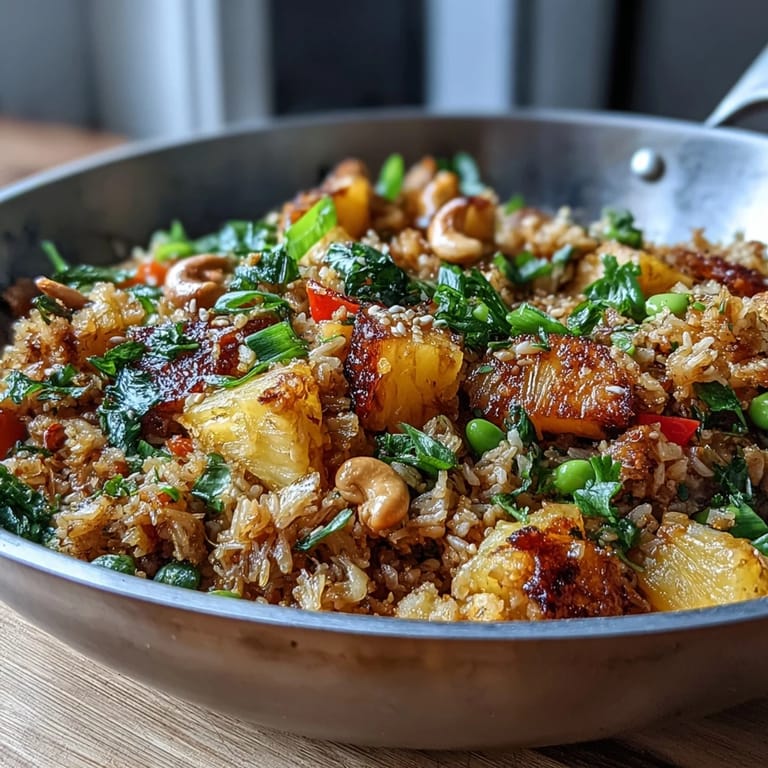
 There's something about the sizzle of a hot wok that makes me move faster in the kitchen. One Tuesday evening, I was craving something bright and satisfying, but my usual rice felt heavy. I grabbed a head of cauliflower on impulse, pulsed it into grains, and thirty minutes later had created something that tasted nothing like a compromise. The pineapple chunks caught the heat just right, turning golden at the edges, and suddenly I understood why this bowl kept appearing on my friends' dinner tables.
I made this for a potluck where half the guests were vegan and the other half were skeptics. Someone asked for seconds before finishing their first plate, and a non-believer admitted the pineapple completely changed how they thought about cauliflower. That's when I knew this recipe was doing something right.
Ingredients
- Cauliflower, riced: This is your rice substitute, and the texture matters more than you'd think—pulse it in a food processor until it's about the size of couscous, not powder or chunks.
- Pineapple, diced: Use fresh if you can because those caramelized edges are everything, though canned works when life gets real.
- Edamame: These little green beans bring protein and a subtle sweetness that anchors the whole dish without screaming soy.
- Red bell pepper: The color isn't just pretty—it adds a crisp sweetness that balances the earthier vegetables.
- Green onions: Split them—white parts go in early for base flavor, green tops at the end for freshness and a little bite.
- Garlic and ginger: These two are your flavor foundation, so don't skip them or use jarred versions if you can help it.
- Carrot, diced: Keeps its texture better than you'd expect and adds natural sweetness that plays nicely with pineapple.
- Peas: Frozen works beautifully here and thaws from the heat of the pan.
- Tamari or soy sauce: This is your salt and umami hit—go gluten-free if needed, and don't cheap out on quality.
- Toasted sesame oil: A small amount goes a long way, and it's the secret ingredient that makes people ask what you did differently.
- Fresh ginger: Grate it just before you cook so the aroma hits you in the face—that's how you know it's fresh.
- Rice vinegar: Adds brightness without the sharp bite of regular vinegar, and keeps everything balanced.
- Sriracha or chili-garlic sauce: Optional but recommended for depth—even if you don't like spice, a teaspoon adds complexity.
- Cashews or peanuts: Toasted nuts add texture and richness that makes this feel like an actual restaurant dish.
- Fresh cilantro or basil: Cilantro is traditional, but basil works if that's what you have or prefer.
- Lime wedges: These are not decoration—they're essential for brightening everything at the last second.
Tired of Takeout? 🥡
Get 10 meals you can make faster than delivery arrives. Seriously.
One email. No spam. Unsubscribe anytime.
Instructions
- Rice your cauliflower the right way:
- Cut your cauliflower into florets and pulse them in a food processor in batches, about ten seconds at a time, until they look like rice grains—not fine powder and definitely not chunky. This matters because uneven sizes cook differently and ruin the texture.
- Get your pan screaming hot:
- Pour that sesame oil into a large nonstick skillet or wok over medium-high heat and let it shimmer for a solid minute. You'll see the oil start moving differently across the pan when it's ready.
- Build your flavor base:
- Add minced garlic, grated ginger, and the white parts of your sliced green onions to the hot oil, stirring constantly for about a minute until your kitchen smells absolutely incredible. Don't let anything brown or burn here—you want fragrance, not bitterness.
- Cook the firmer vegetables first:
- Toss in your diced carrot and red bell pepper, stirring every ten seconds or so for two to three minutes until they're just starting to soften but still have some crunch. You want them cooked through but not sad and limp.
- Add the cauliflower rice and let it do its thing:
- Dump in all your riced cauliflower and stir constantly, breaking up any clumps as you go, for four to five minutes until it's tender but hasn't turned into mush. Taste a piece—it should have a little firmness left but not be raw.
- Bring in the other vegetables and fruit:
- Add your peas, edamame, and pineapple chunks all at once, stirring gently for two to three minutes until everything is warmed through and the pineapple has started to caramelize slightly on the edges. You're not cooking them further—just heating them and letting them mingle with everything else.
- Season aggressively:
- Pour in the tamari, rice vinegar, and sriracha if you're using it, tossing everything constantly for about a minute until every grain of cauliflower is coated and glistening. Add salt and black pepper to taste, keeping in mind that tamari is already salty, so go easy at first.
- Finish with freshness:
- Remove from heat and stir in the green parts of your green onions and half the cilantro, letting the residual heat just wilt them slightly without cooking them completely. The brightness here matters.
- Serve and garnish generously:
- Divide among bowls and top with your chopped cashews or peanuts, remaining cilantro, and a lime wedge on the side. Squeeze that lime over everything just before eating—it changes the whole game.
 Save to Pinterest
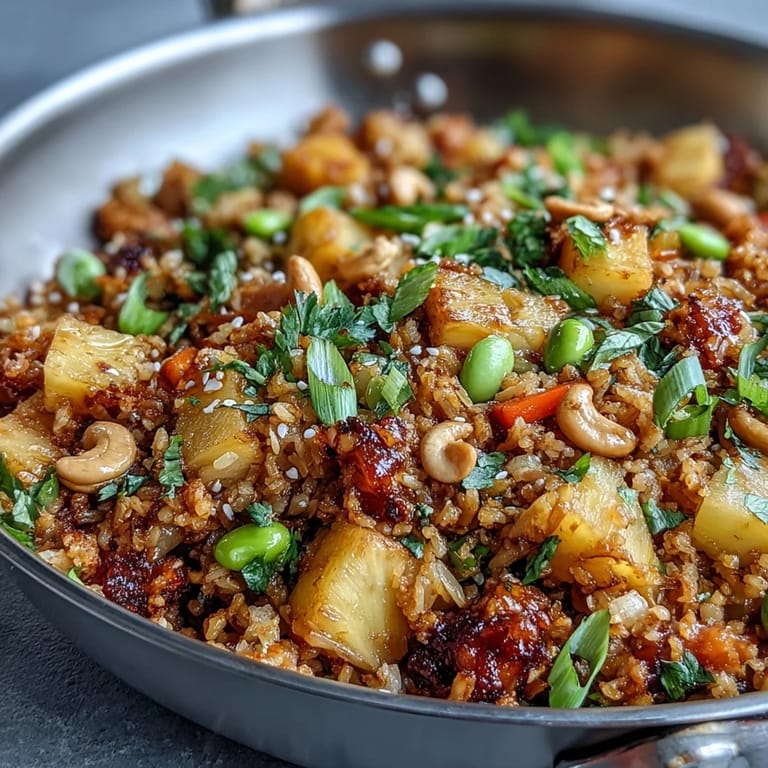
 This dish became my go-to when I needed something that felt special but didn't require complicated technique or hours of prep. There's joy in the simplicity of it, in how something that looks this vibrant on the plate also happens to taste exactly as good as it looks.
When to Add Extra Vegetables
Water chestnuts and snap peas are my favorite additions because they maintain their crunch even after hitting the heat, which contrasts beautifully with the softer cauliflower rice. If you're adding anything extra, do it when you add the carrot and bell pepper so it has time to cook slightly and absorb the surrounding flavors. Mushrooms, broccoli, and even a handful of bok choy work wonderfully if that's what you have on hand.
Protein Swaps and Additions
Edamame gives you a gentle protein boost, but tofu cubes are brilliant if you want something heartier and more traditional to stir-fried rice. Pan-fry your tofu separately in a little sesame oil until it's golden, then fold it in at the end so it keeps its structure and doesn't break apart. Cashews on their own actually provide more protein than most people realize, so don't underestimate the garnish as part of the nutrition equation.
Serving Ideas and Storage
Hollowing out a fresh pineapple and serving this mixture inside is admittedly a showstopper move, though be warned that the warm rice against the cold pineapple flesh creates condensation that can make things watery if it sits too long. Leftovers keep beautifully in the refrigerator for up to three days, and you can reheat them gently in a skillet with a splash of sesame oil to restore some of that fried-rice texture. Some people swear by eating the cold leftovers straight from the container the next day, which tells you something about how well balanced the flavors are.
- If you're meal prepping, let the rice cool completely before storing it to prevent moisture buildup and sogginess.
- A squeeze of fresh lime juice when reheating brings back the brightness that sometimes fades in the fridge.
- This freezes reasonably well for up to a month if you want to make a double batch and save some for desperate weeknights.
 Save to Pinterest
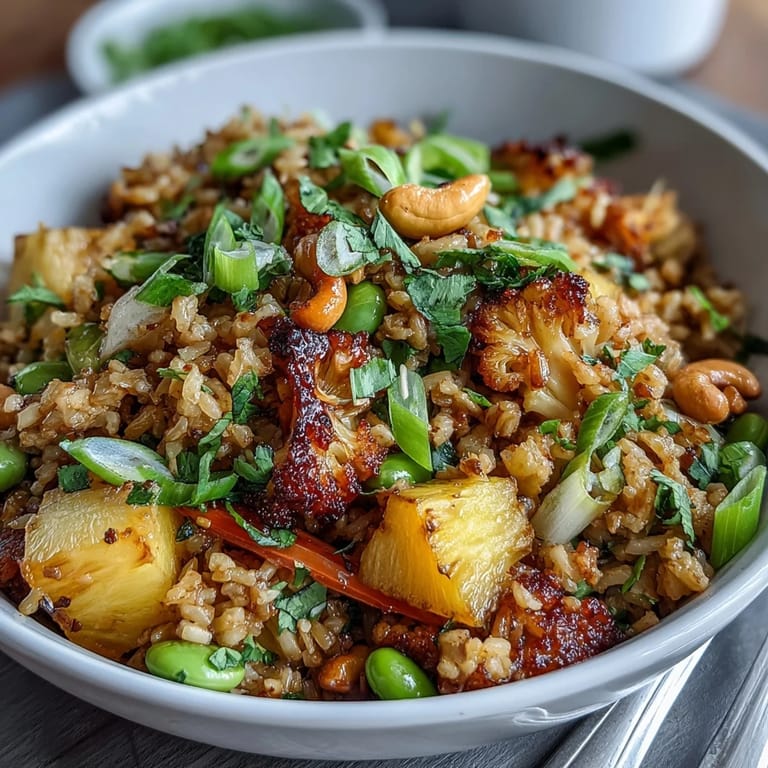
 This vegan fried rice has a way of surprising people who think they don't like vegetables, which is maybe the best compliment any dish can receive. Make it once and you'll understand why it keeps finding its way back onto my weekly menu.
Recipe Questions
- → Can I substitute edamame with another protein?
Yes, firm tofu cubes work well as a plant-based protein alternative, maintaining the dish's balance and texture.
- → Is fresh pineapple better than canned for this dish?
Both can be used; fresh pineapple offers a brighter, juicier flavor, while canned should be drained to prevent excess moisture.
- → How can I make this dish spicier?
Adding extra sriracha or chili-garlic sauce during cooking can easily increase the heat and flavor depth.
- → What is the best way to rice cauliflower without a processor?
A box grater can be used to grate the cauliflower into rice-sized pieces if a food processor isn’t available.
- → Can this be prepared ahead and reheated?
Yes, leftovers keep well refrigerated up to three days and can be gently reheated on the stove or microwave.