 Save to Pinterest
 I discovered this dish during a late summer evening at a tiny bistro in Lyon, where the chef arranged vegetables so artfully that I actually hesitated before disrupting the spiral with my fork. There was something magical about the way each slice caught the light, and I realized then that some of the most memorable meals aren't just about flavor—they're about that moment when beauty and nourishment become one. I've been recreating that magic in my own kitchen ever since, and I want to share this with you.
I remember making this for my sister's dinner party last spring, watching her guests gasp a little when I brought it to the table. One friend said it was too beautiful to eat, but then they couldn't stop. That's when I knew this spiral wasn't just a presentation trick—it was genuine theater in the best way.
Ingredients
- 1 small eggplant, thinly sliced lengthwise: Eggplant gives you depth and a subtle earthiness that grounds the lighter vegetables. I learned to slice it lengthwise because it creates those beautiful long ribbons that spiral naturally—crosswise slices just don't have the same elegance.
- 1 medium zucchini, thinly sliced lengthwise: The workhorse vegetable here, mild and pliable. It becomes almost silky after roasting, the perfect canvas for the colors around it.
- 1 red bell pepper, seeded and thinly sliced: Your brightness and sweetness—don't skip this. The red color is what makes people stop and look before they even taste.
- 1 yellow squash, thinly sliced lengthwise: This adds warmth and a gentle sweetness. Summer on a plate, honestly.
- 1 small carrot, peeled and thinly sliced lengthwise: The surprise element that adds a hint of earthiness and natural sweetness. It roasts beautifully and stays firm enough to keep its shape in the spiral.
- 100 g goat cheese, softened: This is the soul of the dish. The tangy creaminess makes the whole thing come alive. Make sure it's truly soft before you mix it—cold cheese won't blend smoothly.
- 2 tbsp crème fraîche: This loosens the goat cheese and makes it spreadable without losing its character. It also adds a subtle richness that ties everything together.
- 2 tbsp fresh basil leaves, finely chopped: Use fresh basil, never dried. The difference is night and day. Add it just before assembling so it stays vibrant.
- 1 tbsp fresh thyme leaves: Thyme brings an understated sophistication. Those little leaves scatter throughout the cheese mixture and bloom when you bite into them.
- 2 tbsp olive oil: Good olive oil for brushing—it needs to coat every slice so they roast evenly and become pliable.
- ½ tsp sea salt and ¼ tsp freshly ground black pepper: These are non-negotiable. Taste as you go.
- 1 tbsp pine nuts, lightly toasted: Toast them yourself in a dry pan for one minute—they go from ordinary to addictive. They add a buttery crunch that wakes up every bite.
- Microgreens, for garnish (optional): These finish the dish with a whisper of sophistication and a peppery edge. Optional but worth it.
Tired of Takeout? 🥡
Get 10 meals you can make faster than delivery arrives. Seriously.
One email. No spam. Unsubscribe anytime.
Instructions
- Prepare your stage:
- Preheat your oven to 200°C (400°F) and line a baking tray with parchment paper. This matters more than you might think—it keeps everything from sticking and makes cleanup easier so you can focus on the artistry.
- Slice with intention:
- Using a sharp chef's knife or mandoline, slice each vegetable lengthwise into thin, even pieces. Aim for about the thickness of a coin—thin enough to be tender, thick enough to hold their shape. As you slice, arrange them on the tray in a single layer, not overlapping yet.
- Oil and season:
- Gently brush each slice with olive oil on both sides. This is a light hand job, not a drenching. Sprinkle with salt and pepper. Feel the vegetables—they should feel supple to touch, not wet.
- The roast that matters:
- Slide the tray into your preheated oven for 10 to 12 minutes. You're not cooking them through; you're making them pliable so they'll bend into your spiral without cracking. They should still have a tiny bit of resistance when you bend one gently. Remove them and let them cool just enough to handle—warm vegetables are more cooperative.
- Create your cheese foundation:
- While the vegetables cool, combine the softened goat cheese, crème fraîche, finely chopped basil, and thyme leaves in a bowl. Stir until completely smooth. Taste it. Does it sing? Add a pinch more salt if needed. This mixture is your spiral's secret.
- The spiral begins:
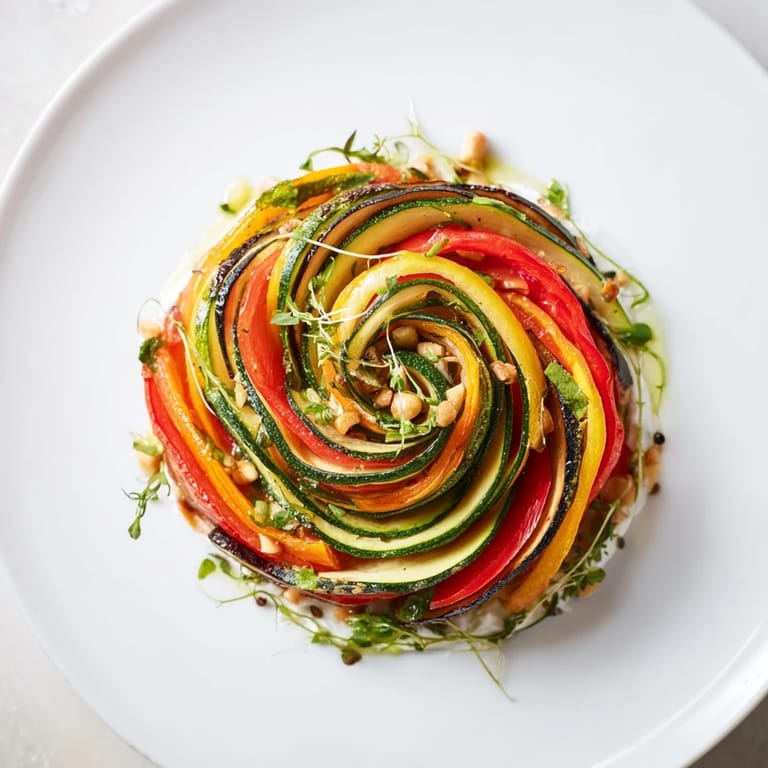
- On a large serving plate, start at the very center and spread a thin layer of the cheese mixture in a continuous spiral, working outward toward the edge. Think of it like a snail shell—steady, confident movements, even pressure. The spiral should be about ½ inch wide as you go.
- Layer your masterpiece:
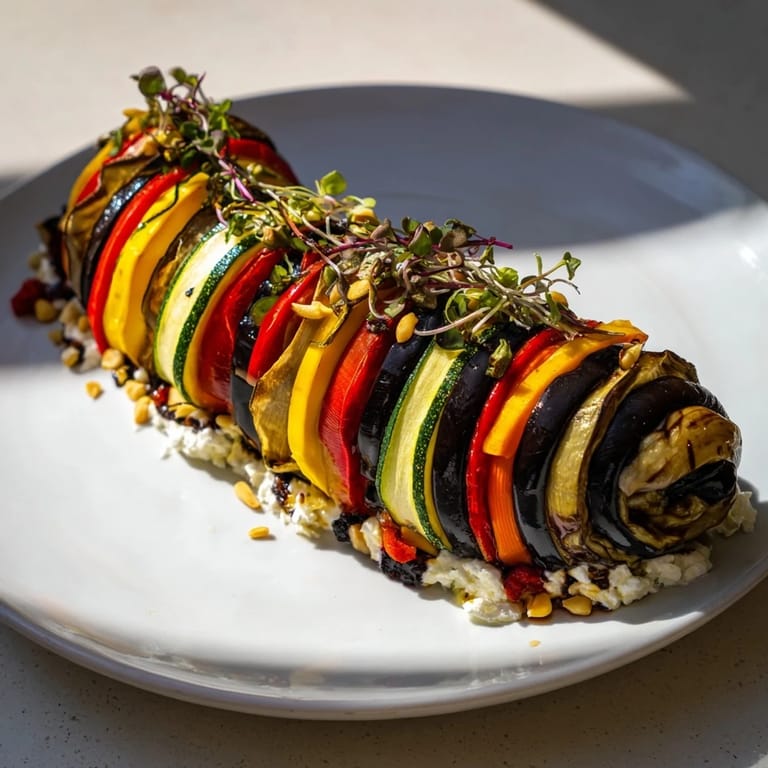
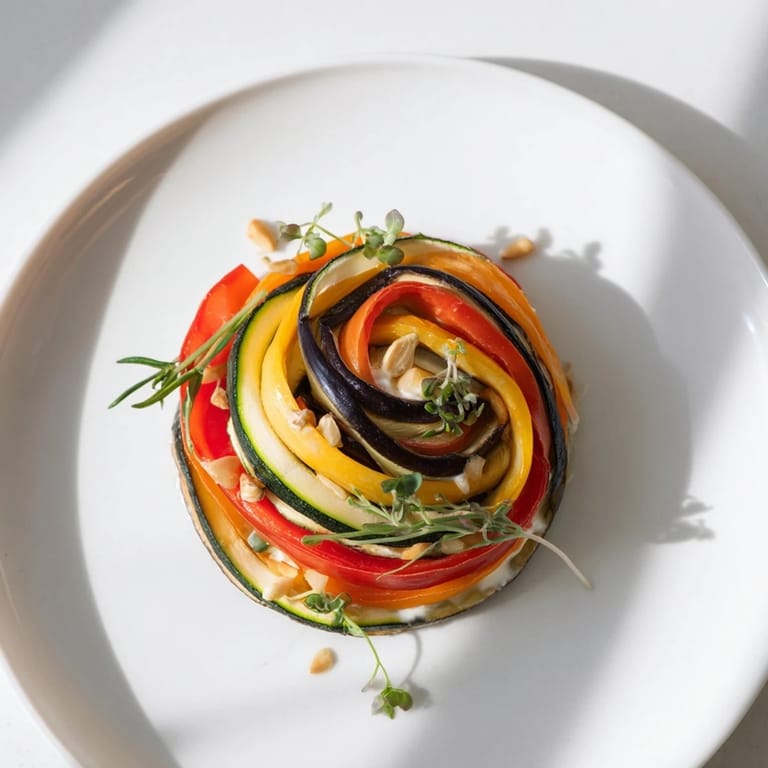
- Now, starting at the center again, begin arranging your roasted vegetable slices directly over the cheese spiral, overlapping them slightly as you go around. Alternate your colors intentionally—red, then yellow, then green, then purple, creating a visual rhythm that pulls the eye outward. Each slice should nestle against the one before it. This is where patience becomes an art form. If a slice tears slightly, just overlap it a bit more—no one will know.
- The finishing touches:
- Sprinkle your toasted pine nuts across the spiral in a gentle scatter. If you have microgreens, arrange them delicately on top, adding freshness and a touch of green punctuation to your work. Step back and look at what you've created.
- Serve with confidence:
- Bring this to the table at room temperature. Serve it as an elegant appetizer or a beautiful light lunch. As you cut slices, the spiral will unwind slightly—this is part of its charm.
 Save to Pinterest
 What struck me most about this dish, the first time I served it, was how it transformed a simple appetizer into a moment of togetherness. People slowed down. They looked before they ate. They talked about the colors, the flavors, the care that went into it. That's when I understood that cooking like this—with attention to both beauty and taste—is a form of love.
Choosing Your Vegetables
The vegetables here aren't sacred—they're a starting point. I chose these five because they roast at the same temperature and offer a rainbow of natural colors. But if your farmer's market offers beautiful beets, roast them separately (they'll stain everything otherwise) and add them to your spiral. Sweet potato slices bring warmth and earthiness. Thin strips of fennel add an anise whisper that some people find absolutely addictive. Zucchini and yellow squash are your gentle anchors; eggplant and carrot are your flavor depth. Red pepper is your joy.
Making It Your Own
This recipe is vegetarian, but it welcomes variations like a good conversation welcomes new voices. For vegan friends, swap the goat cheese and crème fraîche with a quality plant-based cheese spread—cashew-based ones have a creaminess that works beautifully here. Add roasted garlic to your cheese mixture if you want richness. Mix in pine nuts directly into the cheese for texture, or save them for garnish as a surprise. Some people scatter crispy breadcrumbs on top for contrast. Others add a drizzle of aged balsamic vinegar to the finished spiral—just a whisper across the top.
Serving and Storing
This dish is meant to be served at room temperature, which is wonderful because you can make it earlier in the day and simply bring it out when guests arrive. It actually tastes better this way—the flavors have time to mingle and introduce themselves properly. Store any leftovers covered in the refrigerator, though honestly, there are rarely leftovers. If you do have some, enjoy it cold the next day with crusty bread or crackers, which provide a textural contrast that makes each bite interesting. The spiral keeps for about two days, but it's best eaten within the first day while the vegetables still have some spring to them.
- Serve alongside crusty artisan bread or your favorite crackers to complete the experience
- A simple green salad dressed with lemon vinaigrette is the perfect counterpoint to the richness of the cheese
- This pairs beautifully with a crisp white wine or even a light rosé if you're feeling festive
 Save to Pinterest
 This snail shell spiral is proof that the most elegant dishes often come from the simplest ideas. Take your time with it, taste everything as you go, and remember: the spiral is just the beginning of the conversation you're having with the people you're feeding.
Recipe Questions
- → How do I prepare the vegetables for the spiral?
Slice the eggplant, zucchini, bell pepper, yellow squash, and carrot thinly lengthwise, then roast them until pliable but not browned.
- → What cheese complements this dish best?
Soft goat cheese mixed with crème fraîche provides a creamy, tangy base that enhances the vegetables' flavors.
- → Can I make a vegan version of this dish?
Yes, substitute the goat cheese and crème fraîche with a plant-based cheese spread for a vegan-friendly alternative.
- → What is the best way to arrange the spiral?
Start spreading the cheese mixture in the center, then layer the roasted vegetable slices overlapping slightly in a tight continuous spiral outward.
- → Any tips for added flavor or garnish?
Sprinkle lightly toasted pine nuts for crunch and add microgreens for a fresh, decorative touch.