 Save to Pinterest
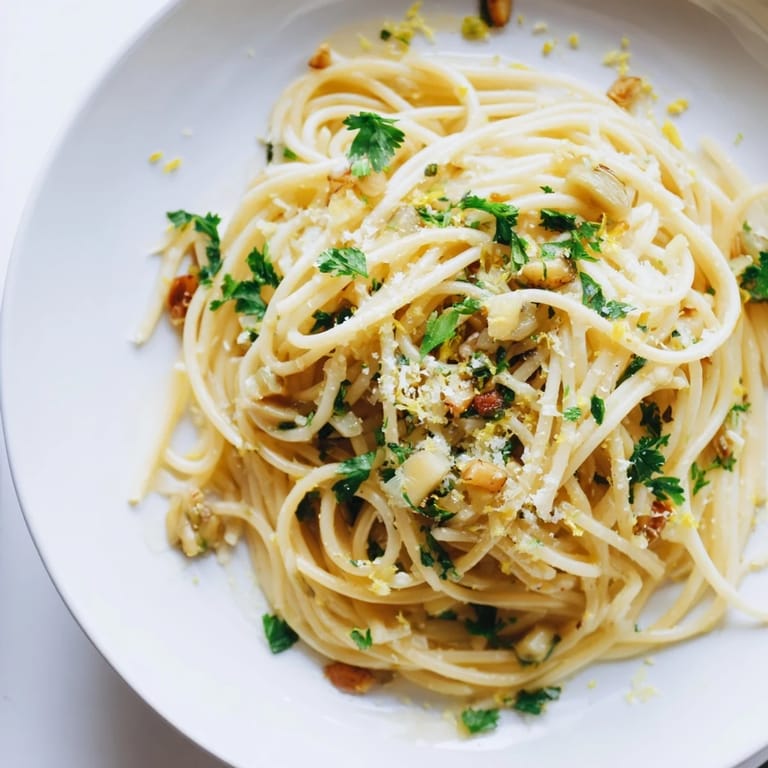
 The first time I roasted garlic specifically for a pasta dish, my kitchen filled with this incredible aroma that had my roommate wandering in from her room, asking what smelled so good. We ended up standing around the oven door, watching the cloves turn golden, completely forgetting we were supposed to be studying for finals. That night became a tradition whenever we needed comfort food that felt fancy without the fuss.
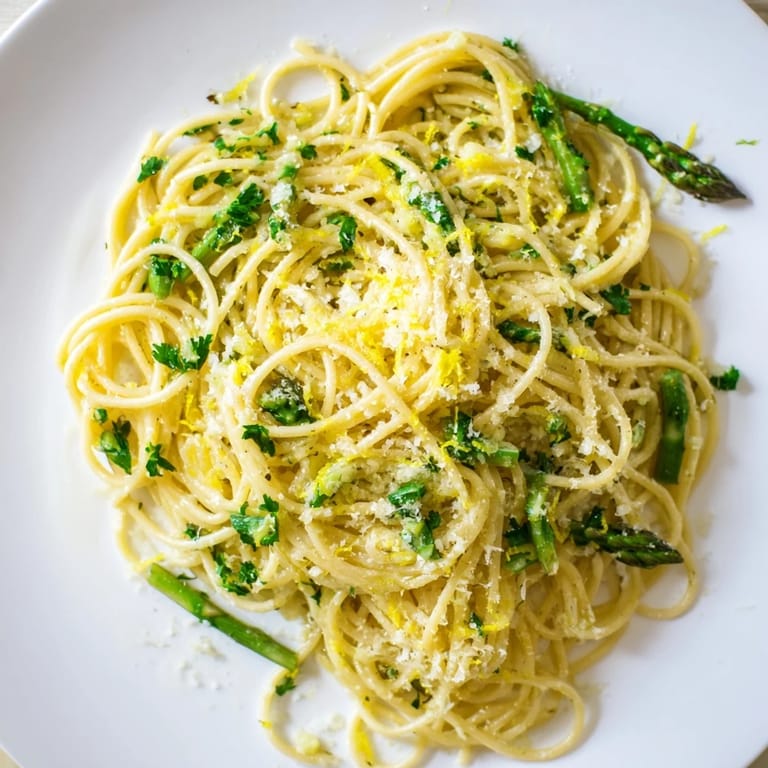
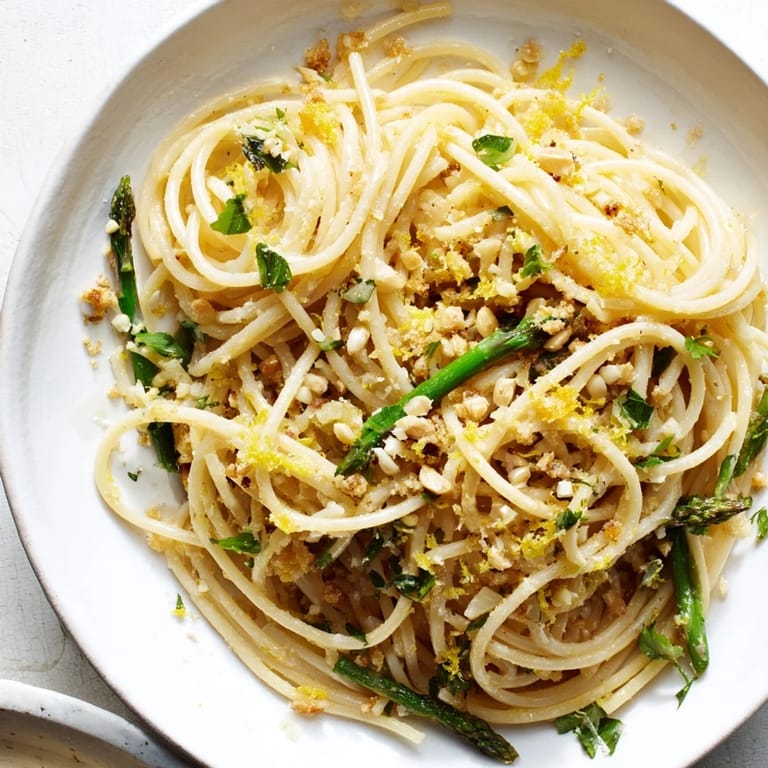
Last spring, I made this for a dinner party where everyone claimed they hated asparagus. I did not tell them it was in there until they had already taken their first bites. Watching my friend Sarah literally scrape her plate clean and then ask for seconds was the kind of kitchen victory that keeps you cooking for people.
Ingredients
- 1 large head garlic: Roasting whole cloves mellows the sharpness into something sweet and almost buttery, completely different from raw garlic
- 1 bunch fresh asparagus: Look for bright green stalks with tight tips, and snap off the woody ends rather than cutting them
- 12 oz spaghetti: The thin strands coat perfectly with the garlic oil sauce, though bucatini works beautifully too
- 1/4 cup extra-virgin olive oil: This is your flavor carrier, so use something good enough to drizzle on bread
- 1/2 teaspoon sea salt: Fine for the pasta water, flaky salt is nice for finishing if you have it
- 1/4 teaspoon freshly ground black pepper: Grind it right before you cook, the difference is noticeable
- 1/4 teaspoon red pepper flakes: Optional but adds a gentle warmth that makes everything pop
- 1/2 cup grated Parmesan cheese: The salty, nutty element that ties the vegetables and pasta together
- Zest of 1 lemon: Do not skip this, it cuts through the richness and wakes up the whole dish
- 2 tablespoons fresh parsley: Adds a fresh, grassy note that brightens the final bowl
Tired of Takeout? 🥡
Get 10 meals you can make faster than delivery arrives. Seriously.
One email. No spam. Unsubscribe anytime.
Instructions
- Roast the garlic until golden:
- Preheat oven to 400°F, slice the top off the garlic head, drizzle with olive oil, wrap in foil, and roast for 30 minutes until cloves are soft and caramelized.
- Add the asparagus halfway through:
- After 15 minutes of garlic roasting, toss asparagus on a baking sheet with olive oil, salt, and pepper, then roast for 12-15 minutes until tender but still bright green.
- Cook the pasta:
- Boil a large pot of salted water and cook spaghetti until al dente, then reserve 1/2 cup pasta water before draining.
- Prep the roasted garlic:
- Squeeze the soft cloves from their skins and mash gently with a fork until it becomes a fragrant paste.
- Build the sauce base:
- Heat 1/4 cup olive oil in a large skillet over medium heat, add the mashed garlic, and sauté for 1-2 minutes until the kitchen smells amazing.
- Combine everything:
- Add the roasted asparagus and drained pasta to the skillet, tossing together and adding pasta water as needed for a silky consistency.
- Finish with flavor:
- Stir in Parmesan, lemon zest, parsley, and red pepper flakes, then season with salt and pepper to taste.
- Serve immediately:
- Plate in warm bowls and pass extra Parmesan and parsley at the table.
 Save to Pinterest
 My mother in law asked for this recipe after I made it for Easter dinner. I sent it to her the next day, and she texted back that she had already made it twice that week. Sometimes the simplest dishes are the ones that stick around the longest.
Getting The Roast Right
I have learned that the difference between good roasted garlic and great roasted garlic is about five minutes and paying attention. You want those cloves to turn golden brown, not dark, and they should squeeze out like soft butter. If they are still white and firm, they need more time. The texture matters as much as the flavor here.
Making It Your Own
This pasta is incredibly forgiving, which is probably why it is become my weeknight standby. I have added cherry tomatoes when asparagus was not in season, tossed in shredded chicken for protein, and used pecorino instead of Parmesan when that was what I had in the fridge. The garlic olive oil base works with almost anything you throw at it.
Wine Pairing And Serving
A crisp white wine like Sauvignon Blanc cuts through the roasted garlic and complements the asparagus perfectly. I usually serve this with a simple green salad dressed with nothing but lemon juice and olive oil. It keeps the meal light and lets the pasta shine without competing flavors.
- Use a box grater for the Parmesan rather than pre shredded, it melts better
- Warm your serving bowls in the oven while the pasta cooks
- Extra lemon wedges at the table let people adjust brightness to their taste
 Save to Pinterest
 Every time I make this pasta, I am reminded that the best dishes come from simple ingredients treated with respect and patience. Good food does not have to be complicated.
Recipe Questions
- → How do I know when the garlic is properly roasted?
The garlic should be roasted for about 30 minutes at 400°F until the cloves are soft and golden. You'll know it's ready when you can easily squeeze the cloves out of their skins with gentle pressure. They should be creamy and mellow, not burnt or too dark.
- → Can I prepare this dish ahead of time?
Yes, you can roast the garlic and asparagus up to 2 days ahead and store them in the refrigerator. Cook the pasta fresh just before serving, then combine all components while the pasta is still warm for the best texture and sauce consistency.
- → What's the best way to make this dish vegan?
Simply omit the Parmesan cheese or replace it with a plant-based alternative like nutritional yeast or vegan cheese. The pasta itself becomes naturally vegan without dairy, making this an excellent meat-free and dairy-free option.
- → Why reserve pasta water for this dish?
Pasta water contains starch that helps create a silky, cohesive sauce when combined with the olive oil and roasted garlic. It allows the sauce to cling better to the spaghetti and prevents the dish from feeling dry or greasy.
- → Can I use different vegetables instead of asparagus?
Absolutely. Roasted zucchini, green beans, broccoli, or spinach all work wonderfully with roasted garlic. Use similar quantities and roast for 12-15 minutes until tender, adjusting time based on vegetable size and thickness.
- → What wine pairs best with this dish?
A crisp Sauvignon Blanc complements the fresh lemon zest and tender asparagus beautifully. The wine's acidity balances the richness of the olive oil and roasted garlic, enhancing the overall spring flavors of the dish.