 Save to Pinterest
 There's something almost magical about the moment you unfold a croissant fresh from the oven and watch the steam rise from those impossibly thin, shattered layers. I stumbled into sourdough croissants almost by accident, really—my starter had been sitting on the counter looking neglected, and I had this wild idea to use it in something that needed serious lamination. That first batch taught me that tangy fermentation and butter-folded pastry were meant for each other, creating this unexpected depth that store-bought croissants could never touch.
I made these for my partner on a Saturday morning without telling them—just set the alarm for the final proof, did the bake, and pulled them out golden at dawn. Watching their face when they bit into one and the layers actually shattered, hearing that crisp crunch echo through the kitchen, made every fold and every temperature check completely worth it. That's when I knew this wasn't just a recipe; it was something I'd be making on every important morning.
Ingredients
- Bread flour (500 g): Use a high-protein bread flour rather than all-purpose—it gives you the structure needed to hold those beautiful laminations without tearing or becoming dense.
- Granulated sugar (60 g): Feeds the yeast and adds subtle sweetness; don't reduce it or your croissants will taste flat and one-dimensional.
- Fine sea salt (10 g): Precision matters here because salt strengthens gluten and controls fermentation speed—too much and you'll kill your rise, too little and the flavor disappears.
- Whole milk, cold (240 ml): Keep it genuinely cold from the fridge because warm milk will start activating your dough before you're ready, throwing off your timeline.
- Active sourdough starter at 100% hydration (100 g): This is your flavor engine and your leavening agent, so make sure it's bubbly and fed within a few hours of using it.
- Unsalted butter, softened (30 g for dough): This enriches the base dough and makes it more extensible so it doesn't shred when you fold in the butter block.
- Unsalted butter, cold (250 g for lamination): Absolutely must be cold and pliable but not hard—this is what creates those paper-thin, shattered layers everyone dreams about.
- Large egg (1) and milk (1 tbsp) for wash: The egg gives you that mahogany-brown sheen, and the milk keeps it from getting too dark or glossy.
Tired of Takeout? 🥡
Get 10 meals you can make faster than delivery arrives. Seriously.
One email. No spam. Unsubscribe anytime.
Instructions
- Build your dough foundation:
- Mix the flour, sugar, and salt in your bowl, then add the cold milk, sourdough starter, and softened butter. Knead for about 8 minutes until the dough is smooth and elastic—you'll feel the exact moment it stops being shaggy and becomes satiny. This is where patience pays off because a well-developed gluten network won't tear when you fold the butter later.
- Give it time to rest:
- Shape the dough into a rough rectangle, wrap it in plastic, and let it chill for at least 2 hours—overnight is even better because the cold relaxes the gluten and lets the flavor develop. This isn't laziness; this is strategy.
- Prepare your butter block:
- Place your cold butter between two sheets of parchment paper and pound it, then roll it into a 20 × 15 cm rectangle that's firm but not so hard it cracks when you fold. Chill it until it's the same temperature as your dough—you want them to work as equals, not one bullying the other.
- Execute the first fold (détrempe):
- Roll your cold dough into a 40 × 20 cm rectangle on a lightly floured surface, place the butter block on one half, fold the dough over it like you're closing a book, and seal the edges by pressing gently with your rolling pin. This seals in the butter so it doesn't escape during folding.
- First turn (letter fold):
- Turn the dough package 90 degrees so the seam faces you, then roll it out to 60 × 20 cm and fold it into thirds like a letter—fold the top third down, then fold the bottom third up over it. Wrap it and chill for 1 hour.
- Second and third turns:
- Repeat the exact same process: rotate 90 degrees, roll to 60 × 20 cm, fold into thirds, chill for 1 hour. After the third fold, wrap it again and refrigerate overnight—this is where the magic really happens as the layers set and your dough relaxes completely.
- Shape and cut:
- The next morning, roll your dough into a 60 × 30 cm rectangle about 5 mm thick and cut it into 12 long triangles using a sharp knife (a dull one will compress the layers and ruin your flakiness). Work quickly so the dough stays cool.
- Roll into crescents:
- Starting from the wide end of each triangle, roll it tightly toward the tip, then curve it slightly into a crescent shape with the tip tucked underneath. Place each one on a parchment-lined baking sheet with enough space between them—they'll nearly double in size.
- Final proof:
- Cover the baking sheet loosely with plastic or a towel and let the croissants proof at room temperature for 2-3 hours until they're visibly puffy and nearly doubled. You'll see the butter starting to glisten through the dough—that's your signal they're almost ready.
- Apply the egg wash and bake:
- Whisk the egg with milk and brush each croissant lightly—don't soak them or the layers will stick together. Bake at 200°C for 18-22 minutes until they're deep golden brown and you can hear them crackle when you tap the sheet.
- Cool and enjoy:
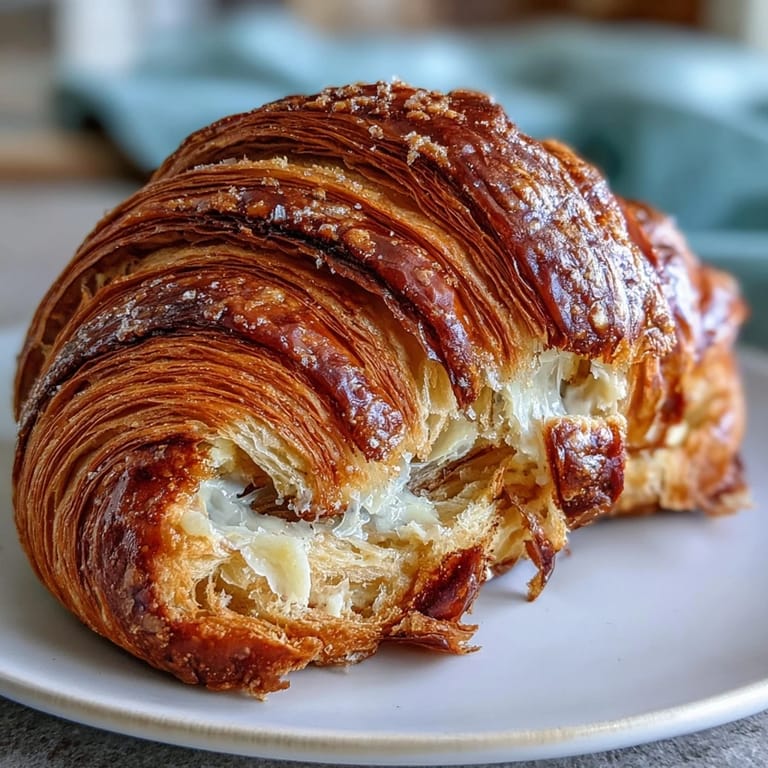
- Let them cool for just a few minutes before eating because the insides are molten with butter at first. Slightly cooled croissants are actually better because the layers have set enough to stay intact when you bite into them.
 Save to Pinterest
 My friend Sarah came over one evening and watched the entire process unfold, from me pulling the dough out of the fridge to the final proofing. She kept saying, "This is way too complicated," right until she tasted one warm croissant with a tiny smear of apricot jam. Suddenly she understood why people become obsessed with laminated dough, and now she texts me pictures of her attempts.
The Art of Lamination
Lamination sounds fancy and intimidating, but it's really just controlled folding that traps butter between layers of dough. The key is keeping everything cold enough that the butter doesn't meld into the dough before you've completed your folds. I learned this the hard way when I rushed through my first attempt on a warm day and ended up with something more like enriched bread than croissants—they still tasted good, but they taught me that patience isn't optional here.
Flavor Development Through Fermentation
Using sourdough starter instead of commercial yeast means your croissants develop complex flavors during the long, slow rise. The fermentation breaks down proteins and creates organic acids that add depth and that subtle tang you can't fake. This is also why the overnight rest matters so much—it's not just about gluten relaxation; it's about building flavor through time rather than rushing it with heat.
Storage and Reheating Tips
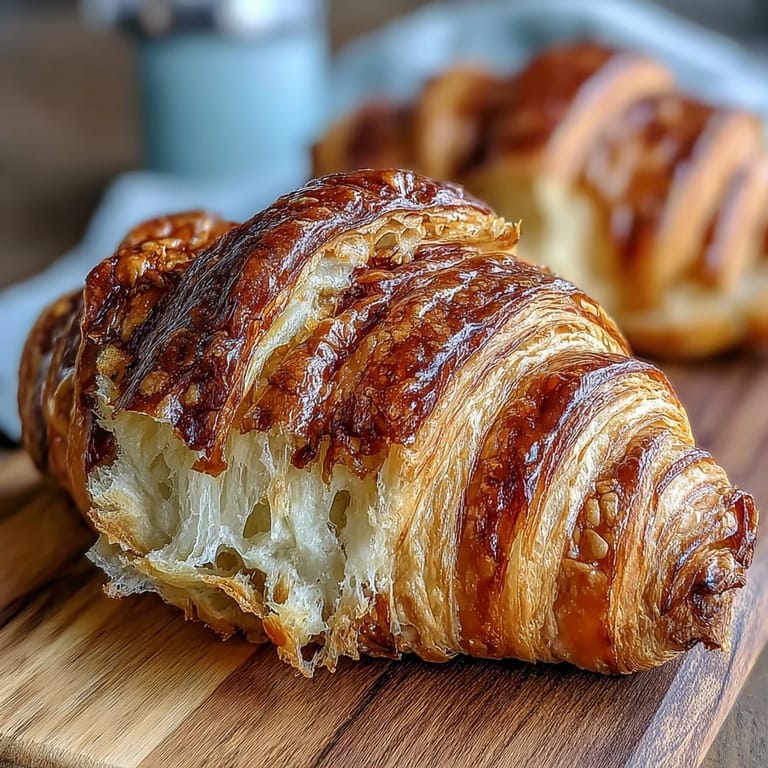
Croissants are genuinely best within a few hours of baking when they're still warm and the layers are pristine, but life doesn't always cooperate with your baking schedule. You can wrap baked croissants in foil and freeze them for up to two weeks, then reheat them in a 180°C oven for about 5 minutes until they're warm and the exterior crisps back up beautifully.
- Never store croissants in an airtight container at room temperature because they'll soften as they release moisture—paper bags are actually your friend.
- If you want to prepare ahead, you can freeze the shaped, unproofed croissants and proof them straight from frozen the next morning, adding about 30 minutes to your proof time.
- Day-old croissants taste better than you'd expect if you warm them properly, and honestly, they're perfect for making croissant French toast.
 Save to Pinterest
 Making croissants from scratch feels like joining a quiet, patient club where people understand that some things simply can't be rushed. Once you've pulled that first batch from the oven and heard the crisp snap of those shattered layers, you'll never look at the bakery case the same way again.
Recipe Questions
- → What role does the sourdough starter play?
It adds a tangy flavor and natural fermentation, contributing to the dough's texture and depth.
- → How is the butter incorporated for flaky layers?
Cold butter is rolled into the dough through repeated folding and chilling, creating distinct, flaky layers.
- → Can these croissants be made without an overnight rest?
The overnight fermentation develops complex flavor and improved texture, so it’s recommended but not mandatory.
- → How should croissants be stored after baking?
Store at room temperature for up to two days or freeze for longer keeping, reheating gently before serving.
- → Are there variations to make these savory?
Yes, fillings like cheese or ham can be added before rolling to create savory versions.