 Save to Pinterest
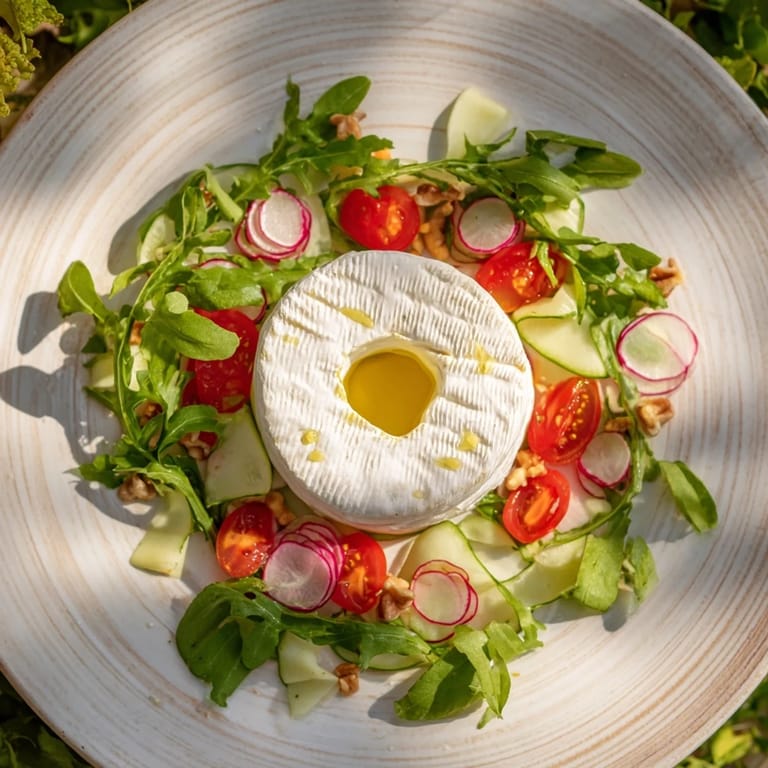
 I discovered this arrangement entirely by accident one evening when I was prepping ingredients for a dinner party and my hands moved faster than my planning. Instead of tossing everything together as usual, I'd already sliced and arranged half the vegetables in radiating lines across my board when I realized the visual pattern was far more striking than any mixed salad could be. The cheese wheel, sitting slightly elevated at the center, suddenly became the focal point of the entire composition, and I remember thinking: why not lean into this? That single moment of happy mistake transformed how I think about plating.
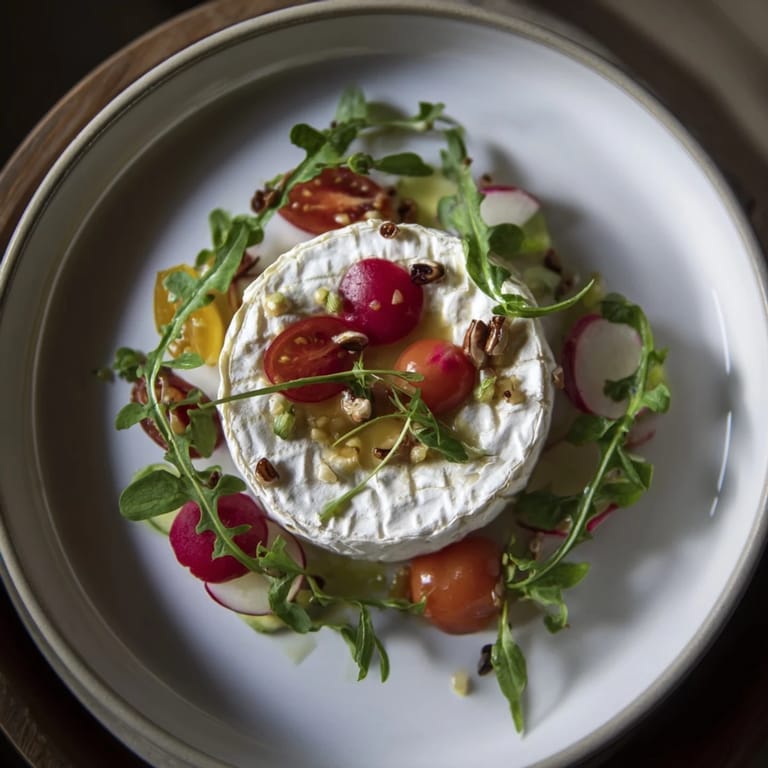
My cousin asked me to bring something "interesting" to Thanksgiving, and I'll admit I was nervous about serving what amounts to a very fancy, very expensive salad. But watching people lean over the board, pointing at the geometry of it all, debating which color to taste first—that's when I understood this wasn't about being fussy or pretentious. It was about making people slow down and actually look at their food, to notice the watermelon radish's pink striations and the way pomegranate seeds caught the light. Food became conversation.
Ingredients
- Baby arugula: Use it as your first line from the cheese outward—its peppery bite and delicate texture create that sweeping arc naturally.
- Cherry tomatoes, halved: Their round shape and bright red make them perfect anchors for the eye; halving them ensures they catch dressing pools without rolling away.
- Cucumber, thinly sliced: Slice these last-minute so they stay crisp and don't weep water across your board.
- Watermelon radish, thinly sliced: This is your surprise element—the pale pink and white interior contrasts beautifully when arranged in overlapping rows.
- Pomegranate seeds: Scatter these like jewels between other ingredients; they're as much visual punctuation as flavor.
- Toasted walnuts: Toast them fresh in a dry pan, and you'll catch that warm, almost buttery smell that changes everything about the final dish.
- Extra-virgin olive oil: Use something you'd actually taste on its own—this dressing is minimal, so the oil does the heavy lifting.
- White balsamic vinegar: It's milder and won't darken your carefully arranged ingredients, which matters more than you'd think.
- Honey: Just a teaspoon rounds out the acidity and adds a whisper of sweetness that lets the cheese shine.
- Dijon mustard: This tiny amount emulsifies the dressing and adds a subtle sharpness that plays beautifully against soft cheese.
- Artisanal cheese wheel: Choose something that's ripe and spreadable—a Saint-Marcellin at room temperature becomes almost silky, while Brie offers that familiar comfort everyone recognizes.
Tired of Takeout? 🥡
Get 10 meals you can make faster than delivery arrives. Seriously.
One email. No spam. Unsubscribe anytime.
Instructions
- Set your stage:
- Place the cheese wheel slightly off-center on your board, elevated on a small plate or pedestal so people can't miss it. This becomes your anchor point, the reason all the lines exist.
- Create the arugula arc:
- Arrange the baby arugula in a sweeping curve that radiates outward from the cheese, like you're drawing lines with your hands. The delicate leaves naturally follow direction without needing to be fussy.
- Layer the geometry:
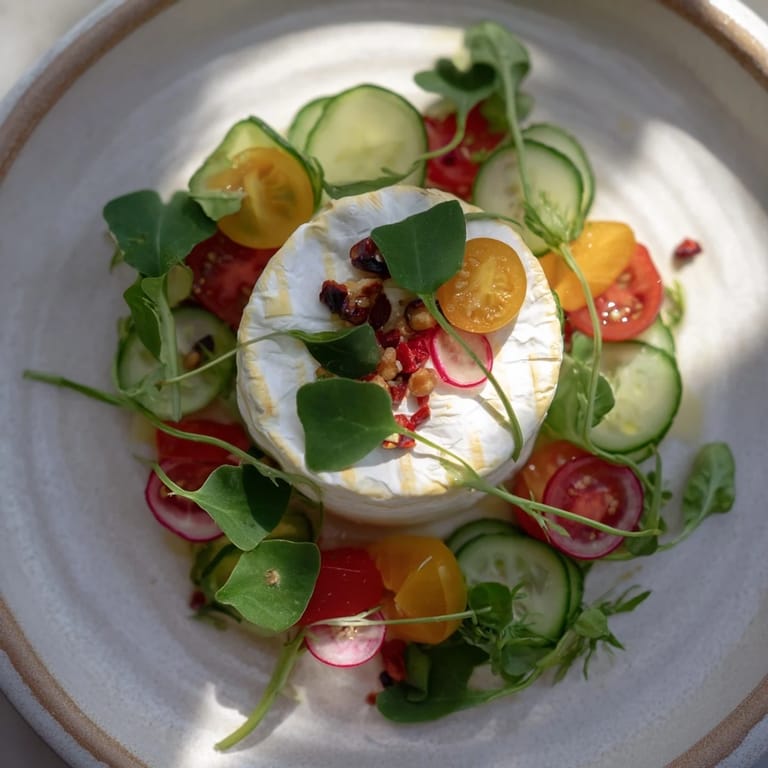
- Now add your tomatoes in an orderly row, angling them subtly toward the cheese, then cucumber slices in another row, and finally the watermelon radish in its own layer. Think of yourself as an architect arranging intention.
- Scatter the finishing touches:
- Distribute pomegranate seeds and walnuts across the gaps, maintaining that sense of everything pointing inward. Don't overthink placement here—a light hand looks more natural than perfect symmetry.
- Mix your dressing:
- Whisk the olive oil, white balsamic, honey, and Dijon mustard together in a small bowl until slightly emulsified and smooth. Taste it, adjust seasoning with salt and pepper, and remember you can always add more vinegar but you can't take it back.
- The gentle drizzle:
- Using a light hand (or even a squeeze bottle), drizzle the dressing in thin, deliberate streaks across the vegetables, carefully avoiding the cheese wheel itself. The cheese doesn't need dressing—it IS the sauce.
- Bring it to the table:
- Serve immediately while everything is crisp and the arrangement is still clean and defined. Hand people small plates and let them build their own bites, choosing which colors and flavors they want to pair together.
 Save to Pinterest
 There's a quiet magic that happens when people gather around food that's been arranged with intention. Someone will always ask about the cheese wheel, touching it gently like it's precious, and suddenly the whole meal becomes less about eating and more about experiencing. That's when you know you've done something right.
Choosing Your Cheese
The cheese wheel is the entire point, so choose something you genuinely love. I've used Saint-Marcellin when I want something delicate and nutty, Brie when I know most people at the table will recognize it and feel comfortable, and once, a local tomme that had such a funky, earthy character that it made everyone stop and really taste. The magic happens when you pick something that makes you excited before your guests even arrive. If you're shopping at a proper cheese counter, ask them what's ripe and spreadable that day—they'll know better than any recipe ever could.
The Visual Foundation
This salad lives or dies by arrangement, which sounds pretentious until you realize it's actually liberating. You're not worried about mixing flavors evenly or making sure every bite is balanced—you're creating a moment where people choose their own adventure. A watermelon radish's striations become a point of conversation, a pomegranate seed catches light in a way that makes someone smile. The board becomes a landscape, and people navigate it according to what calls to them. That agency, that permission to build your own plate, changes everything.
Beyond the Vegetarian Version
If you want to add protein, thin slices of prosciutto or smoked salmon drape beautifully between vegetable rows without disrupting the visual geometry. I've also scattered microgreens or edible flowers in the gaps when I wanted extra color impact—nasturtiums are peppery and gorgeous, while purple pansies feel almost jewel-like against the pale cucumber. The bones of this salad are flexible enough to accommodate your mood, your guests, what's in season, or what you found at the market that morning.
- Toast walnuts in a dry pan for two minutes before serving to intensify their flavor and crunch.
- If you can't find watermelon radish, use regular radishes or even thin apple slices for that crisp, slightly sweet element.
- Make the dressing up to two hours ahead, but dress the vegetables only moments before serving so nothing gets soggy.
 Save to Pinterest
 This salad taught me that sometimes the most interesting food isn't about complicated technique or rare ingredients—it's about paying attention, creating intention, and trusting that people will notice when you care. Serve it proud.
Recipe Questions
- → What type of cheese works best as the centerpiece?
Soft-ripened cheeses like Saint-Marcellin, Brie, or Camembert provide a creamy texture that pairs well with fresh produce.
- → Can I substitute walnuts with other nuts?
Yes, toasted pecans or almonds can be used to add a similar crunch and nutty flavor.
- → How should the dressing be applied?
Lightly drizzle the olive oil-based dressing over the salad ingredients, avoiding the cheese wheel to keep its texture intact.
- → Is it possible to add protein to this dish?
Thinly sliced prosciutto or smoked salmon can be included for additional savory notes and protein.
- → What wine pairs well with this salad?
A chilled Sauvignon Blanc or a dry rosé complements the fresh and nutty flavors perfectly.
- → How do I create the visual effect in the salad?
Arrange the arugula, vegetables, nuts, and seeds in arcs radiating from the cheese wheel to create directional lines focusing on the centerpiece.