 Save to Pinterest
 The first time I tasted authentic mango sticky rice, I was sitting on a plastic stool at a night market in Bangkok, sweat dripping down my temples while a vendor wielded a paddle through a pot of steaming rice like it was the most natural thing in the world. What struck me wasn't just how the creamy coconut soaked into every grain, but how something so simple could feel so indulgent—how a ripe mango and a bowl of sweetened rice could stop you mid-conversation. Years later, I finally asked my friend Noi for her technique, and she laughed at how seriously I was taking it. Now whenever I make it, her kitchen tips echo back: patience with the soaking, gentleness with the folding, and always, always waiting for that perfect mango moment.
I remember making this for my partner on a humid summer evening when the kitchen was almost unbearable, and yet somehow the cool sweetness of the mango and the ritual of plating it felt like an act of love. He sat at the table watching me arrange the slices, and I realized the dish had already done half its work before he even tasted it—just by existing, by being something I'd chosen to spend time on.
Ingredients
- Sticky Rice (1 cup glutinous rice): This is the foundation—look for bags labeled specifically as glutinous, sweet, or sticky rice at Asian markets, never regular long-grain. The starch content is what gives it that signature clingy, creamy texture that's absolutely non-negotiable.
- Water (for soaking and cooking): The long soak isn't just tradition; it ensures even cooking and helps each grain absorb the coconut evenly later on.
- Coconut Milk (1 cup, full fat): Do not use lite; the fat is what makes this creamy and luxurious, not watery or thin.
- Granulated Sugar (1/4 cup): This sweetens the sauce gently—you're not making candy, just bringing out the mango's natural sweetness.
- Salt (1/4 tsp): This tiny pinch is the secret that makes everything else taste more like itself, not salty at all but just... complete.
- Ripe Mangoes (2 large ones): The entire dish hinges on mango quality; they should smell fragrant and yield slightly to thumb pressure, not rock-hard or mushy.
- Coconut Cream (2 tbsp, optional): A drizzle of this at the end adds visual drama and an extra hit of coconut intensity if you want it.
- Toasted Sesame Seeds or Mung Beans (1 tbsp, optional): The crunch and visual pop here is optional but deeply worthwhile—it shifts the whole experience.
Tired of Takeout? 🥡
Get 10 meals you can make faster than delivery arrives. Seriously.
One email. No spam. Unsubscribe anytime.
Instructions
- Rinse and Soak the Rice:
- Run the raw sticky rice under cold water, stirring gently with your fingers until the water runs completely clear—this removes surface starch that would otherwise make the rice gluey rather than creamy. Soak it in fresh water for at least 4 hours or overnight; the grains will plump slightly and cook more evenly.
- Steam the Rice Until Tender:
- Line a steamer basket with cheesecloth, drain your rice, and spread it in a single layer, then steam over boiling water for 25 to 30 minutes until the grains are fully tender and have absorbed the steam moisture. You'll know it's ready when a grain pressed between your fingers yields completely without any hard center.
- Warm the Coconut Sauce:
- While rice steams, pour coconut milk into a small saucepan with sugar and salt, then heat gently over medium, stirring often until the sugar dissolves and the mixture is warm and fragrant—but never let it bubble or boil, which breaks the delicate coconut emulsion. The sauce should smell like coconut cream and feel luxurious, not thin.
- Fold the Sauce Into the Rice:
- Transfer the hot rice to a mixing bowl and pour in about three-quarters of your coconut sauce, stirring very gently with a wooden spoon to coat each grain without mashing the rice. Cover the bowl and let it sit for 10 to 15 minutes so the rice absorbs all that sweetness and becomes creamy throughout.
- Slice the Mangoes:
- While the rice sits and absorbs, peel your mangoes and slice them into thin, elegant pieces—if you can, cut along the side of the large flat pit, then score the flesh into thin strips. Taste a slice to confirm it's as sweet as you hoped; if it isn't, your whole dish will taste flat.
- Plate and Serve:
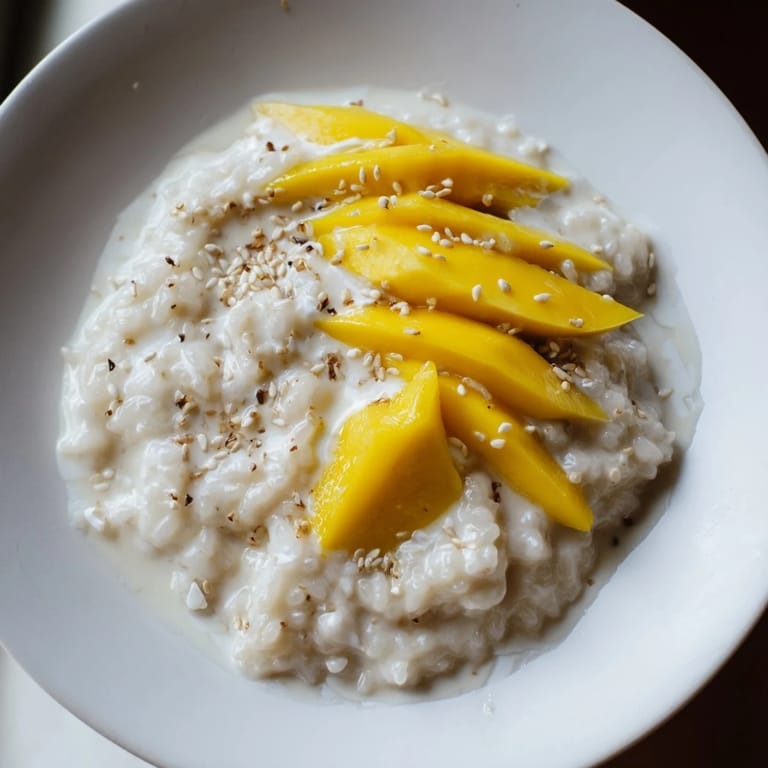
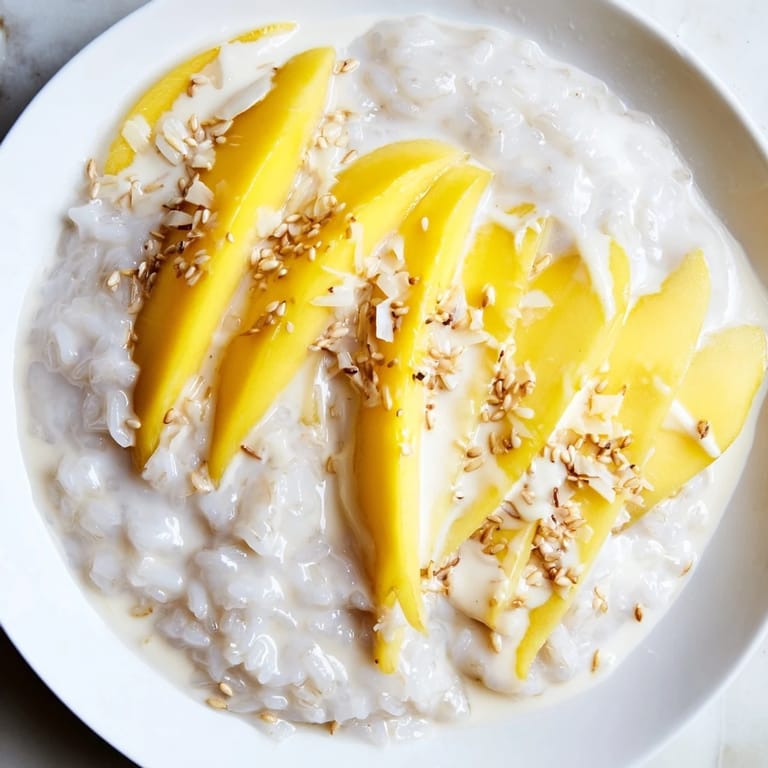
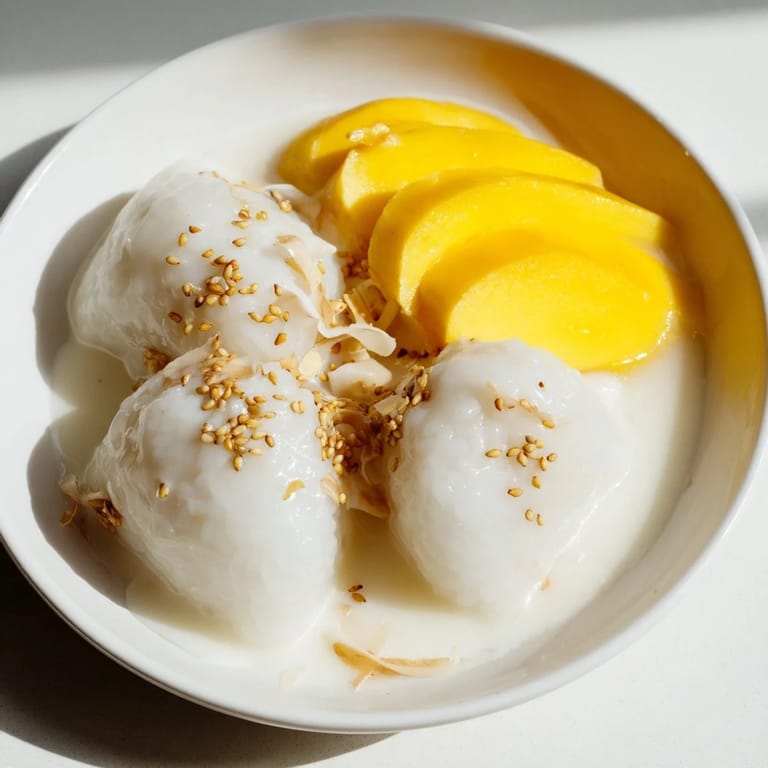
- Spoon a mound of warm sticky rice onto each plate, fan the mango slices alongside it in an arc, then drizzle with the remaining coconut sauce so every bite has both rice and fruit. Top with a small dollop of coconut cream and a sprinkle of sesame seeds if using, then serve immediately while the rice is still warm.
 Save to Pinterest
 One afternoon my neighbor knocked on my door as I was finishing a batch, and I invited her in without thinking. She tasted it and got very quiet for a moment, and then she told me it reminded her of being a child in Chiang Mai, eating from a street vendor while her grandmother held her hand. That's when I understood this dish isn't just about technique—it's a door to feeling something real.
On Choosing the Perfect Mango
The mango is not a side note here; it's the entire point. A beautiful but unripe mango will make the dish taste thin and vaguely off, while an overripe one becomes mushy and loses its ability to play against the creamy rice. The sweet spot is a mango that yields to gentle thumb pressure, smells faintly floral or fruity at the stem end, and has skin that still holds its color—usually a blush of red or orange against golden yellow. If you're shopping at a regular supermarket, buy your mangoes a day or two ahead so they can ripen on your counter; this small act of patience changes everything.
Variations Worth Trying
Once you've made the classic version, small variations open up entirely new dimensions. Try palm sugar instead of granulated for a deeper, more complex sweetness that tastes less straightforward and more interesting. Add a few strands of pandan leaf while the rice steams if you can find them at an Asian market—they perfume the whole dish with a subtle green, floral note that feels almost haunting. Some Thai cooks add a tiny splash of vanilla extract to their coconut sauce, which sounds odd until you taste it and realize it was always supposed to be there.
Making It Your Own
The beauty of mango sticky rice is that it's simple enough to repeat a hundred times and still find something new in it. Maybe you'll discover you prefer it chilled on a warm day, or that you like the rice slightly less sweet and the mango doing more of the work. Maybe you'll toast the sesame seeds yourself instead of buying them pre-toasted, or you'll hunt down a specific variety of mango because you noticed a difference. These small choices are where the dish becomes yours instead of just a recipe.
- If mangoes aren't in season or look sad at your market, frozen mango slices work beautifully—just thaw them gently and drain excess liquid before serving.
- Make the sticky rice a few hours ahead if timing is tight; it stays creamy at room temperature and honestly tastes just as good.
- If you don't have a steamer basket, a colander lined with cheesecloth suspended over a pot of boiling water works perfectly fine.
 Save to Pinterest
 This dish asks so little of you and gives back so much—a moment of calm in the kitchen, something beautiful to share, a taste that carries memory. Make it when you want to feel like you're cooking with intention.
Recipe Questions
- → How do I prepare the sticky rice properly?
Rinse the glutinous rice until water runs clear, soak for at least 4 hours, then steam it in cheesecloth for about 25-30 minutes until tender.
- → Can I substitute any ingredients for a different flavor?
Yes, you can use palm sugar instead of granulated sugar in the coconut sauce for richer depth, and pandan leaves during steaming add fragrant notes.
- → What is the best way to serve this dish?
Mound the steamed sticky rice on plates, arrange mango slices alongside, drizzle with remaining coconut sauce, and optionally garnish with coconut cream and toasted sesame seeds or mung beans.
- → Is this dish suitable for special diets?
It is vegetarian and gluten-free, but contains coconut, so check for allergies before serving.
- → How should leftovers be stored?
Because the sticky rice hardens when refrigerated, it’s best enjoyed fresh and not stored once combined with mango and coconut sauce.