 Save to Pinterest
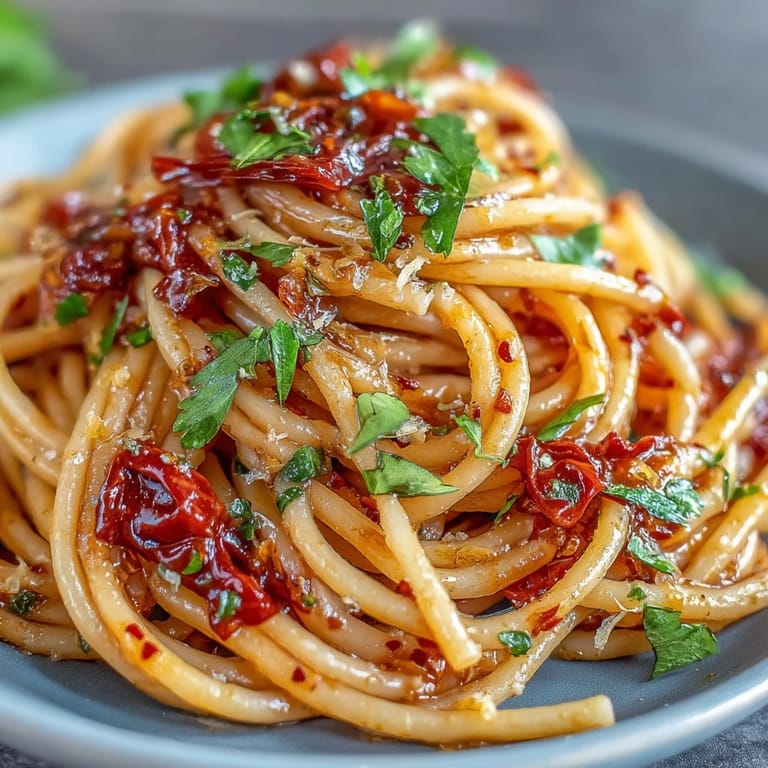
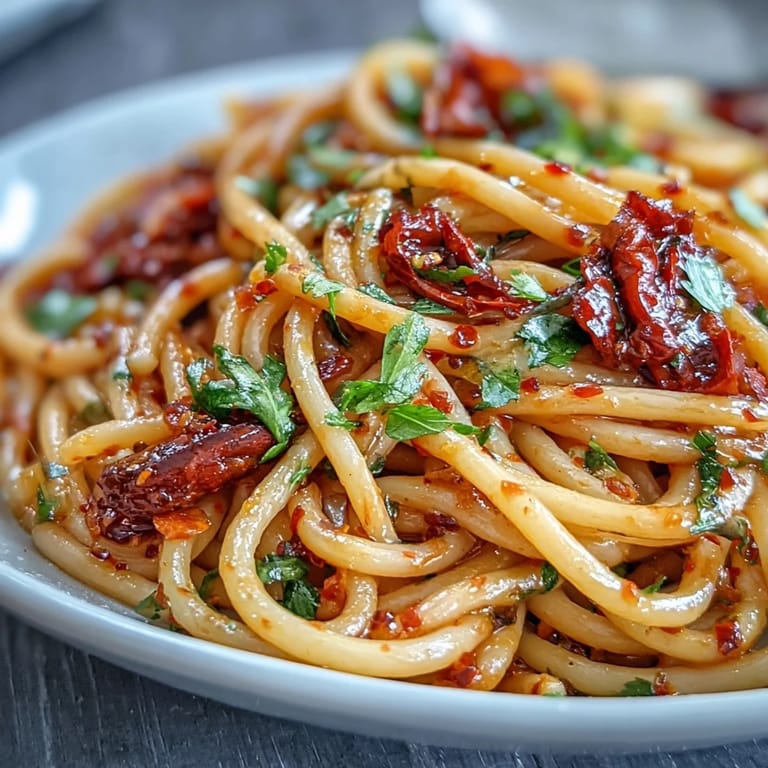
 There's a moment in every cook's life when you taste something that shifts your perspective on what simple food can do. For me, it happened at a cramped trattoria in Calabria, watching an elderly woman work her magic with nothing but pasta, oil, chilies, and anchovies. She didn't fuss or measure—she just moved with the confidence of someone who'd made this dish a thousand times. Years later, I finally understood what she was doing, and now this spicy calabrian chili pasta has become my go-to when I want to feel like I'm cooking with intention.
I made this for my neighbor last spring when she mentioned offhandedly that she'd never had real Italian pasta. Watching her face when she tasted it—that moment of surprise when the heat and the salt and the citrus all clicked into place—reminded me why I love cooking more than anything else. She asked for the recipe immediately, but more importantly, she asked me to make it again next month.
Ingredients
- Bucatini (400 g): This hollow pasta drinks in the oil in ways that spaghetti can't quite manage; the center tube becomes a little channel of pure flavor.
- Extra virgin olive oil (4 tbsp): Quality matters here because the oil is the sauce—don't cheap out.
- Calabrian chili paste (3 tbsp): This is where the soul lives; it's fruity and hot without being aggressively spicy, but you can adjust based on your heat tolerance.
- Garlic cloves (4, thinly sliced): Slicing rather than mincing keeps the pieces visible and slightly sweet rather than sharp.
- Anchovy fillets (6, drained and chopped): They're the secret ingredient that nobody notices until they ask why this tastes so good.
- Crushed red pepper flakes (1/2 tsp, optional): Add this if you want to push the heat further without changing the flavor profile.
- Sea salt and black pepper: Taste as you go—the anchovies and chili paste bring their own salt, so you need less than you'd think.
- Fresh flat-leaf parsley (1/4 cup, chopped): Added at the end for brightness and color; it cuts through the richness in the most graceful way.
- Lemon zest (from 1 lemon): This tiny addition makes the whole dish sing by adding citrus without acidity.
- Pecorino Romano or Parmesan (1/4 cup, optional): A sprinkle finishes it, though honestly this dish doesn't need it.
Tired of Takeout? 🥡
Get 10 meals you can make faster than delivery arrives. Seriously.
One email. No spam. Unsubscribe anytime.
Instructions
- Boil the pasta:
- Fill a large pot with water and salt it generously—it should taste like the sea. Bring it to a rolling boil, add your bucatini, and cook according to the package until it's just tender with a tiny bit of resistance when you bite it. As soon as it's close, scoop out a coffee mug full of pasta water before you drain it.
- Bloom the garlic and anchovies:
- Pour olive oil into a large skillet and set it over medium heat, letting it warm for a minute until you can feel the heat above it. Add your sliced garlic and chopped anchovies, stirring gently until the garlic turns gold at the edges and the anchovies have basically disappeared into the oil—you'll smell something incredible happening.
- Wake up the chili:
- Now stir in the Calabrian chili paste and red pepper flakes if you're using them, cooking for just a minute or two so the heat transfers into the oil without burning anything. The oil should turn a deeper red and smell bold and inviting.
- Marry the pasta and sauce:
- Add your drained bucatini directly to the skillet, tossing it with wooden tongs or two forks so every strand gets coated in that chili oil. If it looks dry, splash in a little of that reserved pasta water—the starch in the water helps the sauce cling to the pasta.
- Season and finish:
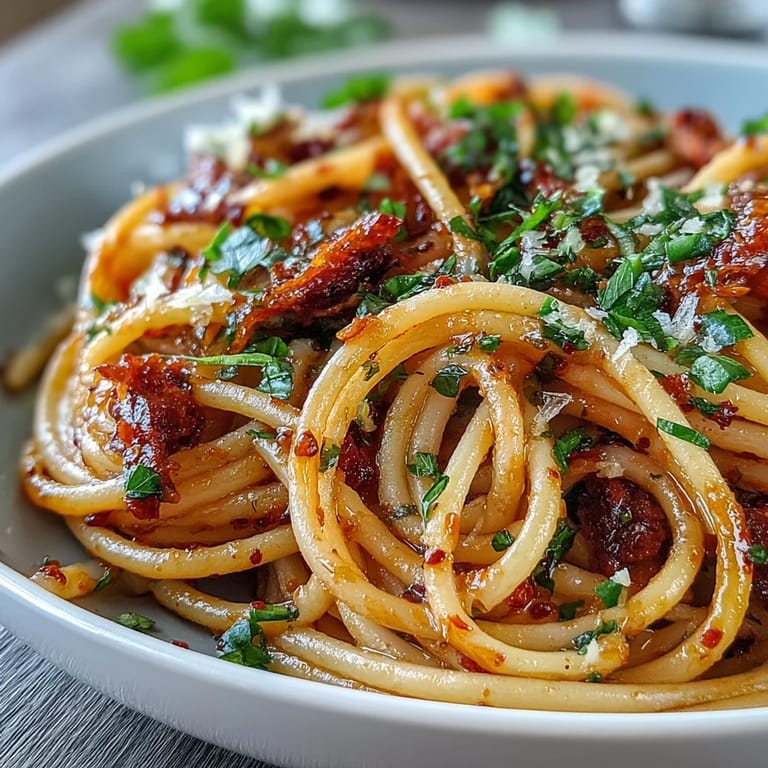
- Taste it, add salt and pepper as needed, then remove from heat and toss in your fresh parsley and lemon zest. The heat from the pasta will release the parsley's perfume, and the lemon zest brightens everything without making it sour.
 Save to Pinterest
 I once made this dish for someone I was trying to impress, and I was so nervous that I almost added cream—thank goodness I stopped myself. The purity of what came out of that skillet, the way the heat lingered on my tongue, the simplicity of it all, somehow felt more honest than anything elaborate could have been. That's when I learned that the best food doesn't hide behind technique; it just trusts itself.
The Calabrian Difference
Calabrian chilies aren't like other hot peppers—they have a sweetness underneath the heat, an almost fruity quality that makes them special. If you use standard chili flakes or fresh red chilies, the dish shifts into something different, sharper and less nuanced. Calabrian chili paste is worth seeking out, usually found in the Italian section of good grocery stores or online, and it keeps forever in your pantry.
Why the Anchovies Matter
I used to be one of those people who claimed to hate anchovies until I understood that they're not meant to taste fishy—they're meant to taste salty and savory, to deepen every other flavor in the dish. They dissolve completely into the oil, leaving behind umami and a subtle briny note that makes you feel like you're eating something crafted by people who knew exactly what they were doing. Once you see what they do in this dish, you'll start understanding why Italian cooks have trusted them for centuries.
Serving Suggestions and Variations
This pasta is at its best served immediately while the oil is still warm and fragrant, maybe with a glass of crisp white wine that has acidity to echo the lemon. If you're cooking for someone vegetarian, simply leave out the anchovies and add a tablespoon of capers—you'll lose a layer of depth but gain a clean, briny brightness that works beautifully. Some nights I add a splash of white wine to the oil before the pasta goes in, and other times I press a fresh red chili into thin rings and scatter them on top for people who want to crank up the heat.
- A squeeze of fresh lemon juice right before serving makes everything taste more vibrant.
- Don't skip the reserved pasta water—those few splashes are what transform this from dry tossed pasta to something that clings together.
- Eat it while it's hot, because once it cools, the oil starts to solidify and the magic fades.
 Save to Pinterest
 There's something about this dish that turns an ordinary Tuesday night into something worth remembering. Make it for someone you care about, or make it just for yourself—either way, you're participating in something old and real and good.
Recipe Questions
- → What pasta works best with Calabrian chili sauce?
Bucatini is ideal due to its hollow center capturing the chili oil well, though spaghetti can be substituted.
- → Can anchovies be omitted in this dish?
Yes, for a vegetarian twist, leave out anchovies and add capers to maintain a briny depth.
- → How do I control the spice level?
Adjust the amount of Calabrian chili paste or red pepper flakes to increase or decrease the heat intensity.
- → What cheese pairs well with this pasta?
Pecorino Romano or Parmesan adds a salty, nutty finish that complements the bold flavors.
- → Is this dish suitable for quick preparation?
Yes, with a total time of around 25 minutes, it's great for an easy and fast flavorful meal.