 Save to Pinterest
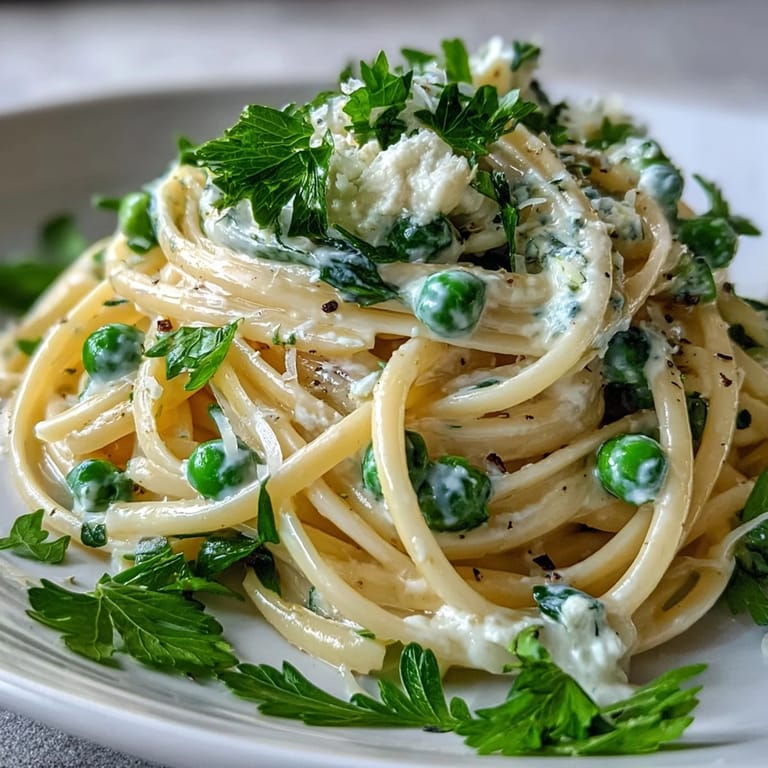
 The first burst of spring always inspires me to reach for citrus and fresh greens, but it was a rainy Tuesday that truly convinced me of this pasta’s magic. The lemon scent mingling with ricotta was so uplifting, I felt like the kitchen window had opened to a sunlit garden. I remember the peas popping and sizzling, a sound that urged me to taste one straight from the pan. Sometimes, the lightness of the meal echoed the mood outside, and it somehow cheered everything up. Dishes like this feel like a quiet celebration of new beginnings, right from the chopping board.
One evening, I cooked this for my partner after a tough day, and the ricotta’s mellow sweetness seemed to ease just about everything. We stood at the stove tossing the pasta, laughing about a failed attempt at homemade garden pesto. Our plates piled high, we paused only to add a bit more lemon zest. Later, the quiet clinking of forks signaled pure contentment—no words needed.
Ingredients
- Linguine: Cook it just to al dente, then finish in the sauce for the perfect bite.
- Fresh or frozen peas: Sweet peas give a gentle crunch and color—fresh are ideal, but frozen work beautifully.
- Garlic: Mince finely to release fragrance without overpowering; sauté only until just fragrant.
- Lemon zest and juice: Use unwaxed lemons for zest to avoid bitterness, and squeeze juice just before mixing for bright flavor.
- Ricotta cheese: Whip ricotta with the other ingredients for a creamy base—full-fat is best for texture.
- Parmesan cheese: Grate fresh for maximum nuttiness and a salty finish.
- Extra-virgin olive oil: Heat gently so the garlic won’t burn; its richness lifts the sauce.
- Salt and black pepper: Adjust after tossing, but do not skip the salt in pasta water.
- Fresh parsley: Chop right before serving for a burst of herbal freshness.
Tired of Takeout? 🥡
Get 10 meals you can make faster than delivery arrives. Seriously.
One email. No spam. Unsubscribe anytime.
Instructions
- Start the pasta:
- Fill your biggest pot with water and season it well—more salt than you think. Drop in the linguine, and let it tumble and swirl until just al dente, then save some cooking water before draining.
- Sizzle the aromatics:
- While the pasta simmers, heat olive oil in a skillet. Add garlic and let it sizzle until its aroma fills the kitchen—just a minute, so it stays soft and mellow.
- Cook the peas:
- Tip peas into the skillet and stir; the color brightens and they soften quickly. If you use frozen peas, cook a bit longer so they’re just tender, not mushy.
- Mix the creamy base:
- In a large bowl, combine ricotta, lemon zest, lemon juice, Parmesan, salt, and pepper. Stir until smooth, and taste—the citrus should sparkle but not overwhelm.
- Toss everything together:
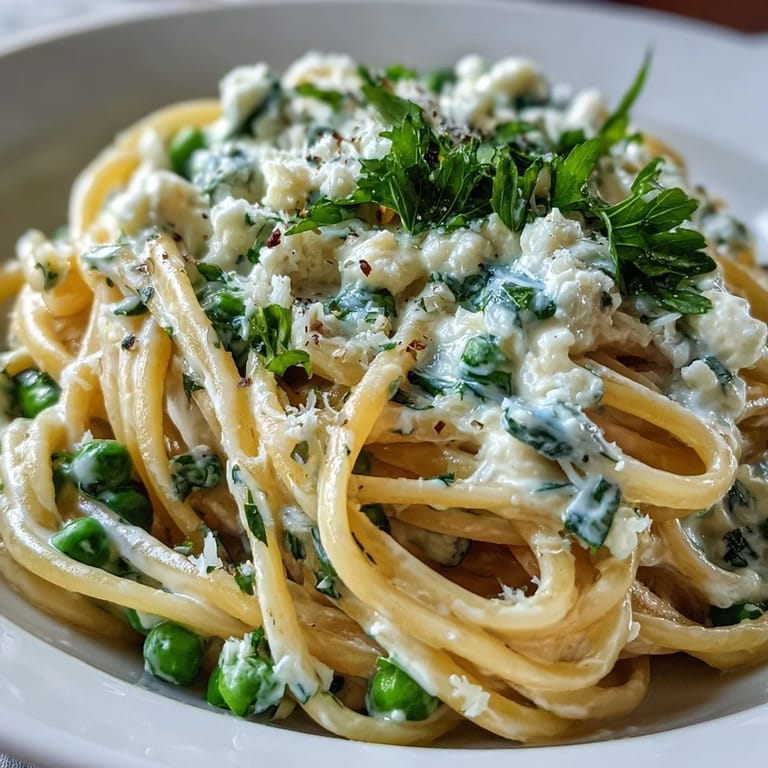
- Add pasta and peas (plus the garlicky oil) to the ricotta mix. With tongs, toss gently, adding reserved pasta water until the sauce is glossy and coats the noodles.
- Finish and serve:
- Scoop onto plates, sprinkle with parsley and extra Parmesan. Serve immediately, adding extra lemon zest for a punchy finish if you wish.
 Save to Pinterest
 This pasta made its mark for me at a spring potluck, where I overheard friends arguing over who got the last forkful. Suddenly, the conversation turned to the memory of vibrant gardens and laughter, and I realized how food can draw out nostalgia and joy with just a plateful of flavors.
The Joys of Simple Ingredients
It’s surprising how ordinary staples—ricotta, lemon, peas—become luminous together. Even a late-night version with tired produce and day-old cheese can revive a mood when tossed properly. Every ingredient deserves attention, no matter its simplicity.
Timing Matters More Than You Think
If you rush the pasta or overcook the peas, the dish loses its signature lightness. Take an extra minute to watch the peas for that vivid green sheen; the ricotta base can wait until the pasta is freshly drained and still steamy.
Finishing Touches That Elevate the Pasta
Never underestimate the effect of freshly chopped parsley or an extra sprinkle of cheese at the table. A little zest grated straight onto the pasta just before serving brightens the plate enormously.
- Have tongs handy—forks don’t mix the sauce as well.
- Warm your bowl before tossing the pasta for a creamier result.
- Don’t add too much pasta water at once; drizzle slowly and check texture.
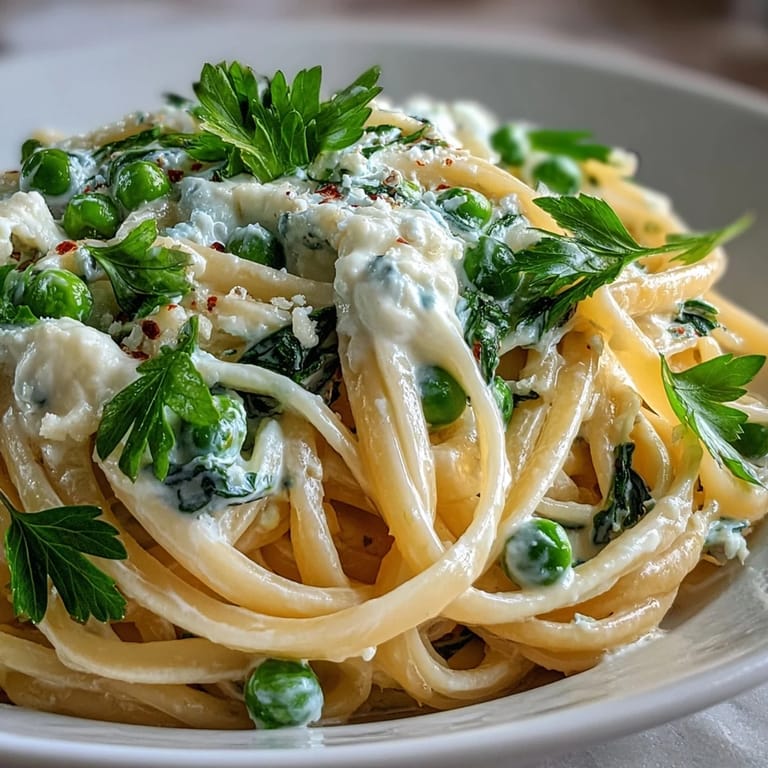 Save to Pinterest
 I hope your kitchen fills with the bright aroma of lemon and the warmth of shared plates. There’s nothing like discovering new comfort in the familiar—happy cooking.
Recipe Questions
- → Can I use frozen peas instead of fresh?
Yes, frozen peas work perfectly. Just cook slightly longer until bright green and tender.
- → How can I make the sauce creamier?
Add a bit more reserved pasta water or substitute mascarpone for ricotta to enrich the texture.
- → Is whole-wheat pasta suitable for this dish?
Whole-wheat linguine gives added fiber and a nutty flavor, offering a wholesome alternative.
- → What white wine pairs well?
Sauvignon Blanc or Pinot Grigio complements the lemon and ricotta flavors beautifully.
- → Can I add extra vegetables?
Toss in spinach or arugula with the peas for extra freshness and color.
- → Is this dish allergy-friendly?
It contains wheat and dairy. Check pasta and cheese labels for additional allergens.