 Save to Pinterest
 The first time I made neon noodles, my kitchen looked like a mad scientist's lab—food coloring bottles everywhere, a syringe I'd borrowed from a friend who works in pastry, and absolutely no idea if this would actually work. But when those jewel-bright strands hit the ice water and set firm, I couldn't help laughing. Here was something that looked like it belonged in a modernist restaurant, made with nothing but basic kitchen supplies and a willingness to play. The real magic wasn't in the technique—it was in how a simple dish could surprise people who thought they knew what noodles were supposed to be.
I served these at a dinner party last summer, and the moment my friend tasted them with the ginger-soy sauce, she got quiet for a second. Then she asked if they were real food or if I'd somehow convinced her to eat something magical. That's when I realized this dish does something unexpected—it delights people not just with flavor, but with the simple joy of encountering something playful and unfamiliar in a moment when food usually plays it safe.
Ingredients
- Water: The base that holds everything together; use filtered water if your tap water is heavily chlorinated, since it can dull the neon colors.
- Agar-agar powder: This is the secret to the whole dish—it sets without gelatin or eggs, giving you that distinctive bouncy texture that makes these noodles feel almost alive in your mouth.
- Sugar: Just enough to balance the slight earthiness of agar and keep the noodles from tasting clinical.
- Food coloring: Gel or liquid colors work best; neon shades are the whole point here, so don't be shy with the color—one drop usually isn't enough.
- Soy sauce or tamari: The backbone of your dipping sauce, so choose one you actually enjoy drinking straight; you'll taste it clearly.
- Rice vinegar: Adds brightness without harshness; it's the difference between a sauce that tastes complete and one that tastes flat.
- Mirin: Brings a gentle sweetness and glossy mouthfeel; don't skip it for honey as a substitute.
- Sesame oil: A small amount goes a long way—this is about aroma and depth, not richness.
- Fresh ginger: Microplane it fine so it dissolves into the sauce rather than sitting as visible bits.
- Scallion: The garnish that keeps the sauce from feeling too smooth and corporate.
- Sesame seeds: Toasted seeds add a quiet crunch and nutty depth that makes people wonder what they're tasting.
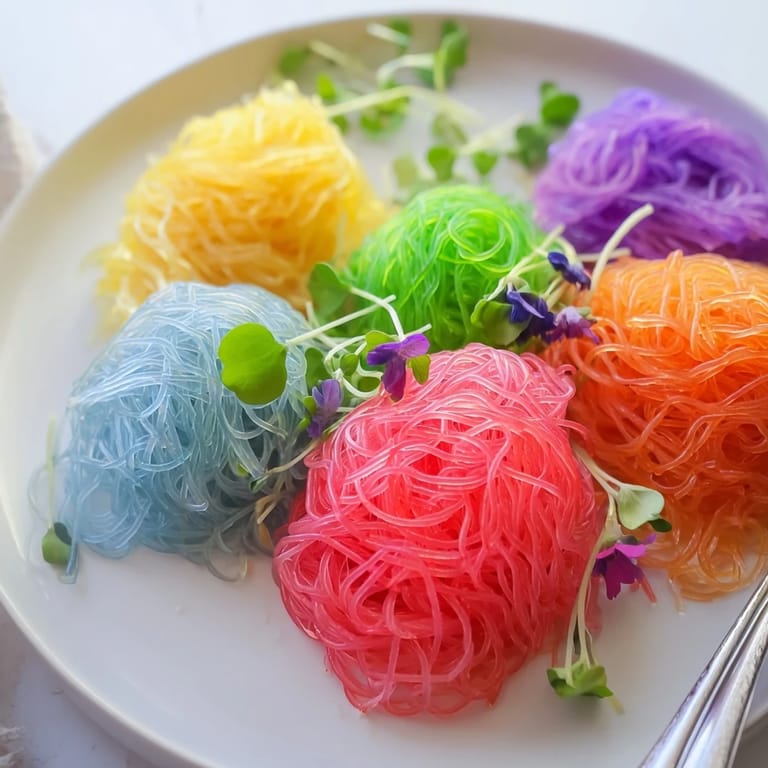
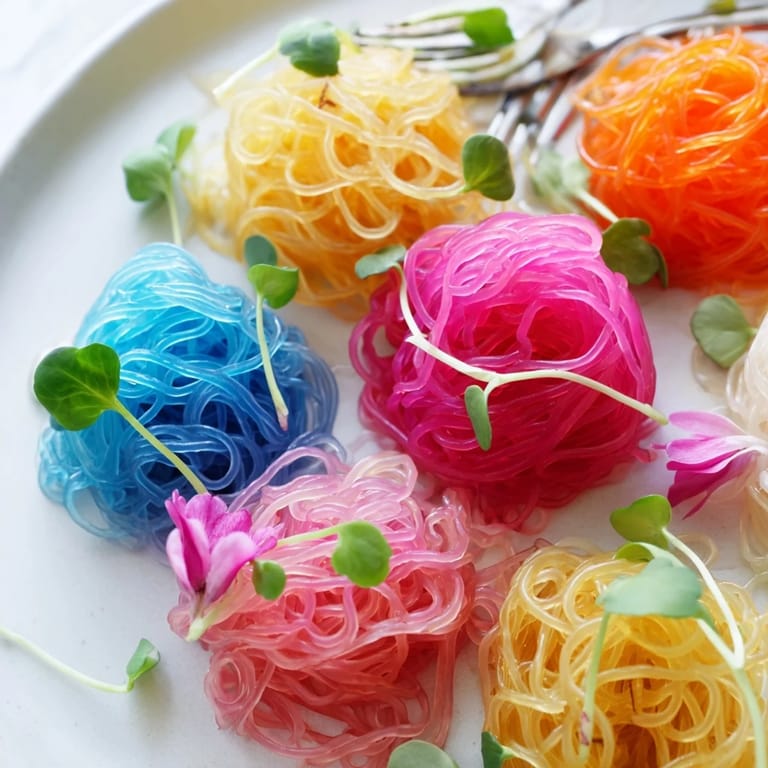
- Microgreens or edible flowers: Optional, but they complete the visual story—choose colors that pop against your neon noodles.
Tired of Takeout? 🥡
Get 10 meals you can make faster than delivery arrives. Seriously.
One email. No spam. Unsubscribe anytime.
Instructions
- Dissolve the agar:
- Pour water into a saucepan and sprinkle the agar-agar powder over it, then add sugar. Bring everything to a boil over medium heat, stirring constantly—this takes about 2 to 3 minutes, and you'll know it's ready when the powder has completely dissolved and the liquid is clear. Don't rush this step or try to cook it hotter; agar needs time to fully hydrate.
- Divide and color:
- Remove the pan from heat and let the liquid cool for just a minute—you want it still pourable but not scalding. Pour the base into separate small bowls, one for each color you're using, then add one or two drops of food coloring to each and stir well, being careful not to splash.
- Pipe into noodles:
- Fill a syringe or squeeze bottle with the first color and pipe thin strands into a bowl of ice water, working slowly and deliberately. The noodles will set in 1 to 2 minutes; you'll see them become opaque and firm. Repeat with each color, and if you prefer thicker noodles, you can pour the mixture into a flat tray instead, let it set for 5 minutes, then cut it into thin ribbons with a sharp knife.
- Rinse and chill:
- Carefully collect all the noodles and give them a brief, gentle rinse under cold water to remove any cloudiness. Drain them well and transfer to the refrigerator until you're ready to serve—cold noodles taste better and hold their shape.
- Make the sauce:
- In a small bowl, whisk soy sauce, rice vinegar, mirin, sesame oil, ginger, and sugar together until the sugar dissolves completely. Taste it and adjust—if it feels too salty, add a splash more vinegar; if it's too sharp, a touch more mirin balances it. Stir in the scallion and sesame seeds just before serving.
- Plate and serve:
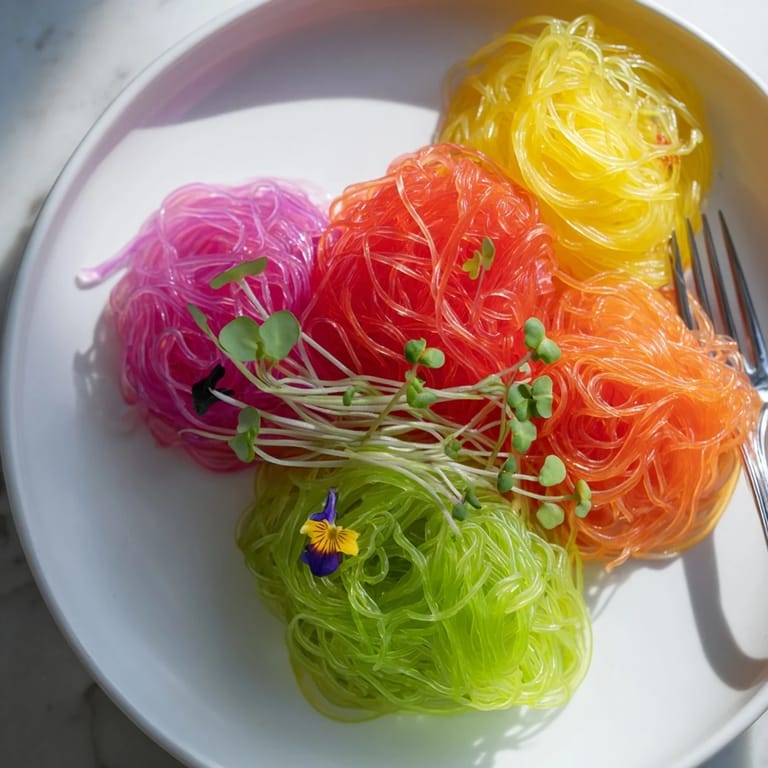
- Divide the chilled noodles into small bundles or nests and arrange them in serving bowls. Drizzle with sauce or serve the sauce on the side for dipping, and top with microgreens or edible flowers if you have them. The visual impact is half the meal here.
 Save to Pinterest
 There's a particular kind of quiet that happens when someone encounters something completely unexpected in food. It's not about the taste—though the sauce is genuinely delicious—it's about the moment when your brain catches up to what your eyes are telling you. That's what these neon noodles do, and it's become my favorite reason to make them.
The Science of Agar
Agar-agar is a gelling agent made from red algae, and it behaves completely differently than gelatin or pectin. It sets at room temperature and holds firm even when warm, which is why you can serve these noodles without them melting into soup. The first time I used it, I was shocked at how quickly it transformed from liquid to solid—it almost felt like magic, but it's really just chemistry being reliable. Once you understand how agar works, you start seeing applications everywhere: ethereal jellies, clear noodles, even savory aspics that don't require meat stock.
Playing with Color and Flavor
The beauty of this recipe is that it's infinitely adaptable. I've made versions with butterfly pea flower that shift color when you add the acidic sauce, and batches with spirulina that tasted faintly of the ocean. Natural colorants often have flavor consequences—beet juice adds earthiness, matcha brings bitterness—so taste as you go. Once you're comfortable with the basic technique, you can experiment with adding yuzu juice, a whisper of chili oil, or even edible glitter to the cooking liquid for an extra dimension.
Beyond the Appetizer
I've started thinking of these noodles as a palate cleanser, the way you might serve sorbet between courses at a fancy dinner. They reset your mouth and prepare you for the next dish, but with more personality and play. You could also nestle them into a cold soup, toss them gently with a light vinaigrette, or use them as a textural contrast in a composed salad. The real lesson is that noodles don't have to be heavy or comforting to be memorable.
- Make the noodles a few hours ahead so they're perfectly chilled when you serve them.
- If you're nervous about piping, start with just one color to build confidence before you attempt the rainbow.
- The sauce is just as important as the noodles—never serve these without it, since the sauce gives them context and flavor.
 Save to Pinterest
 These neon noodles are the kind of dish that reminds you why cooking is play as much as it is nourishment. They ask you to be a little bit bold, a little bit silly, and willing to make something that delights the people you feed.
Recipe Questions
- → How do agar-agar noodles set properly?
Agar-agar sets quickly as it cools; pour the colored liquid into ice water or a flat tray and let it firmly chill for 1-2 minutes to achieve a noodle-like texture.
- → Can I use natural colorings for neon noodles?
Yes, spirulina powder, butterfly pea, or beet juice are excellent natural alternatives that add vibrant hues without artificial dyes.
- → What makes these noodles bouncy and firm?
The agar-agar powder gels as it cools, giving the noodles their characteristic springy and firm texture unlike typical wheat noodles.
- → How should the dipping sauce be served?
Serve the soy-based dipping sauce chilled alongside the noodles, garnished with scallions and optional toasted sesame seeds for added flavor.
- → Are there allergen concerns to consider?
This dish contains soy from the sauce and potentially sesame seeds; use tamari to maintain gluten-free status and omit seeds if needed.