 Save to Pinterest
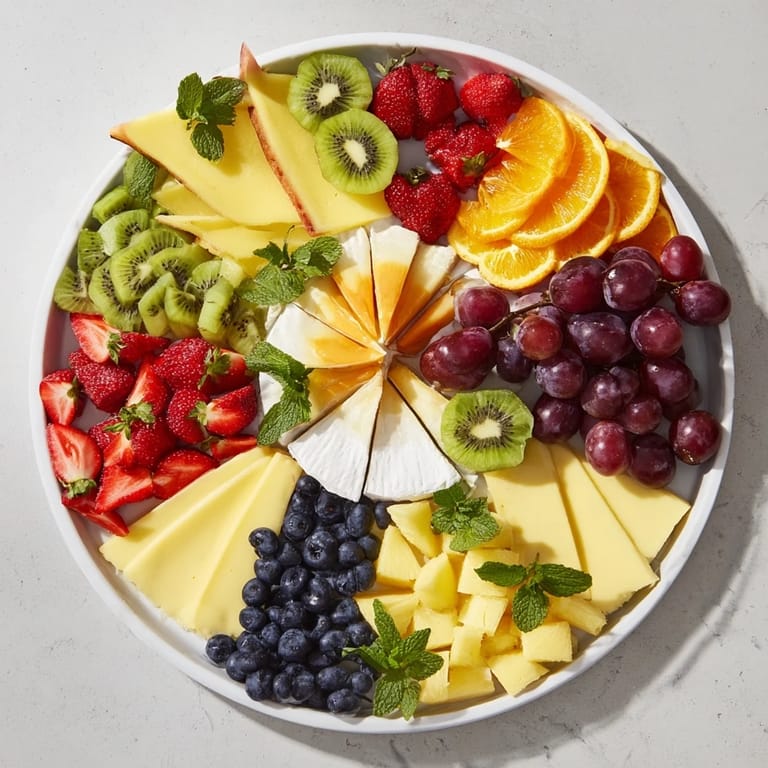
 There's something magical about watching a platter come together when the colors finally align just right. I was setting up for a dinner party, stressed about the appetizer, when I decided to abandon the usual cheese board and instead arrange everything in concentric circles. My hands moved almost without thinking, placing each fruit wedge and cheese slice to catch the light differently, and by the time I stepped back, my guests gasped before they even tasted anything. That moment taught me that food arranged with intention becomes conversation before anyone takes a bite.
I made this platter for my cousin's baby shower on a humid July afternoon, and I remember how the mint stayed crisp and bright even in the heat. Everyone kept circling back to it between bites of other dishes, drawn in by how the colors seemed to shift depending on where the light hit. One guest asked if I'd arranged it by a color wheel, and I hadn't, but I pretended I had—secretly pleased that it looked so intentional.
Ingredients
- Seedless red grapes: Buy them a day or two before so they're fully chilled and firm; cold grapes are the secret to texture contrast.
- Fresh strawberries: Halve them just before arranging to keep the cut surfaces from browning or weeping liquid onto your cheese.
- Kiwi: Peel and slice into thin wedges, and they'll hold their bright green color and slight tartness against sweet elements.
- Pineapple: Cut into small wedges that catch light beautifully; frozen pineapple works too if fresh isn't at peak ripeness.
- Blueberries: These are your gap-filler; their deep color makes patterns pop, and they're small enough to nestle between larger pieces.
- Orange: Segment it by cutting between membranes so you get clean pieces with no bitter white pith.
- Aged cheddar: Cut into matching triangular wedges so each piece feels intentional and part of the design.
- Manchego: This Spanish cheese has a firm texture that slices cleanly into thin wedges and a subtle nuttiness that bridges fruit and other cheeses.
- Brie: Cut into small wedges just before serving so the creamy interior stays defined; warm brie can slide apart.
- Goat cheese: Sliced into thin rounds, it provides a tangy note that balances the sweetness and adds visual contrast with its pale color.
- Fresh mint: Tuck whole leaves into gaps after you've built your pattern, or use them as a final garnish for aroma and color.
Tired of Takeout? 🥡
Get 10 meals you can make faster than delivery arrives. Seriously.
One email. No spam. Unsubscribe anytime.
Instructions
- Wash and prep your fruits:
- Rinse everything under cold water and pat dry so moisture doesn't make your platter slick. Cut your strawberries in half, peel and slice the kiwi into thin wedges, cut pineapple into small chunks, and segment the orange by cutting between the membranes so you get clean pieces.
- Slice your cheeses into matching shapes:
- Cut cheddar and Manchego into thin triangular wedges, divide the brie into small pieces, and slice the goat cheese into neat rounds. Aim for consistency so each type of cheese repeats visually across your pattern.
- Start at the outer edge:
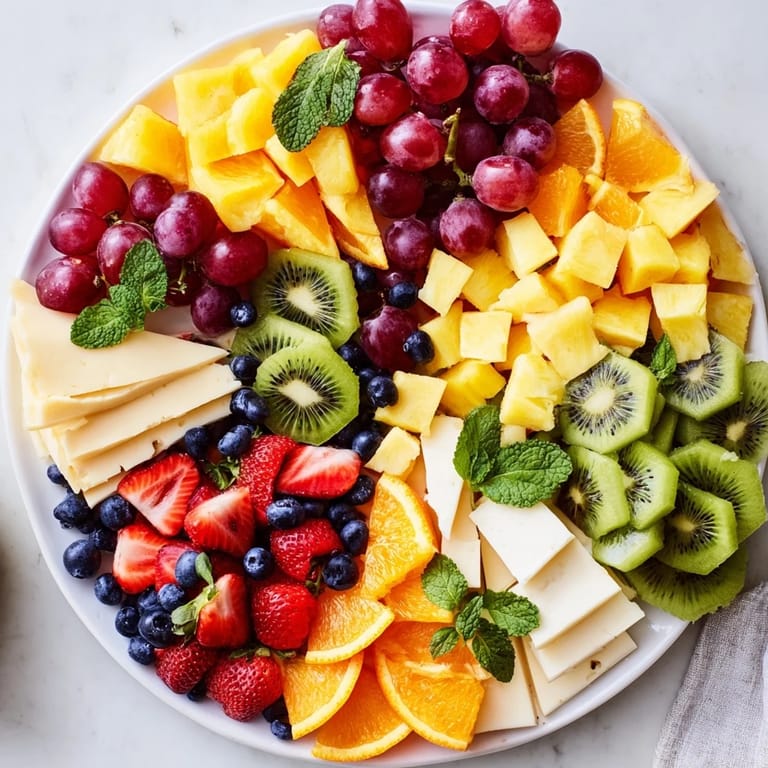
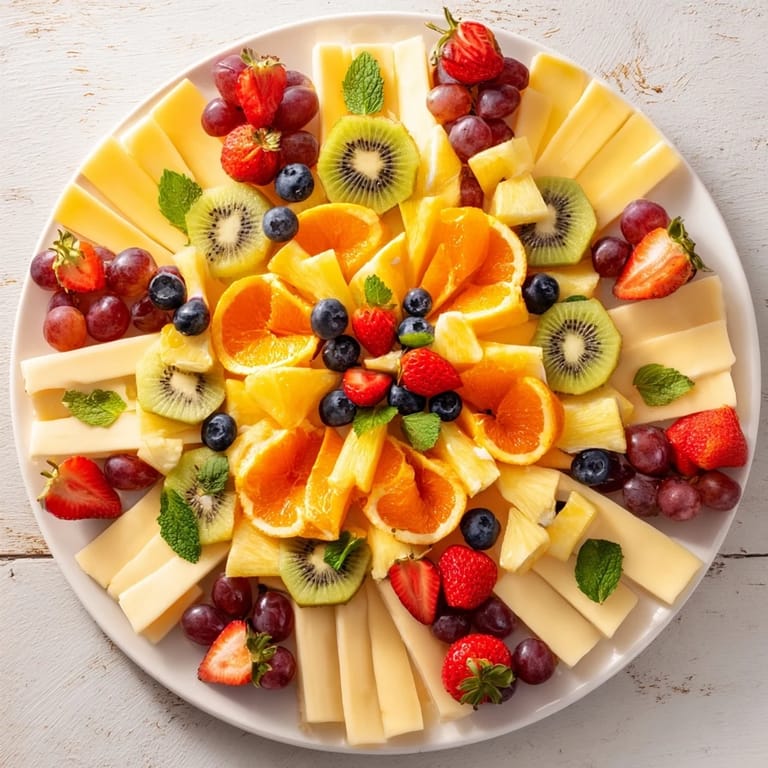
- Place your largest round platter on a stable surface and begin at the very edge with one type of fruit wedge, positioning them like spokes on a wheel. Immediately next to each fruit wedge, place a matching piece of cheese, alternating colors and textures as you move clockwise.
- Build your concentric rings:
- Once you've completed the outer circle, move inward and repeat the same pattern, staying true to the order you chose. Keep checking that your design reads clearly from above, adjusting as you go so the kaleidoscope effect strengthens with each new ring.
- Fill gaps with intention:
- Use blueberries and extra grapes to fill any spaces between wedges, creating a seamless pattern with no raw platter showing through. Think of gaps as opportunities to deepen the color story.
- Tuck in fresh mint and finish:
- Scatter fresh mint leaves across the platter, tucking them into the design so they add both color and aroma without disrupting the geometry. Serve immediately if your kitchen is cool, or cover loosely with plastic wrap and refrigerate until guests arrive.
 Save to Pinterest
 What I didn't expect was how this platter became the centerpiece of the whole evening. People stood around it talking and laughing before moving to the table, drawn by the colors and the fact that something so beautiful was actually meant to be eaten. It reminded me that when you take care with presentation, people feel cared for.
Why Symmetry Matters More Than You'd Think
I used to throw fruit and cheese together randomly, assuming no one cared about arrangement. But the moment I committed to a repeating pattern, something shifted. Your eye knows when colors and shapes repeat, even if you can't articulate why the platter feels satisfying. It's the same reason mandalas draw us in—our brains are wired to find peace in symmetry, and feeding people food arranged with that kind of intention feels like offering them a moment of calm before the meal even begins.
Cheese and Fruit Pairings That Actually Work
Not all cheese and fruit combinations feel balanced, and I learned this the hard way by pairing aged cheddar with melon once and regretting it. Cheddar shines next to apple, strawberry, or pineapple because the sharpness cuts through sweetness. Manchego's nutty, slightly salty profile feels at home with tropical fruits like pineapple and grapes. Brie's creamy texture and delicate flavor pair beautifully with berries and stone fruits. Goat cheese's tang is a perfect foil for anything sweet, making it the bridge that ties everything together. The combination on this platter works because each cheese has been chosen to highlight the fruit closest to it, creating tiny flavor stories as guests graze.
Making This Your Own
The real gift of this platter is that it's endlessly adaptable to what's in season and what you love to eat. Winter calls for pomegranate arils, persimmon slices, and harder cheeses like Gruyère. Spring opens up for fresh apricots, raspberries, and creamy burrata if you're feeling generous. Summer is when this platter truly shines with stone fruits, berries, and lighter cheeses like fresh mozzarella. You can add nuts, olives, or honey drizzle without breaking the pattern—just tuck them into gaps and let the kaleidoscope expand.
- Swap in seasonal fruits rather than forcing out-of-season options that look pale and tired.
- Keep at least three different cheese textures for visual and flavor variety.
- A simple squeeze of lemon juice on apples or pears an hour before serving keeps them from browning.
 Save to Pinterest
 This platter is for moments when you want to feed people something that tastes as good as it looks, with no stress and zero cooking required. Make it and watch how it transforms from appetizer into the reason people linger.
Recipe Questions
- → How should the fruit be prepared for the platter?
Wash, peel, and cut fruits into uniform wedges or segments to ensure a balanced and colorful presentation.
- → Which cheeses pair well in this arrangement?
Aged cheddar, Manchego, brie, and goat cheese provide varied textures and flavors that complement the fresh fruits.
- → What is the best way to arrange the platter?
Alternate wedges of fruit and cheese in concentric circles, creating symmetrical and colorful repeating segments.
- → Can I substitute different fruits or cheeses?
Yes, seasonal fruits or preferred cheeses can be used to maintain variety and seasonal freshness.
- → How can I enhance the platter’s aroma and color?
Garnish with fresh mint leaves for an added burst of color and a refreshing aroma.
- → Is this platter suitable for special diets?
It is vegetarian and gluten-free, but check cheeses for animal rennet if strict dietary needs apply.