 Save to Pinterest
 The scent of roux darkening in the pot always pulls me straight back to a tiny kitchen in the French Quarter, where a neighbor showed me how to stand guard over that bubbling oil and flour with a wooden spoon and endless patience. She said the secret was in the color, not the clock. I burned my first three attempts, filling the apartment with smoke and regret. But when I finally nailed that chocolate hue, the étouffée that followed tasted like redemption. Now every time I make it, I hear her voice reminding me to never walk away from the roux.
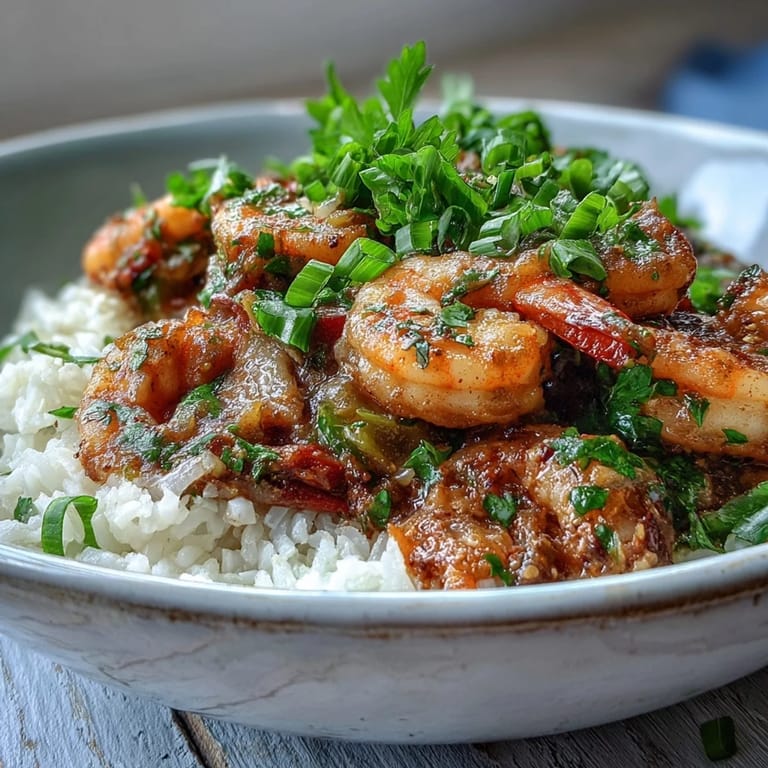
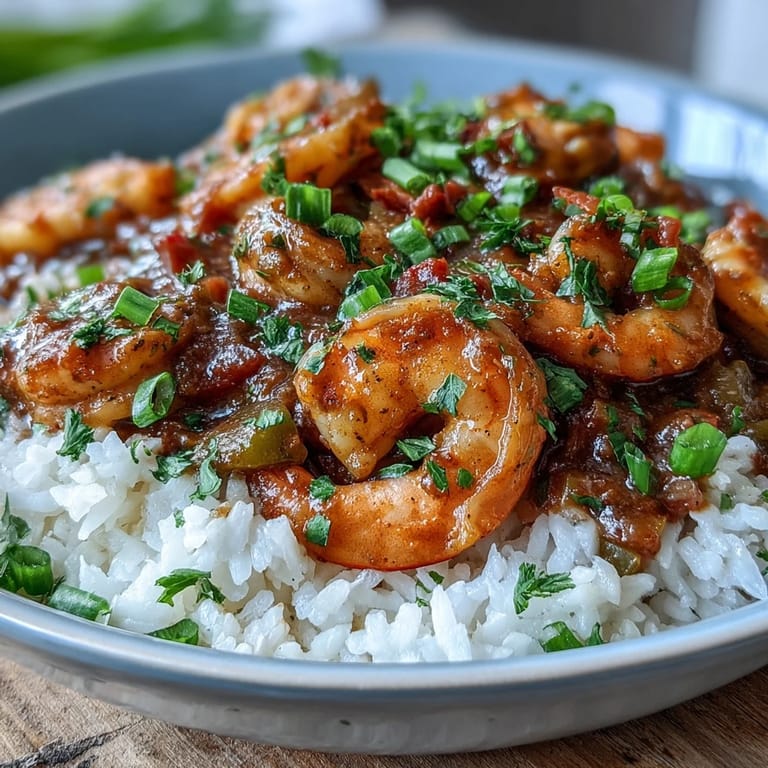
I served this to friends during a spring thunderstorm, the kind where the sky goes green and everyone crowds into the kitchen instead of the dining room. We ate straight from bowls balanced on our laps, rice soaking up every bit of that dark, glossy sauce. Someone said it tasted like New Orleans even though we were a thousand miles away. That night, étouffée stopped being just a recipe and became the dish I make when I want people to stay a little longer.
Ingredients
- Vegetable oil: You need a high smoke point oil to coax the roux to that deep color without scorching, so save the olive oil for another day.
- All purpose flour: This combines with the oil to form the foundation of the dish, thickening and flavoring everything that follows.
- Onion, bell pepper, celery: The holy trinity of Cajun cooking, these three vegetables add sweetness, subtle bitterness, and aromatic depth that balance the richness.
- Garlic: Toss it in after the vegetables soften so it perfumes the pot without turning bitter or burnt.
- Shrimp or crawfish: Fresh or frozen both work beautifully, just make sure theyre peeled and deveined so they cook evenly in the sauce.
- Seafood stock: This brings a briny sweetness that marries perfectly with the shellfish, though chicken stock will do in a pinch.
- Worcestershire sauce: A few dashes add umami and a whisper of tang that rounds out the spice.
- Cajun seasoning and cayenne: These deliver the heat and complexity, but start light because you can always add more.
- Bay leaf: It lends a subtle herbal note that deepens as the étouffée simmers.
- White rice: Fluffy and plain, it soaks up the sauce and gives you something to pile high on your plate.
- Green onions and parsley: Freshness and color at the end, they wake up every spoonful.
Tired of Takeout? 🥡
Get 10 meals you can make faster than delivery arrives. Seriously.
One email. No spam. Unsubscribe anytime.
Instructions
- Start the roux:
- Heat the oil in your heaviest pot over medium heat, then whisk in the flour until smooth. This is where your patience pays off, so keep stirring steadily and watch it transform from pale to peanut butter to deep chocolate brown.
- Add the trinity:
- Once the roux is ready, toss in the onion, bell pepper, and celery. The vegetables will sizzle and soften, their moisture slowing the roux just enough to prevent burning.
- Stir in the garlic:
- Let the minced garlic cook for about a minute, just until it releases that unmistakable aroma. Dont let it sit too long or it will turn bitter.
- Pour in the stock:
- Add the seafood stock gradually, stirring constantly to dissolve the roux into a smooth, glossy sauce. This is where the magic starts to happen.
- Season and add the shrimp:
- Stir in the Worcestershire, Cajun seasoning, cayenne, bay leaf, salt, and pepper, then nestle the shrimp into the bubbling liquid. They will turn pink and tender as everything simmers together.
- Simmer until thick:
- Lower the heat and let the étouffée cook uncovered for 20 to 30 minutes, stirring now and then. The sauce will thicken and the flavors will deepen into something unforgettable.
- Taste and adjust:
- Sample the sauce and add more salt, pepper, or cayenne if needed. Pull out the bay leaf before serving.
- Serve over rice:
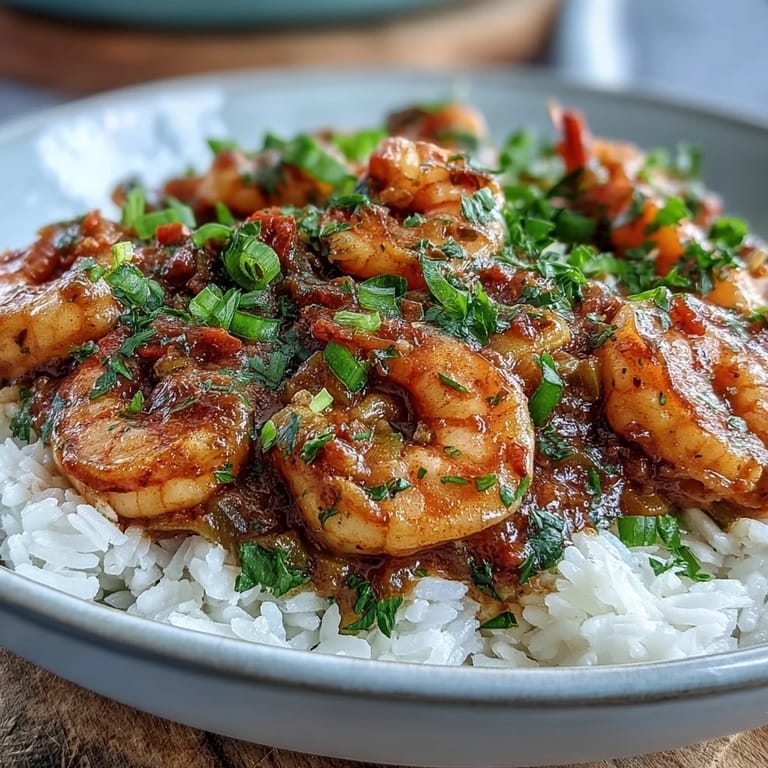
- Spoon the étouffée generously over hot rice and scatter green onions and parsley on top. Serve it while its steaming.
 Save to Pinterest
 One Sunday, I made a double batch and brought it to a potluck where half the guests had never heard of étouffée. By the end of the night, the pot was scraped clean and three people had asked for the recipe. Watching them go back for seconds, I realized this dish has a way of turning strangers into friends. Its the kind of food that starts conversations and ends with everyone too full and too happy to leave the table.
Choosing Your Protein
Shrimp and crawfish are traditional, but Ive swapped in chicken thighs, andouille sausage, and even thick slices of mushroom when I wanted something vegetarian. Each version carries that smoky, spicy backbone, just with a different texture and richness. The key is to adjust the cooking time so nothing overcooks or turns rubbery. If youre using chicken, brown it first and let it simmer longer to absorb the sauce. For mushrooms, add them toward the end so they stay tender and meaty.
Making It Ahead
Étouffée is one of those rare dishes that actually improves after a night in the fridge. The flavors marry and deepen, the spice mellows just enough, and reheating it feels like opening a time capsule of your own cooking. I often make it on a weeknight and eat it for lunch the next two days, each bowl tasting richer than the last. Just store it in an airtight container and reheat gently on the stove, adding a splash of stock if it thickens too much.
Serving Suggestions
I love piling étouffée over rice, but it also shines with creamy grits or even crusty French bread for soaking up every drop of sauce. A crisp green salad with a sharp vinaigrette cuts through the richness, and cold beer or sweet iced tea rounds out the meal. Sometimes I set out hot sauce and extra green onions so everyone can customize their bowl.
- Serve with a side of cornbread for a Southern comfort feast.
- Offer lemon wedges at the table for a bright, citrusy finish.
- Pair with a chilled white wine or a light lager to balance the spice.
 Save to Pinterest
 This dish has taught me that the best meals come from standing still and letting the process unfold, no shortcuts, no distractions. When you serve it, youre handing someone a bowl of patience, spice, and a little bit of New Orleans magic.
Recipe Questions
- → What is the most important step in making étouffée?
Creating the dark roux is the foundation of authentic étouffée. Cook the oil and flour mixture over medium heat for 15-20 minutes, stirring constantly until it reaches a deep chocolate brown color. This develops the rich, nutty flavor that defines the dish.
- → Can I use crawfish instead of shrimp?
Absolutely! Crawfish is a traditional choice for étouffée and works beautifully in this preparation. Use the same quantity of peeled crawfish tails as you would shrimp, and follow the same cooking instructions.
- → How can I make this dish less spicy?
Simply reduce or omit the cayenne pepper to control the heat level. You can also use a mild Cajun seasoning blend instead of a spicy one. The dish will still have wonderful depth of flavor from the roux and aromatics.
- → What is the holy trinity in Cajun cooking?
The holy trinity refers to the aromatic base of diced onion, bell pepper, and celery that forms the flavor foundation of most Cajun and Creole dishes. This combination is essential to authentic étouffée.
- → Can I make étouffée ahead of time?
Yes, étouffée actually tastes better the next day as the flavors meld together. Store it in an airtight container in the refrigerator for up to 3 days, and reheat gently on the stovetop before serving over freshly cooked rice.
- → What should I serve with étouffée?
Serve étouffée over hot white rice as the traditional base. Complement it with crusty French bread for soaking up the rich sauce, and a simple green salad or coleslaw on the side for freshness.