 Save to Pinterest
 My kitchen smelled like caramelized onions for three days straight after my neighbor casually mentioned she'd brought a dip to her book club and everyone fought over the last spoonful. I'd never given much thought to onion dip before—it seemed like something that came from a packet—but watching her describe how the sweet, jammy onions melted into tangy sour cream made me want to try it myself. That first batch taught me patience; I kept turning up the heat because thirty minutes felt too long, but then everything would catch and burn. Now I understand the magic is in the slowness, in letting time do what impatience never could.
I made this for a potluck on a gray October afternoon when everyone seemed tired and a little disconnected. Within ten minutes of setting it out, people were clustering around the dip bowl, trading chips, laughing about their weeks. My boss told me it reminded her of her grandmother's kitchen, which felt like the highest compliment. It's funny how food can reset a room's whole energy.
Ingredients
- Yellow onions (2 large, finely diced): These are your foundation—yellow onions have natural sweetness that deepens and concentrates as they caramelize, creating that addictive jammy flavor you can't achieve with other varieties.
- Unsalted butter (2 tbsp) and olive oil (1 tbsp): Butter alone would brown too fast; the oil brings the temperature down just slightly and helps you cook low and slow without burning.
- Kosher salt and freshly ground black pepper: Season as you cook rather than at the end—this lets the onions release their moisture and develop deeper flavor.
- Sugar (½ tsp, optional): This seems counterintuitive in a savory dish, but a tiny amount accelerates caramelization without making anything taste sweet; skip it if you prefer pure savory.
- Sour cream (1½ cups, full-fat): This is non-negotiable—low-fat versions break down and get grainy, and you need that richness to balance the onions.
- Mayonnaise (½ cup): This adds body and a subtle tang that keeps the dip from feeling one-dimensional; it also prevents the sour cream from separating.
- Worcestershire sauce (1 tsp): Just a whisper of this adds an umami depth that makes people pause and wonder what that flavor is.
- Garlic powder and onion powder (1 tsp and ½ tsp): These aren't about adding obvious flavor—they're about reinforcing what's already there and rounding out the taste.
- Fresh chives (¼ cup, finely chopped): These brighten everything at the last second; if you can't find them, fresh scallion greens work in a pinch.
Tired of Takeout? 🥡
Get 10 meals you can make faster than delivery arrives. Seriously.
One email. No spam. Unsubscribe anytime.
Instructions
- Melt your fat and get your onions in:
- In a large skillet over medium-low heat, melt the butter with the olive oil, then add your diced onions along with the salt, pepper, and sugar. The medium-low heat is your secret weapon here—it prevents the onions from sautéing and forces them to cook slowly, drawing out their natural moisture.
- Let time do the work:
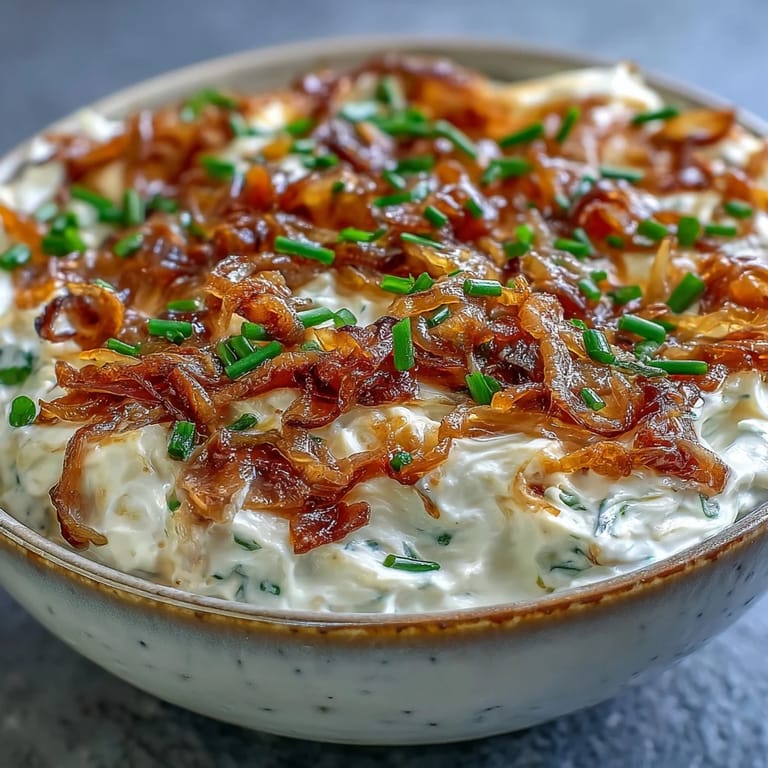
- Stir occasionally (not constantly—you want them to rest between stirs so they can brown) for thirty to thirty-five minutes until they're deep golden and almost sticky. You'll know they're done when they smell like candy and caramel, and the volume has shrunk dramatically. If they start browning too fast, lower the heat further or add a splash of water to reset the pan.
- Cool them down:
- Spread the caramelized onions on a plate or shallow bowl and let them come to room temperature completely. Warm onions will split your sour cream, and nobody wants a broken, grainy dip.
- Build your dip base:
- In a medium bowl, whisk together the sour cream, mayonnaise, Worcestershire sauce, garlic powder, and onion powder until smooth and no lumps remain. This takes maybe two minutes and creates the perfect canvas.
- Fold everything together:
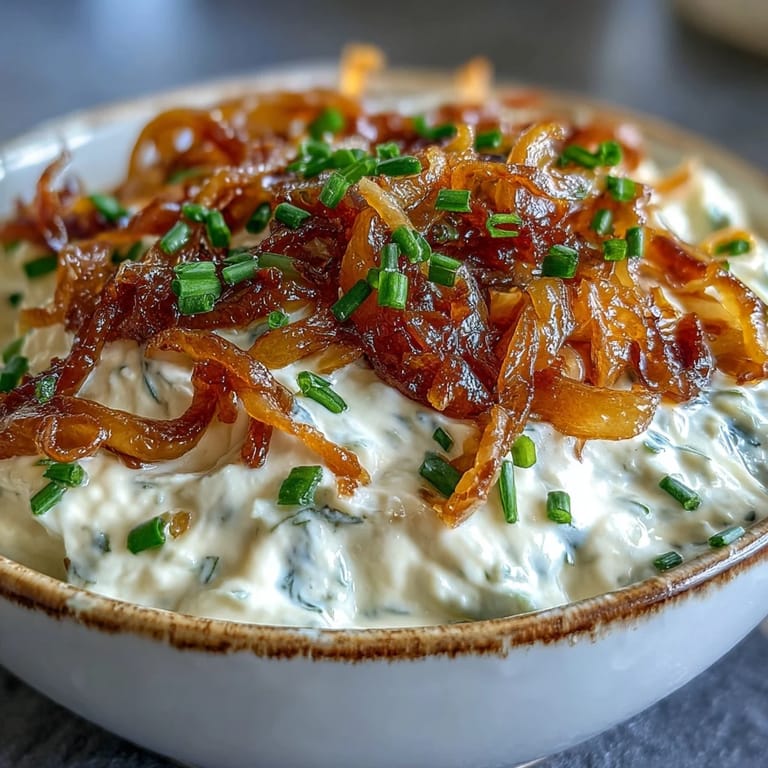
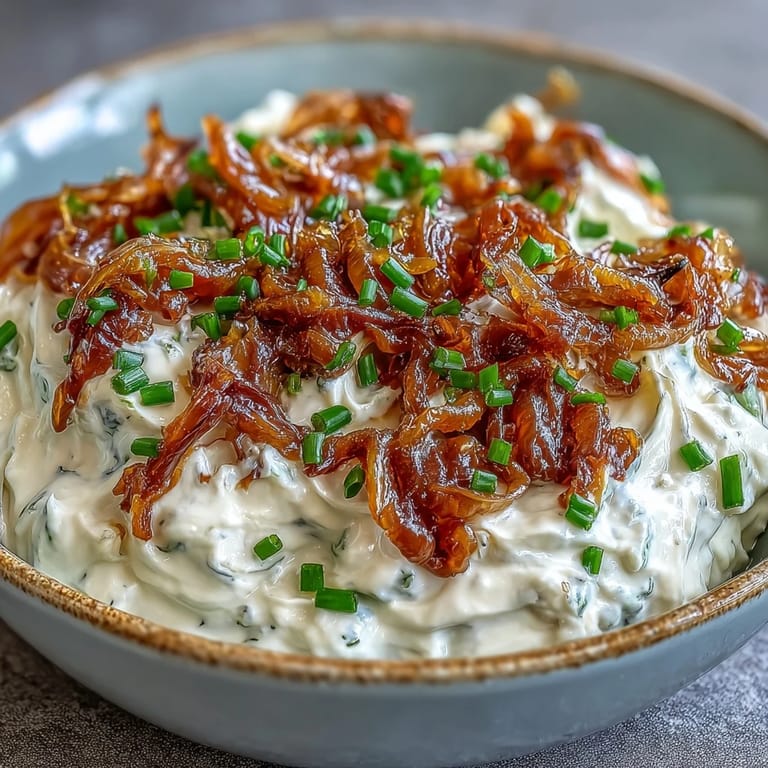
- Add the cooled caramelized onions, chives, and parsley to your creamy base and fold gently—don't overmix or you'll deflate the texture. You want ribbons of onion visible, not an even paste.
- Taste and adjust:
- Pinch of salt? Another whisper of garlic powder? This is your moment to make it taste exactly right for your palate.
- Chill and meld:
- Cover and refrigerate for at least one hour, though overnight is genuinely better. This resting time lets the flavors knit together into something greater than the sum of its parts.
- Serve with confidence:
- Transfer to a serving bowl, top with extra chives for color, and set out alongside your chosen vehicles—crispy chips, crackers, or fresh vegetables work equally well.
 Save to Pinterest
 Last summer my kid asked to help make this for a backyard picnic, and we spent forty minutes together while the onions cooked, just talking and listening to the soft sizzle of the pan. She got impatient halfway through and kept asking if they were done, and I found myself explaining how good things take time—something I needed to hear as much as she did. Years from now, I think she'll remember the smell more than the taste.
The Science of Caramelization
What actually happens during those thirty-five minutes is that the natural sugars in the onions break down and recombine into hundreds of new compounds, creating flavors that don't exist in raw onions. The moisture evaporates slowly, concentrating everything, and the heat creates new browning reactions that add sweetness and complexity. This is why you can't rush it—you're not just cooking onions, you're transforming them into something entirely different. It's food chemistry in its most forgiving form, and once you see it happen, you'll start caramelizing onions for everything.
Flavor Variations Worth Trying
The basic dip is perfect as written, but it's also endlessly customizable once you understand how the components work together. A pinch of smoked paprika adds a whisper of campfire; cayenne brings heat that plays beautifully against the sweetness; a tiny splash of balsamic vinegar adds complexity and almost a wine-like depth. Some people add crispy bacon bits (it stops being vegetarian, but nobody complains), and I once had a version with roasted garlic that made the whole thing taste more sophisticated.
Make-Ahead and Storage Wisdom
This dip is one of those rare dishes that improves with age—I actually prefer it made the morning of or even the day before your event because the flavors have time to settle and intensify. It keeps refrigerated for up to four days, though I've never had any last that long. You can freeze it too, though the texture becomes slightly grainier after thawing, so I save that option for true emergencies.
- Make it ahead without stress—flavor develops overnight, and you'll arrive at parties calm and collected.
- Let it sit on the counter for ten minutes before serving so the flavors wake up and the texture softens slightly.
- If you're traveling with it, keep it in a glass container and cover the top with plastic wrap pressed directly onto the surface to prevent browning.
 Save to Pinterest
 This dip has become the recipe I make when I want to feel like I did something from scratch for people I care about, because honestly, it does feel like magic when you've made it. It's one of those dishes that's humble enough to be casual and refined enough to feel intentional at the same time.
Recipe Questions
- → How do I caramelize onions properly?
Cook diced onions slowly over medium-low heat with butter and oil, stirring occasionally until they turn deep golden brown, which usually takes 30-35 minutes.
- → Can I substitute sour cream with a lighter ingredient?
Yes, half of the sour cream can be replaced with Greek yogurt for a lighter texture and tang.
- → What can I serve this dip with?
This blend pairs well with chips, crackers, fresh vegetables, and sandwiches to add savory richness.
- → How should I store this dip?
Keep it refrigerated, covered, for at least one hour before serving to allow flavors to meld; it can be made a day ahead.
- → Are there any allergen concerns to be aware of?
This dish contains dairy and eggs from sour cream, butter, and mayonnaise, and Worcestershire sauce may contain fish; check labels if needed.
- → Can I add spices for a different flavor profile?
Yes, a pinch of cayenne can add heat or smoked paprika can provide smoky depth to enhance flavors.