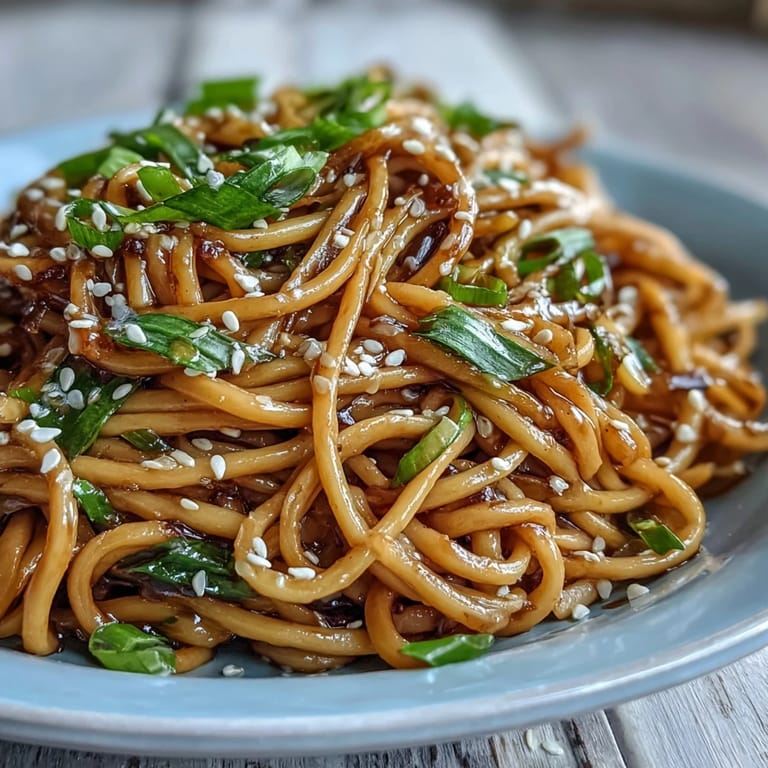
 Save to Pinterest
 My neighbor showed up one evening with a bag of fresh ginger and a knowing smile, insisting I try her family's approach to noodles. Twenty minutes later, my kitchen smelled like an Asian night market—all toasted sesame and vibrant aromatics—and I understood why she'd made the trip. These noodles aren't complicated, but they feel like a secret, the kind of dish that transforms a random Tuesday into something memorable through sheer flavor and simplicity.
I made this for my sister after she mentioned craving takeout, and watching her eyes light up when she took that first bite was worth more than any restaurant reservation. She asked for the recipe immediately, then called me the next day saying she'd made it twice already. That's when I realized this dish had the power to become someone's new favorite, the thing they'd make when they wanted to feel competent and happy in the kitchen.
Ingredients
- Wheat noodles (350 g): Lo mein absorbs the glaze like a dream, but ramen and spaghetti work beautifully too—choose whatever feels right for your pantry.
- Neutral oil (4 tbsp): This carrier matters more than you'd think; it lets the ginger and garlic shine without competing flavors.
- Scallions (4 plus 1 for garnish): Separate the white and green parts the moment you slice them so you can build flavor in layers.
- Fresh ginger (2 tbsp minced): Don't skip the peeling—the slight bitterness of the skin changes everything, so take 30 seconds to scrape it away.
- Garlic cloves (2 minced): Garlic burns faster than you'd expect, so keep the heat moderate and watch carefully.
- Red chili (1 small, optional): This adds a gentle heat that sneaks up on you, not an attack—perfect if you like warmth without fire.
- Soy sauce (4 tbsp): Use a quality brand here; it's the backbone of your glaze and deserves the good stuff.
- Dark soy sauce (1 tbsp, optional): This deepens the color and adds complexity, but skip it if you prefer brightness.
- Oyster sauce (1 tbsp): The umami backbone—use vegan oyster sauce if shellfish concerns you.
- Brown sugar (1 tbsp): Just enough sweetness to balance the salt and vinegar, nothing more.
- Rice vinegar (1 tbsp): Bright acidity that makes everything pop; don't substitute with regular vinegar.
- Toasted sesame oil (1 tsp): A tiny amount goes a long way, adding nuttiness that makes people ask what your secret ingredient is.
- Water (2 tbsp): This keeps the glaze from becoming too thick and allows the flavors to distribute evenly.
- Toasted sesame seeds (1 tsp for garnish): Toast them yourself if you can—the difference between stale and fresh is everything.
Tired of Takeout? 🥡
Get 10 meals you can make faster than delivery arrives. Seriously.
One email. No spam. Unsubscribe anytime.
Instructions
- Boil and prepare the noodles:
- Cook according to the package instructions until they bend easily but still have a slight firmness. Drain and rinse with cool water—this stops the cooking and keeps them from becoming mushy when tossed.
- Mix the glaze while noodles cook:
- Combine soy sauce, dark soy sauce, oyster sauce, brown sugar, rice vinegar, sesame oil, and water in a small bowl. Stir until the sugar dissolves completely so there are no sweet pockets in your final dish.
- Bloom the aromatics in oil:
- Heat neutral oil in your largest skillet over medium heat, then add the white parts of the scallions, ginger, garlic, and chili. Stir constantly for 1 to 2 minutes until the kitchen smells incredible but nothing turns brown—this is the moment where flavor builds without bitterness.
- Toss the noodles with aromatics:
- Add your cooked noodles to the skillet and turn everything together gently, making sure the ginger and garlic coat every strand. This takes about 30 seconds of confident tossing.
- Pour and coat with glaze:
- Add the soy glaze slowly, tossing continuously so every noodle gets covered evenly. Keep heat on medium for 2 to 3 minutes, letting the glaze become glossy and cling to the noodles like silk.
- Finish with fresh green parts:
- Remove from heat and scatter the green parts of your scallions over everything, tossing gently so they stay bright and alive. Raw scallions add a fresh bite that cooked ones can never deliver.
- Serve with joy:
- Transfer to a bowl or plates immediately, garnishing with sesame seeds, extra scallion greens, and cilantro if you like. Eat while the noodles are still warm and the aromatics are singing.
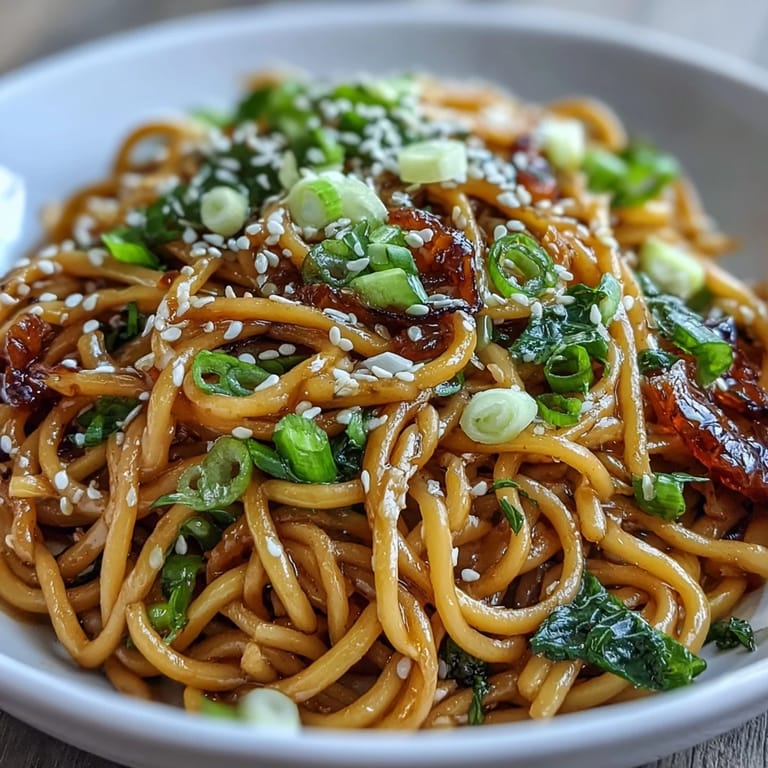 Save to Pinterest
 My father tasted this once and went quiet for a moment, then asked if I was sure it wasn't from a restaurant. That silence meant everything—it meant the simple ingredients had created something that felt crafted and intentional, worth his full attention. Food that makes people pause like that is why I keep cooking.
The Magic of Ginger and Scallion
This pairing is ancient and for good reason: ginger brings warmth and subtle spice while scallions add brightness and onion depth. Together, they create a flavor profile that feels simultaneously grounding and alive. The key is treating them as separate characters—white parts cooked for body, green parts raw for snap—rather than combining them into one tired note.
Customizing Without Losing the Soul
Add mushrooms if you want earthiness, shredded carrots for sweetness, bok choy for body, or snap peas for crunch. Each addition should feel intentional, something you're adding because you love it, not because you think the dish needs rescuing. The glaze is forgiving enough to carry whatever vegetables you choose, as long as you don't crowd the pan.
Building Layers of Heat
The red chili here is optional, but if you use it, slice it thin so the heat distributes gently rather than in sharp bites. If you want more complexity, finish with a drizzle of chili oil at the table—let people control their own adventure. Pickled cucumbers on the side also brighten everything and add a contrast that feels surprisingly right.
- Taste the glaze before pouring it over noodles so you can adjust sweetness or salt to your preference.
- Keep your burner at medium, not high—rushing this dish only burns the aromatics and ruins the whole moment.
- Serve immediately after finishing, because noodles continue cooking from residual heat and become gluey if they sit.
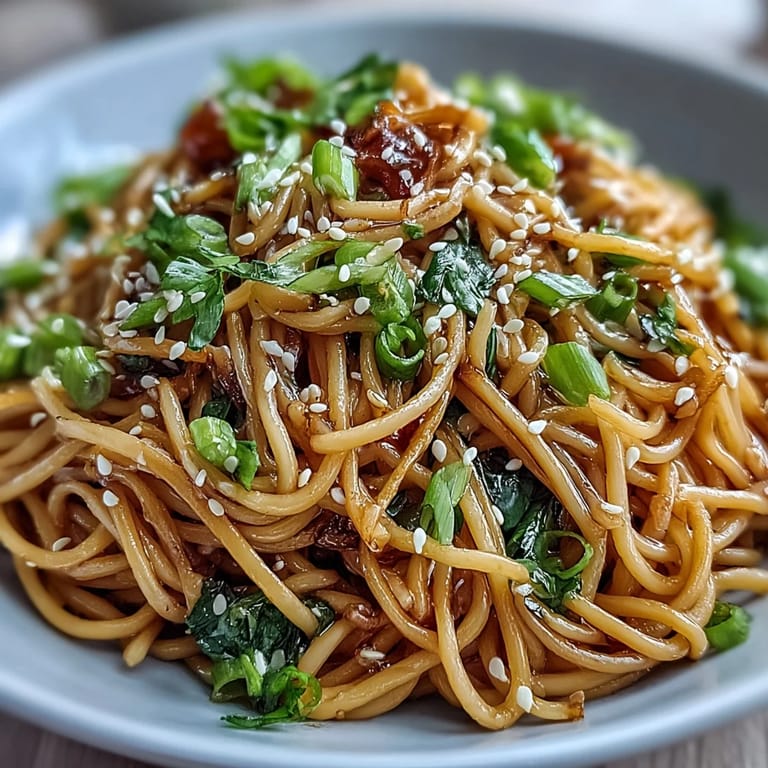 Save to Pinterest
 This dish became my answer to the question we all face when someone says they're hungry but tired. It's the food that proves simple ingredients and a little attention can create something that feels like care on a plate.
Recipe Questions
- → What type of noodles work best?
Wheat noodles like lo mein, ramen, or even spaghetti hold the sauce well and maintain a good texture after stir-frying.
- → Can I make this dish vegan?
Yes, use vegan oyster sauce or substitute extra soy sauce to keep it plant-based without sacrificing flavor.
- → How do I prevent the noodles from sticking?
Rinsing cooked noodles briefly under cold water after boiling helps stop cooking and reduces stickiness before stir-frying.
- → What garnishes complement this dish?
Toasted sesame seeds, sliced scallion greens, and fresh cilantro add texture and bright, fresh flavor.
- → Can I add vegetables to the noodles?
Yes, sautéed mushrooms, shredded carrots, bok choy, or snap peas make excellent additions for extra color and nutrition.