 Save to Pinterest
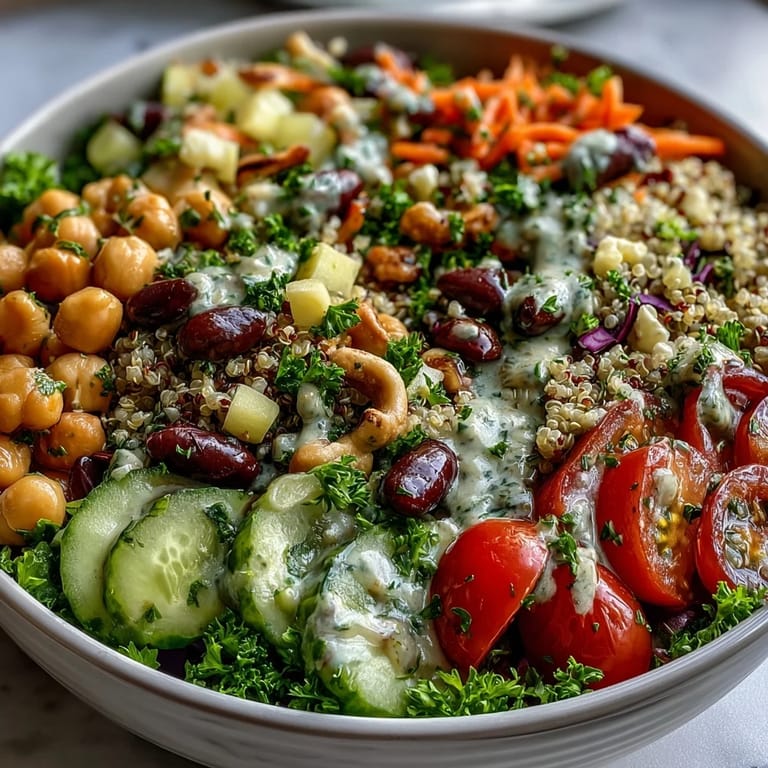
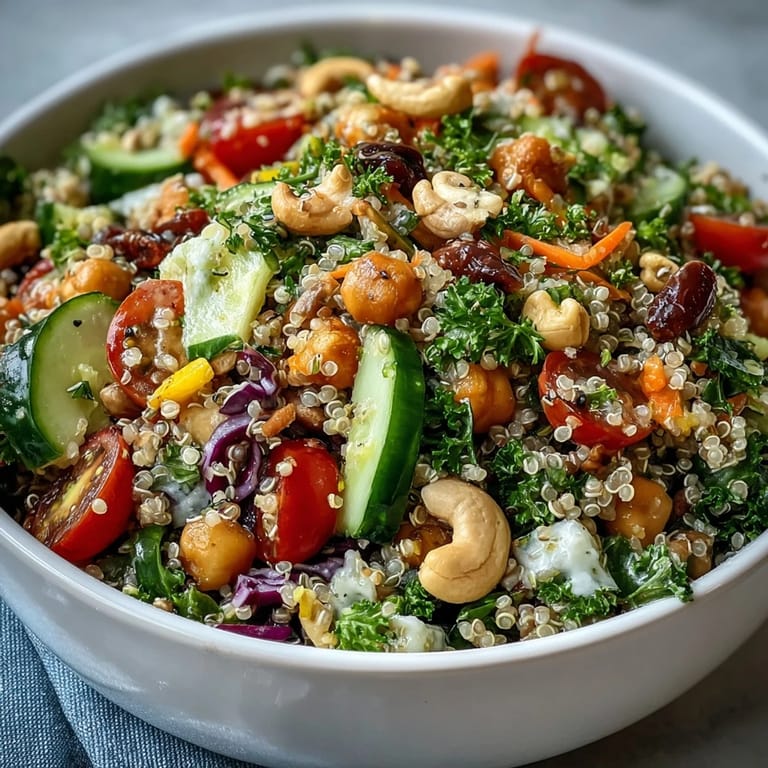
 My coworker brought this rainbow salad to a potluck on a grey Tuesday, and honestly, I was skeptical until I took one bite. The colors were almost too perfect, like someone had arranged them just to make me eat my vegetables, but then the flavors hit differently—bright lemon, creamy nuts, the earthiness of beans all dancing together. That afternoon changed how I think about salads entirely. Now I make versions of it constantly, tweaking the vegetables based on what looks good at the market, and every time someone asks what makes it so craveable, I realize it's the contrast between textures and that perfectly balanced dressing.
Last summer I made this for a beach picnic where everyone was supposed to bring something, and I showed up with this massive bowl of color. My friend's kid asked if it was an art project before eating, then came back for thirds. That moment taught me that healthy food doesn't need to feel like punishment—when it's this beautiful and actually delicious, people want more of it, not less.
Ingredients
- Cooked quinoa or brown rice: Use whichever grain you naturally reach for, but cook it with a pinch of salt and let it cool completely so it doesn't wilt the delicate vegetables.
- Cherry tomatoes: Halving them matters because whole ones slip around while eating, and the cut releases their juices into the other ingredients.
- Purple cabbage: This stuff is practically indestructible and keeps the salad crisp for days if you store it separately from the dressing.
- Grated carrots: A box grater works faster than you'd think, and the smaller pieces distribute flavor better than chunks.
- Yellow bell pepper: The sweetness balances the earthier vegetables, so don't skip it even if peppers aren't your usual thing.
- Baby spinach: It's tender enough to eat raw without feeling like you're chewing lettuce, and it wilts just slightly when the warm dressing touches it.
- Cucumber: Slice it just before assembly so it stays crisp and doesn't release water that makes everything soggy.
- Chickpeas and black beans: Rinsing canned beans removes the starchy liquid that would make your dressing taste tinny and off.
- Roasted cashews or almonds: Buy them roasted and salted because raw nuts disappear in this salad, flavor-wise.
- Pumpkin and sunflower seeds: These add a nutty crunch and protein that actually keeps you full longer than you'd expect.
- Extra-virgin olive oil: Don't use the cheap bottle for this dressing—you'll taste the difference immediately.
- Fresh lemon juice: Bottled works in a pinch, but fresh is noticeably brighter and makes the whole salad sing.
- Maple syrup or honey: A tiny bit of sweetness rounds out the lemon and makes the mustard less aggressive.
- Dijon mustard: It acts as an emulsifier, helping the oil and lemon juice actually stay together instead of separating.
- Garlic: Mince it fine because big chunks are unpleasant, but don't skip it—garlic is what makes this taste intentional rather than random.
- Fresh parsley or cilantro: Whichever you choose, add it right before serving so it stays vibrant green and doesn't turn dark.
Tired of Takeout? 🥡
Get 10 meals you can make faster than delivery arrives. Seriously.
One email. No spam. Unsubscribe anytime.
Instructions
- Get your grains ready:
- Cook your quinoa or rice according to the package, then spread it on a plate and let it cool completely—warm grains will make everything else limp and sad. This is the one step you can't rush.
- Prep all your vegetables:
- Wash everything, then cut with intention—halve those tomatoes, slice the cucumber, dice the pepper, shred the cabbage. Having everything ready before you assemble makes the whole process feel less chaotic.
- Whisk together your dressing:
- In a small bowl, combine olive oil, lemon juice, maple syrup, mustard, and minced garlic, then whisk until it looks slightly thicker and emulsified. It should taste bright and a little sharp—the vegetables will mellow it out.
- Build your bowl with color:
- In a large bowl or on a platter, arrange all your ingredients in separate sections—grains in one area, then vegetables, beans, and nuts each getting their own space. This way people can see exactly what they're getting, and it looks absolutely stunning.
- Dress and serve with intention:
- Drizzle the dressing over everything just before eating, or serve it on the side if you're feeding people who like to control their own portions. Toss gently so you don't crush the delicate parts, then top with fresh herbs.
 Save to Pinterest
 There was a week last April when I made this salad four days in a row because I was going through something heavy, and every time I ate it, I felt a little bit lighter. There's something about putting this much care into food that reminds you that you're worth feeding well, even on the hard days.
The Texture Game
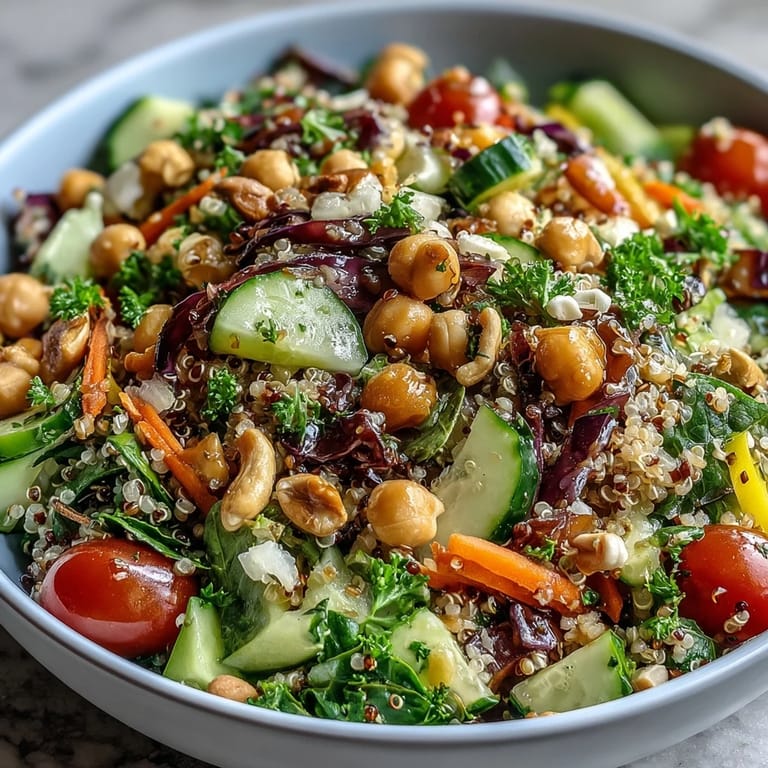
What separates this from a boring vegetable situation is the wild range of textures happening at once. You've got the chewiness of beans, the crunch of nuts, the snap of fresh vegetables, and the softness of cooked grains all in one bite. It's almost like a textural conversation—one element leads to the next, and nothing dominates the whole experience.
Storage and Next Day Magic
The genius move is storing the components separately if you're meal-prepping—keep the grains, vegetables, beans, and nuts in different containers, and store the dressing in its own jar. The night before you eat it, you just combine everything fresh so nothing has a chance to get soggy or weird. I've kept salads like this in the fridge for three days using this method, and they taste nearly as good on day three as they do day one.
Variations Worth Trying
The beautiful thing about this formula is that it adapts to whatever you have on hand or whatever you're feeling. I've made it with farro instead of quinoa, added shredded beets for extra earthiness, thrown in avocado because I was feeling fancy, and even used roasted chickpeas instead of raw ones for more crunch. The dressing stays the same, the basic structure stays the same, but somehow it's never boring because the vegetables change with the seasons.
- Swap grains based on what you're cooking that week—farro, brown rice, millet, or even wild rice all work beautifully.
- Add roasted tofu cubes or grilled chicken if you want extra protein beyond what the beans provide.
- Throw in shredded beets, radishes, or corn kernels depending on what looks fresh at the market.
 Save to Pinterest
 This salad is the kind of dish that sneaks up on you and becomes a favorite without you trying to make it happen. It just quietly proves that eating well doesn't have to be complicated or boring.
Recipe Questions
- → How long does Rainbow Salad Bowl keep in the refrigerator?
The salad keeps well for 3-4 days when stored in an airtight container. For best results, store the dressing separately and toss just before serving to maintain the fresh crunch of vegetables and nuts.
- → Can I make this bowl ahead for meal prep?
Absolutely. Prepare all components in advance and store in separate containers. The grains and vegetables last 4-5 days refrigerated. Add the nuts, seeds, and dressing right before eating to preserve texture.
- → What grains work best as a quinoa substitute?
Brown rice, farro, bulgur, wheat berries, or even millet make excellent alternatives. Cook according to package directions and cool completely before assembling. Each grain brings slightly different texture and flavor.
- → How can I add more protein to this bowl?
Top with grilled tofu, tempeh, roasted chickpeas, or even a hard-boiled egg. Feta cheese adds protein plus creaminess, or add a cup of edamame for plant-based protein that fits the color scheme.
- → Is the dressing customizable?
Certainly. Try balsamic vinegar instead of lemon juice, add fresh herbs like basil or dill, or include a teaspoon of tahini for creaminess. Adjust maple syrup to taste and substitute honey if not vegan.
- → What vegetables can I swap based on season?
Use roasted sweet potato cubes in fall, fresh corn in summer, or shredded Brussels sprouts in winter. The beauty lies in mixing colors and textures, so feel free to adapt based on what looks fresh at your market.