 Save to Pinterest
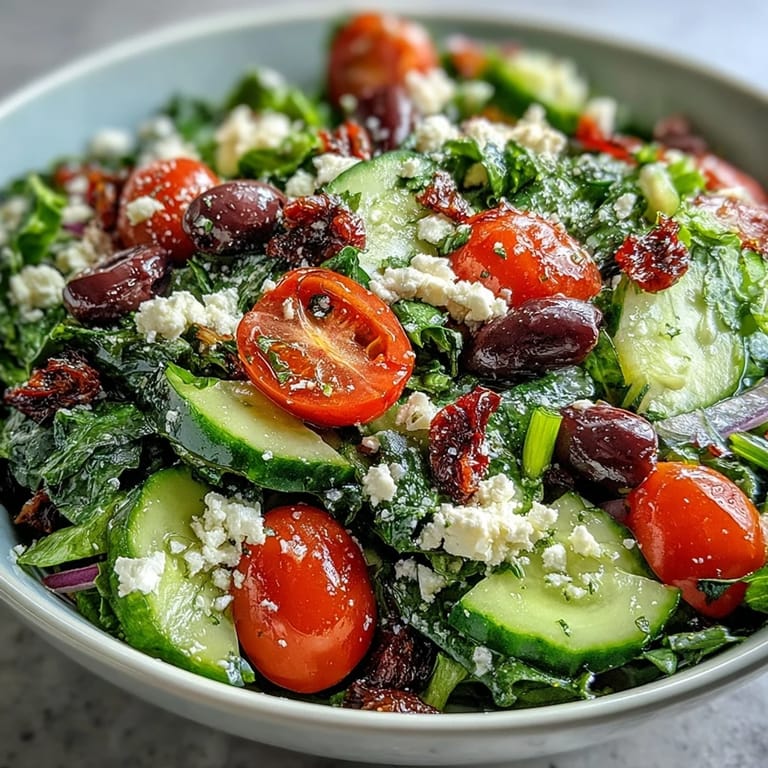
 There's something about assembling a Mediterranean salad that feels less like cooking and more like painting with vegetables. My neighbor Maria handed me this recipe years ago while we were both picking tomatoes at the farmer's market on a Saturday morning, and she said the secret was letting the greens breathe and never—absolutely never—dressing it until the last possible moment. That one detail changed everything for me.
I made this for a potluck last spring when everyone else brought heavy casseroles, and watching people come back for thirds of something so simple and green felt like a quiet victory. One friend actually asked if I'd made the dressing myself, as if that were some impressive feat, and I realized that's when you know a recipe has become part of you—when people assume there's more effort involved than there actually is.
Ingredients
- Spring mix: Baby lettuces, arugula, and spinach together create layers of texture and flavor that don't all wilt at the same rate—each bite feels different.
- Cherry tomatoes: Halving them releases just enough juice to start seasoning the salad naturally, and the smaller surface area means they won't get crushed under the weight of everything else.
- Cucumber: Slice it fresh and use it quickly, as it'll weep water if it sits too long; this is where timing actually matters in a seemingly simple dish.
- Kalamata olives: Pit them yourself if you can find unpitted ones—the ritual of it is meditative, and the flavor feels somehow more intentional.
- Red onion: Slice it thin enough that it doesn't dominate, thin enough that it becomes a whisper of sharpness rather than a shout.
- Feta cheese: Crumble it by hand rather than using pre-crumbled; the irregular pieces catch the dressing better and feel more generous on your fork.
- Extra-virgin olive oil: This isn't the time to reach for the cooking olive oil—you taste this directly, so choose one you'd actually want to drink.
- Red wine vinegar: It's bright and forgiving, balancing the richness of oil without turning harsh or sour.
- Dried oregano: Mediterranean salads practically demand it, and dried works beautifully here because the dressing hydrates it perfectly.
- Garlic clove: Mince it fine so it distributes evenly through the dressing, creating flavor rather than surprise chunks.
- Dijon mustard: Just a touch acts as an emulsifier, helping the oil and vinegar actually stay together rather than separating immediately.
Tired of Takeout? 🥡
Get 10 meals you can make faster than delivery arrives. Seriously.
One email. No spam. Unsubscribe anytime.
Instructions
- Gather and prep your vegetables:
- Wash your greens and spin them truly dry—any excess water will dilute your dressing and make everything soggy. Slice your cucumber on the bias so the pieces look intentional, halve those tomatoes, and get your onion as thin as you can manage without your fingers.
- Build the salad base:
- Toss your spring mix with everything except the feta and dressing in your largest bowl, using your hands to gently combine without crushing anything. This is the moment where you're basically done, and it's a relief to realize how simple it actually is.
- Whisk the dressing:
- In a small jar, combine your oil, vinegar, oregano, minced garlic, mustard, salt, and pepper. Shake it vigorously for about 30 seconds until it thickens and takes on a slightly creamy appearance; this emulsification is what makes it cling to the greens.
- Dress and finish:
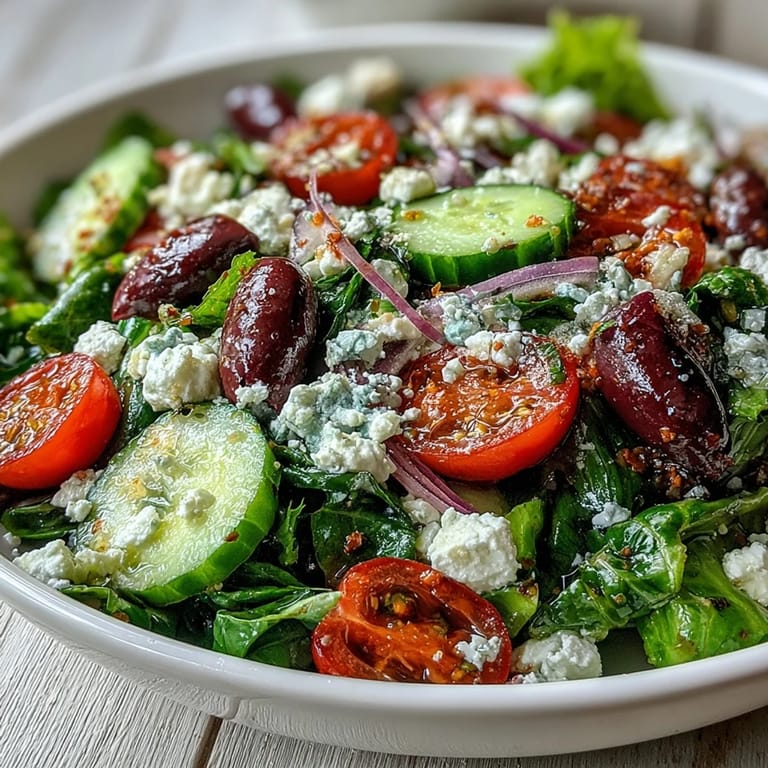
- Drizzle the dressing over your waiting salad just before serving, toss everything together with restraint so nothing gets bruised, then scatter your crumbled feta across the top. Serve immediately while the greens are still crisp and the flavors are still singing separately before they begin to meld together.
 Save to Pinterest
 There was an afternoon when my daughter asked why this salad tasted so good when it was just vegetables, and I realized I didn't have a simple answer except that it was made with attention—that someone cared enough to do it right rather than fast. Those moments remind me that cooking doesn't have to be complicated to matter.
Why Fresh Ingredients Make All the Difference
A tired cucumber or mealy tomato will sabotage this salad faster than anything else, so shop with your hands and your nose. Choose tomatoes that smell like tomatoes, olives that gleam, and greens that feel almost impossibly tender—these aren't fancy requirements, just basic respect for what you're about to eat.
Making It a Meal Instead of a Side
On its own this is a beautiful side dish, but it becomes something more substantial with the right additions. A handful of chickpeas, some grilled shrimp still warm from the pan, or chunks of rotisserie chicken transform it from accompaniment into the main event, and the dressing is sturdy enough to hold up to all of it.
Storage and Timing Tips
You can prep everything hours ahead—wash your greens, slice your vegetables, make your dressing—but don't combine them until you're ready to eat. The moment the dressing touches the leaves, a clock starts ticking, and after about 20 minutes the salad will begin to lose its crispness.
- Keep your dressing in a jar so you can shake it again just before using, waking up the flavors and re-emulsifying if needed.
- If you're bringing this somewhere, pack the dressing separately and dress it in a bowl right before serving for maximum crunch and life.
- Leftover dressing keeps beautifully for a week and works equally well on roasted vegetables, grilled fish, or even bread.
 Save to Pinterest
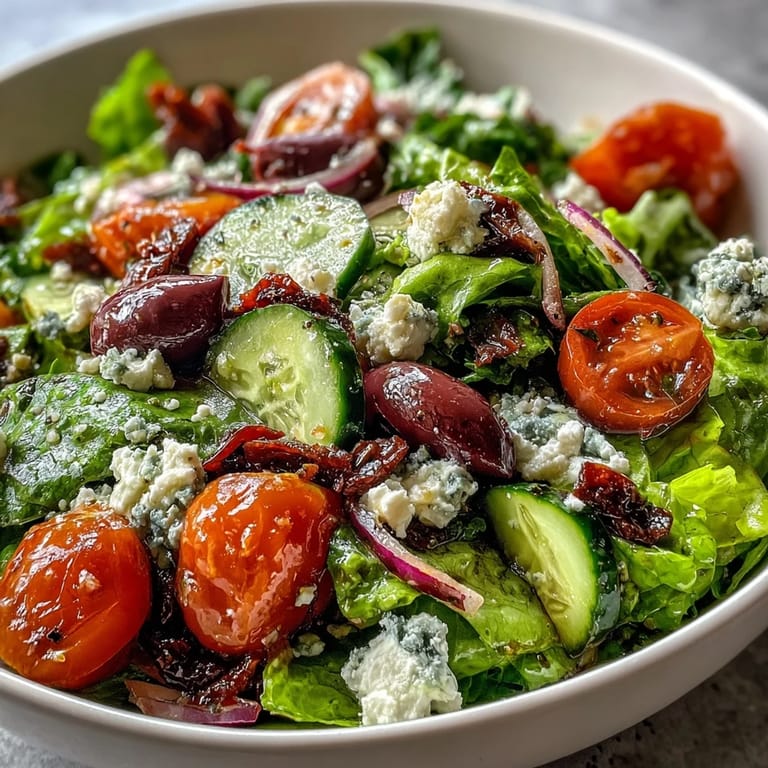
 This salad taught me that the most nourishing meals don't require hours of work or complicated techniques, just good ingredients treated with care. Make it once and you'll understand why people keep coming back for it.
Recipe Questions
- → Can I make Mediterranean green salad ahead of time?
Prepare all vegetables and dressing separately up to 24 hours in advance. Store chopped ingredients in airtight containers in the refrigerator. Keep the dressing in a small jar. Toss everything together just before serving to maintain the crisp texture of the greens and vegetables.
- → What vegetables work best in this Mediterranean bowl?
Spring mix provides a delicate base, but you can also use romaine, butter lettuce, or spinach. Cherry tomatoes add sweetness, while cucumber contributes refreshing crunch. Bell peppers, radishes, or grated carrots would complement the existing flavors beautifully without overpowering the classic Mediterranean profile.
- → How long does homemade Greek dressing last?
The dressing keeps well in a sealed jar in the refrigerator for up to one week. The olive oil may solidify when cold—simply let it sit at room temperature for 10 minutes and shake well before using. The flavors actually develop and deepen after a day or two.
- → What proteins can I add to make it more filling?
Grilled chicken breast seasoned with lemon and herbs works wonderfully. Shrimp lightly cooked with garlic pairs perfectly with the Mediterranean flavors. For plant-based protein, try chickpeas, white beans, or grilled tofu. Quinoa or farro can also be added for extra substance and texture.
- → Is there a dairy-free alternative to feta cheese?
Vegan feta made from almonds or tofu provides a similar tangy, salty element. You can also use dairy-free feta-style cheese available in many stores. Alternatively, increase the olives and add capers for that briny punch, or sprinkle nutritional yeast for a subtle cheesy flavor boost.
- → Can I use bottled dressing instead of homemade?
Store-bought Greek vinaigrette works in a pinch, but the homemade version takes just two minutes and tastes significantly fresher. If using bottled, look for one with simple ingredients and extra-virgin olive oil as the base. Adjust with additional dried oregano or a squeeze of fresh lemon to brighten the flavor.