 Save to Pinterest
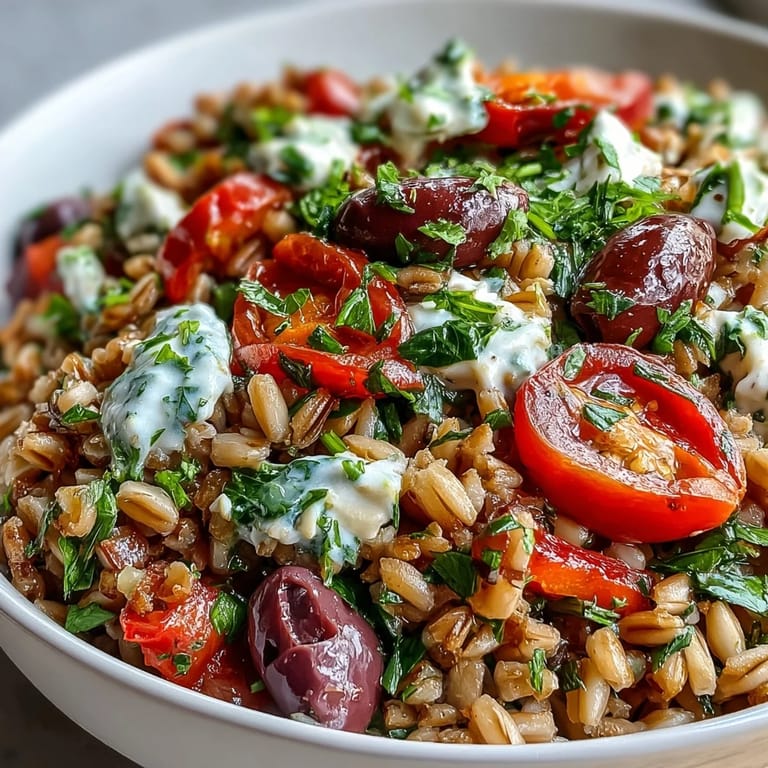
 My neighbor handed me a container of farro one afternoon, insisting I'd been missing out on one of the easiest grains to cook with. Skeptical but curious, I dumped it into a pot with broth that evening and while it simmered, I chopped vegetables almost without thinking—tomatoes, cucumber, peppers—the kind of mindless prep that somehow becomes meditative. By the time I drizzled that first spoonful of tahini dressing over the warm grains, I understood what she meant.
I made this for my partner when he was going through a phase of wanting lighter dinners, and he actually asked for seconds, which he never does. There's something about the combination of warm grain, cool fresh vegetables, and that creamy dressing that just works—it feels both satisfying and bright at the same time.
Ingredients
- Farro: This nutty grain holds up beautifully when tossed with dressing and tastes better than you'd expect from something so humble—I always rinse it first to remove any dust.
- Vegetable broth: The foundation of flavor, so use one you actually like drinking; cheap broth will make the whole bowl taste thin.
- Cherry tomatoes: Their natural sweetness balances the earthiness of everything else, and halving them instead of chopping means less juice seeping into the bowl.
- Cucumber: Keeps things fresh and cool; I dice mine into chunky pieces so it doesn't get lost among the other vegetables.
- Red bell pepper: Any color works, but red feels most Mediterranean and adds a gentle sweetness without being cloying.
- Kalamata olives: Don't skip these—they bring a briny punch that ties the whole thing together, and slicing them means the flavor distributes evenly.
- Red onion: Raw and thinly sliced, it adds a subtle sharpness that you notice but never regret.
- Baby spinach: Wilts slightly from the warm farro without turning mushy, adding nutrients without any effort on your part.
- Chickpeas: Already cooked means no planning ahead, though grilled chicken or crumbled tofu swap in seamlessly if that's what you're craving.
- Tahini: The secret weapon—this creamy sesame paste transforms everything it touches into something more interesting.
- Lemon juice: Brightens the tahini so it doesn't feel heavy, and keeps vegetables from oxidizing as quickly.
- Olive oil: Extra-virgin tastes noticeably better here than regular; this is one place where the good stuff matters.
- Garlic and cumin: Ground cumin especially feels like the spice that says Mediterranean without any confusion.
- Feta cheese: Crumbled over the top, it adds a salty, tangy moment that's completely optional but completely worth it if dairy is fine for you.
- Fresh parsley: A small handful chopped fine makes the whole bowl look intentional instead of thrown together.
Tired of Takeout? 🥡
Get 10 meals you can make faster than delivery arrives. Seriously.
One email. No spam. Unsubscribe anytime.
Instructions
- Simmer the farro:
- Rinse your farro under cold water first, then combine it with vegetable broth in a medium saucepan and bring to a boil. Once it's boiling, reduce the heat low, cover the pot, and let it cook undisturbed for 25 to 30 minutes until each grain is tender but still has a slight chew to it.
- Prepare everything else:
- While the farro is cooking, dice your vegetables and slice your red onion, keeping them separate so you can control when everything comes together. If your chickpeas aren't already cooked, warm them through gently in their own pot or even in a skillet with a splash of olive oil.
- Make the tahini dressing:
- In a small bowl, whisk together tahini, lemon juice, olive oil, water, minced garlic, and cumin until the mixture turns pale and creamy—this takes longer than you'd think, usually about a minute of actual whisking. Taste it and add salt and pepper, then add more water a teaspoon at a time if it feels too thick to drizzle.
- Bring everything together:
- Once the farro has cooled for a minute or two, transfer it to a large bowl and add all your prepared vegetables, the chickpeas, and the spinach. Drizzle the tahini dressing over everything and toss gently with a large spoon, being careful not to crush the tomatoes or turn the spinach into mush.
- Finish and serve:
- Divide the bowl among your serving vessels and top each portion with a scatter of crumbled feta and a pinch of fresh parsley. Serve warm or at room temperature, knowing that this actually tastes better the next day as flavors meld together.
 Save to Pinterest
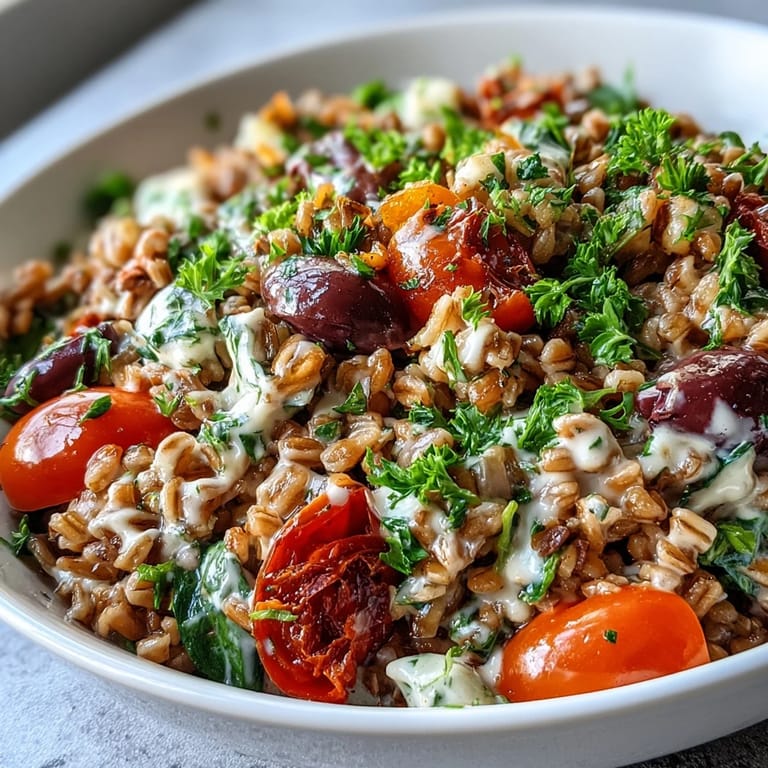
 My sister brought her new boyfriend to dinner once and made this bowl, and I remember him taking his first bite and just going quiet in that way that means he's impressed but trying not to admit it. Food that tastes this good without pretension has a way of winning people over.
Why This Grain Matters
Farro has this pearl-like quality where it stays intact and slightly chewy even when fully cooked, making it feel more substantial than rice or couscous. Once you stop thinking of it as some obscure health food and start treating it like your default grain, you realize how many things it improves—soups, salads, simple bowls like this one. The nuttiness brings warmth to light vegetables without making the whole dish feel heavy.
The Dressing Changes Everything
I used to think tahini was just for hummus, until I started whisking it with lemon juice and realized it becomes something else entirely—a dressing that's both rich and bright, creamy without any cream. The trick is not being stingy with the lemon juice; it's what keeps the tahini from feeling like it's coating your mouth. Once you have this technique down, you'll start drizzling it over roasted vegetables, grains, even simple salads that suddenly feel intentional and Mediterranean.
Making It Your Own
The beauty of this bowl is that it's a template, not a law—I've made it with roasted eggplant when tomatoes were underwhelming at the market, swapped in grilled chicken when I had leftover rotisserie, even thrown in shredded beets just to see what would happen. The core of grain, fresh vegetables, and tahini dressing stays the same while everything else becomes an expression of what you're actually craving.
- Roast whatever vegetables are in season—zucchini, summer squash, Brussels sprouts in winter all work beautifully.
- Grill protein if you have time; grilled shrimp or chicken adds a smokiness that deepens everything around it.
- Make the dressing thinner for drizzling or thicker for dolloping depending on your mood and how you want to eat the bowl.
 Save to Pinterest
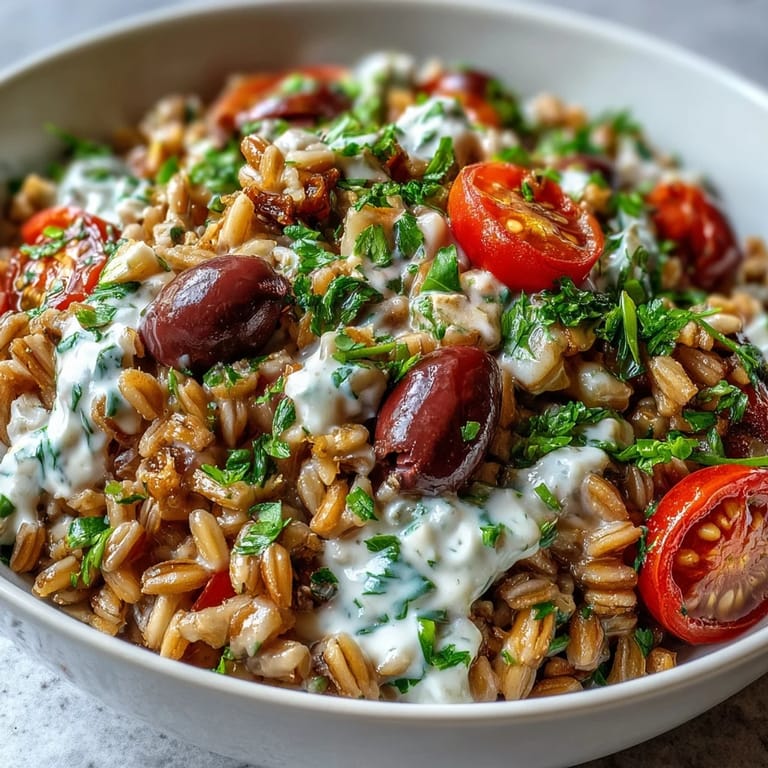
 This bowl has become my answer to the question of what to cook when I want something that feels nourishing but doesn't demand much from me. It's one of those recipes that keeps showing up on the table because it works, every single time.
Recipe Questions
- → What does farro taste like?
Farro has a nutty, chewy texture similar to barley but slightly softer. It absorbs flavors well and provides a satisfying heartiness to grain bowls.
- → Can I make this ahead of time?
Yes, this bowl keeps well refrigerated for up to 2 days. Store the dressing separately and toss just before serving to maintain freshness.
- → Is farro gluten-free?
No, farro contains gluten as it's a wheat product. Substitute quinoa or brown rice for a gluten-free version.
- → What protein options work best?
Chickpeas provide plant-based protein, but grilled chicken, shrimp, or tofu also pair beautifully with the Mediterranean flavors.
- → How can I add more vegetables?
Roasted eggplant, zucchini, or artichoke hearts complement the existing vegetables. You can also add roasted red peppers or fresh herbs like mint or basil.