 Save to Pinterest
 My friend texted me a photo of her King Cake from New Orleans, and I became obsessed with recreating that magic at home. But I wanted something more personal, so I started layering in babka techniques—those gorgeous swirled yeasted breads I'd fallen in love with years ago. The result was this King Cake Cinnamon Babka Loaf, a festive hybrid that somehow tastes like both traditions at once. Every time I make it, the kitchen fills with that intoxicating cinnamon warmth, and suddenly it feels like Mardi Gras season no matter the calendar.
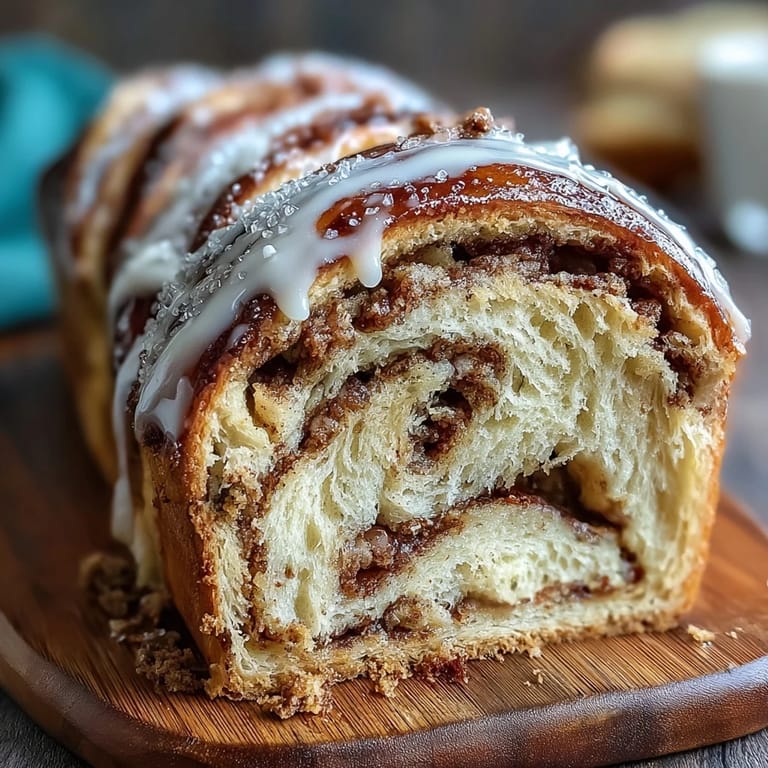
I baked this for my book club during Mardi Gras week, and someone actually gasped when they saw it coming out of the kitchen—not because I'm a great baker, but because the purple, green, and gold sugars caught the light just right. We sliced into it while still slightly warm, and the cinnamon-swirled layers revealed themselves like a secret. That moment when someone tastes something you made and their eyes go quiet with surprise is exactly why I keep making this bread.
Ingredients
- All-purpose flour: The structure of everything—you need good quality here, and measuring by weight (410g) makes all the difference in consistency.
- Instant yeast: This is what gives you rise without the fussiness of active dry; it activates faster and more reliably in a mixer.
- Whole milk, lukewarm: Warmth matters here—too hot kills the yeast, too cold and nothing happens, so aim for around 110°F (43°C).
- Unsalted butter: You're using it three ways (in dough, cinnamon filling, and cream cheese filling), so having it softened to room temperature means smooth, even mixing.
- Brown sugar and ground cinnamon: The brown sugar brings moisture to your filling, and good cinnamon (not that stale jar from 2015) is absolutely worth it.
- Cream cheese: This creates those tender pockets of richness that make the babka layers feel indulgent; room temperature means it blends without lumps.
- Powdered sugar and milk: A simple glaze that sets beautifully and gives the sanding sugars something to cling to.
- Purple, green, and gold sanding sugars: These sparkle differently than regular sugar and actually stick to the glaze—they're the visual magic that makes this loaf unmistakably festive.
Tired of Takeout? 🥡
Get 10 meals you can make faster than delivery arrives. Seriously.
One email. No spam. Unsubscribe anytime.
Instructions
- Build your dough base:
- Combine flour, sugar, yeast, and salt in your mixer bowl, then add the lukewarm milk mixture (whisked together separately). Mix until shaggy, then beat in softened butter until the dough becomes smooth and elastic—this takes about 8–10 minutes and your mixer will work harder than you'd expect. You'll feel the dough transform from rough to silky.
- Let it rise properly:
- Place the dough in a greased bowl, cover it loosely, and find a warm spot (not too hot—your turned-off oven with the light on works perfectly). It should double in size in about 1–1.5 hours; this isn't a race, and rushing means a denser loaf.
- Prepare your fillings while dough rises:
- Mix brown sugar, cinnamon, and softened butter into a paste for the first filling. In another bowl, beat cream cheese with sugar and vanilla until completely smooth—lumpy cream cheese will create weird texture pockets.
- Shape the magic happens here:
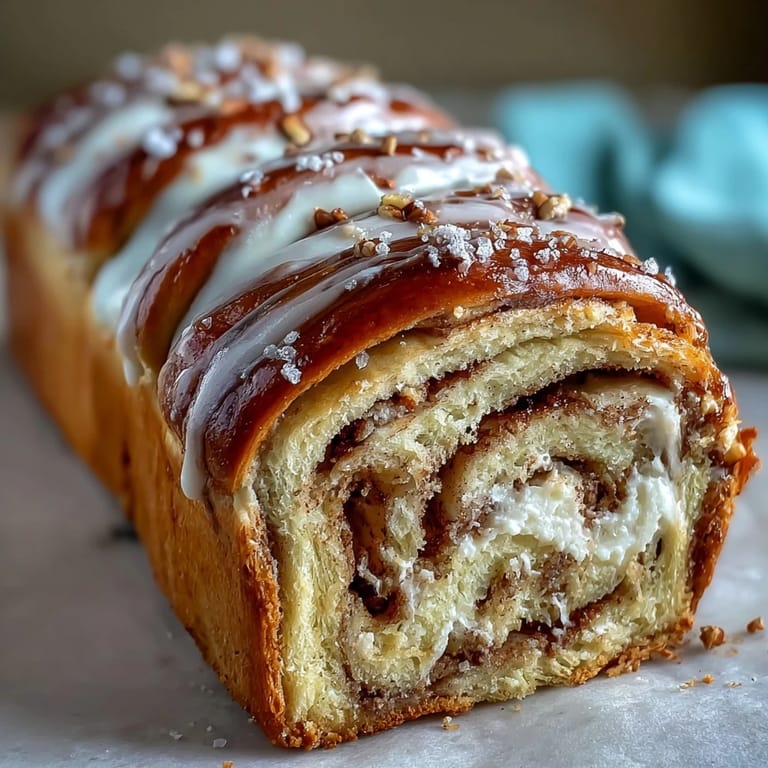
- Punch down your risen dough and roll it into a 16x12-inch rectangle on a lightly floured surface. Spread the cream cheese filling first (leaving a 1/2-inch border), then the cinnamon mixture on top. Roll tightly from the long side into a log, then slice lengthwise in half and twist those two strands together, keeping the cut sides facing up so you see those gorgeous layers.
- Second rise in the pan:
- Place your twisted loaf in a greased 9x5-inch loaf pan, cover loosely, and let it puff up for about 45 minutes until it looks puffy and full of promise. Don't skip this step—it ensures a tender crumb.
- Bake with attention:
- Preheat to 350°F (175°C) and bake for 35–40 minutes until golden brown and cooked through; if the top is browning too fast, loosely tent it with foil. You want deep golden color without burning the sugars on top.
- Cool and finish:
- Let it cool in the pan for 15 minutes (this keeps it from breaking apart), then transfer to a cooling rack. Once completely cool, whisk powdered sugar with milk until thick, drizzle it over the loaf, and immediately sprinkle with the purple, green, and gold sanding sugars while the glaze is still wet. Add your King Cake baby or almond if you're keeping with tradition.
 Save to Pinterest
 There's something almost ceremonial about slicing into a babka loaf—that first cut reveals layers and swirls you orchestrated with your own hands, and it never gets old. This particular loaf sits at the intersection of two bread traditions that shouldn't work together but somehow do, which is maybe why it feels so celebratory every time.
The Babka Twist Makes All The Difference
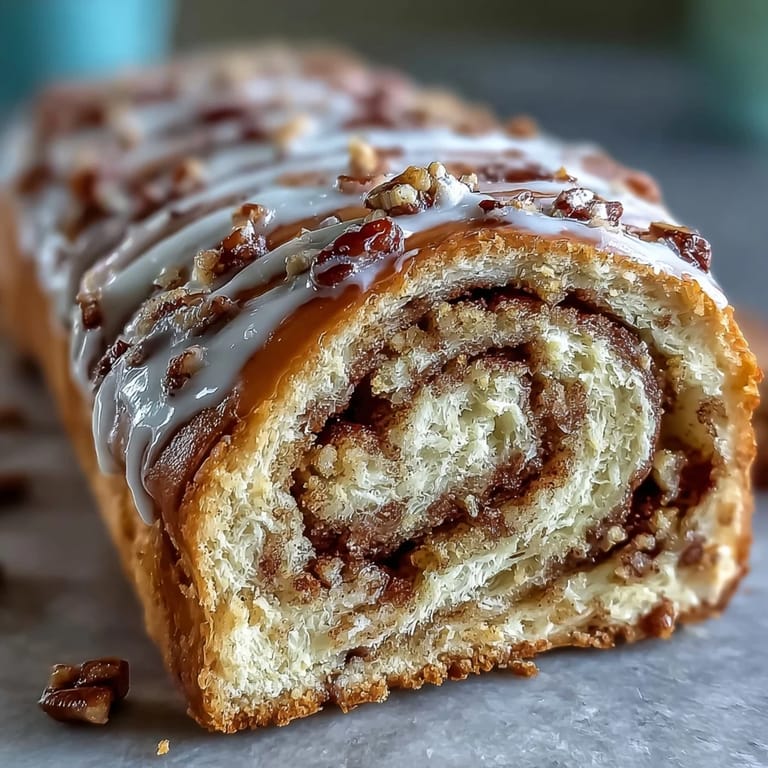
Regular cinnamon swirl breads roll and bake in a loaf pan, which is fine, but slicing a babka lengthwise and twisting those strands before baking creates an entirely different structure. The cut surfaces stay exposed during rising and baking, so your cinnamon and cream cheese layers become visible ribbons instead of hidden swirls. This is also why you keep those cut sides facing up—it's the architectural heart of what makes this special.
King Cake Tradition Meets Everyday Magic
King Cake season in New Orleans runs from Epiphany through Mardi Gras, and hiding a toy baby or almond inside is part of the fun (though not necessary). That tradition of surprise and celebration is part of why these cakes feel joyful, but honestly, this loaf is celebratory enough on its own just from looking at it. The purple, green, and gold aren't just random—they represent justice, faith, and power in the Mardi Gras tradition, and having them on your breakfast table makes even a Tuesday feel a little bit special.
Storage And Serving Secrets
This loaf stays fresh and tender for up to 3 days stored in an airtight container at room temperature, and it tastes even better the next day when the flavors have had time to meld. Slice it thick, serve it with strong coffee or a dessert wine, and don't be surprised when people ask for your recipe immediately.
- Toast leftover slices lightly and they taste almost better than fresh—the sugars caramelize slightly and the texture becomes more indulgent.
- If you want to add orange zest to the dough itself, mix about 1 teaspoon into the flour blend before adding liquids for a subtle citrus background.
- Make this loaf ahead and freeze it well-wrapped for up to 2 weeks; thaw at room temperature and re-glaze with fresh powdered sugar before serving for that just-made appearance.
 Save to Pinterest
 This bread exists in that sweet spot where it's challenging enough to feel like an accomplishment but forgiving enough that even a first attempt usually looks impressive. It's become my go-to for sharing joy, whether it's a celebration or just a random Tuesday that could use something beautiful.
Recipe Questions
- → What type of flour works best for this loaf?
All-purpose flour provides the right balance of structure and tenderness for the yeasted dough.
- → How can I ensure the dough rises properly?
Keep the dough in a warm, draft-free environment until it doubles in size, usually about 1 to 1.5 hours.
- → Can I substitute cream cheese with another ingredient?
Mascarpone can be used for a richer, creamier filling without altering the texture significantly.
- → What is the purpose of the colored sugars on top?
The purple, green, and gold sugars add festive color and a sweet crunch complementing the glaze.
- → How should leftover loaf be stored?
Store slices in an airtight container at room temperature for up to three days to retain freshness.
- → Is it necessary to cover the loaf while baking?
If the loaf browns too quickly, tent it with foil to prevent over-browning while baking through.