 Save to Pinterest
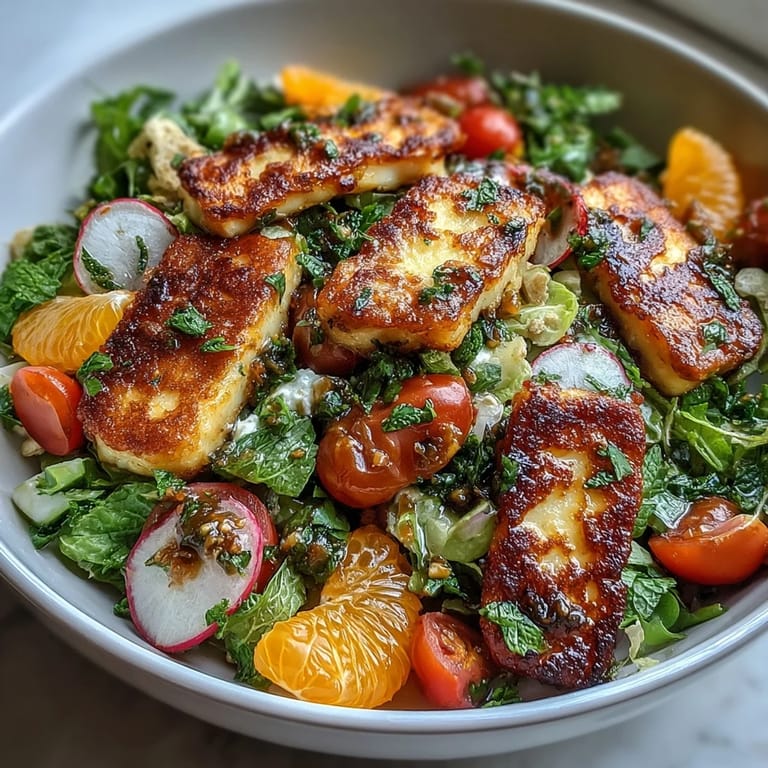
 Last summer, my neighbor brought over a halloumi she'd found at a farmers market, still warm from being made that morning, and I had no idea what to do with it. She suggested frying it until it got this golden, squeaky crust, then tossing it into a salad with blood oranges that were at their peak. That one casual lunch changed how I think about cheese in salads entirely, and now I make this whenever I want to feel like I'm eating something both simple and impossibly elegant.
I made this for my sister's outdoor dinner party in early autumn when the light was turning golden and everyone was tired of heavy food. Someone asked if it was from a restaurant, and when I said I'd made it, the whole table went quiet for a second before diving back in. That moment taught me that food doesn't need to be complicated to feel special—it just needs to be made with attention.
Ingredients
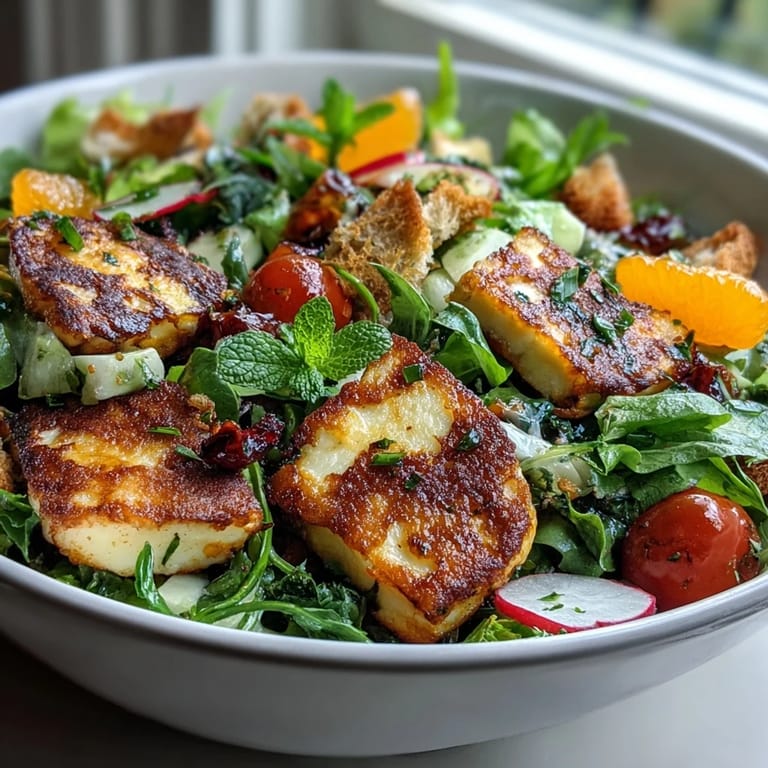
- Halloumi cheese, 200 g sliced 1 cm thick: This is the star that transforms under heat, developing a golden crust while staying creamy inside; it's the only cheese that doesn't melt into oblivion when you fry it.
- Blood oranges, 2 peeled and segmented: Their deep color and complex flavor feel more special than regular oranges, though regular ones work fine if these aren't in season where you are.
- Mixed salad greens, 150 g (romaine, arugula, parsley, mint): The mint and parsley aren't just garnish—they bring a fresh herbal note that balances the richness of the fried cheese.
- Cucumber, 1 small diced: Keep the skin on for texture and those tiny seeds that add moisture and a subtle sweetness.
- Cherry tomatoes, 8 halved: Smaller tomatoes have more concentrated flavor than their larger cousins, so they won't disappear into the dressing.
- Red onion, ½ small thinly sliced: Raw onion brings a sharp bite that cuts through the richness; thinly slice it so it integrates rather than dominates.
- Radishes, 2 thinly sliced: They're not just pretty—they add a peppery crunch that keeps the salad interesting all the way through.
- Sourdough bread, 2 thick slices cut into cubes: The tanginess of sourdough complements the sumac dressing better than neutral bread ever could.
- Olive oil for croutons, 2 tbsp plus 3 tbsp for dressing: Use your better olive oil for the dressing where you'll actually taste it; regular is fine for the croutons.
- Extra virgin olive oil, 3 tbsp: This goes in the dressing, so it matters; choose one you genuinely enjoy tasting.
- Fresh lemon juice, 1½ tbsp: Freshly squeezed makes a noticeable difference—bottled has a different sharpness that doesn't play as well with the pomegranate molasses.
- Pomegranate molasses, 1 tbsp: This ingredient might feel obscure, but it's the secret depth that makes people wonder what you did differently; find it in Middle Eastern markets or online.
- Sumac, 1 tsp: It adds a lemony tartness without more acid, plus a beautiful burgundy color that makes the dressing look intentional.
- Ground black pepper and sea salt to taste: Finish with both—they're not just seasoning, they're the final adjustment that makes everything click.
Tired of Takeout? 🥡
Get 10 meals you can make faster than delivery arrives. Seriously.
One email. No spam. Unsubscribe anytime.
Instructions
- Get your croutons golden while everything else waits:
- Preheat the oven to 200°C (400°F) first so it's ready. Toss your sourdough cubes with olive oil and a pinch of sea salt, then spread them out on a baking tray in a single layer—don't crowd them or they'll steam instead of crisp. Bake for 8 to 10 minutes until they're golden brown and you can hear them crackle when you move the tray; they'll continue crisping as they cool, so don't wait for them to feel crunchy yet.
- Fry the halloumi until it's golden and squeaky:
- Heat a non-stick skillet over medium heat until a drop of water sizzles on contact, then add your halloumi slices—they should sizzle immediately. Fry for 2 to 3 minutes per side until golden brown with a slight crust, watching how the edges go crispy while the inside stays soft; drain briefly on a paper towel to remove excess oil, but serve while still warm.
- Assemble your salad greens and vegetables:
- In a large salad bowl, combine your salad greens, diced cucumber, halved cherry tomatoes, thinly sliced red onion, radishes, and blood orange segments. Don't dress it yet—the acid in the dressing will start breaking down the greens if they sit too long.
- Mix your dressing until it's balanced and fragrant:
- In a small bowl, whisk together the extra virgin olive oil, fresh lemon juice, pomegranate molasses, sumac, black pepper, and sea salt. Taste it before it goes in the salad; it should taste pleasantly sharp and complex, not one-dimensional.
- Bring it all together with warmth and intention:
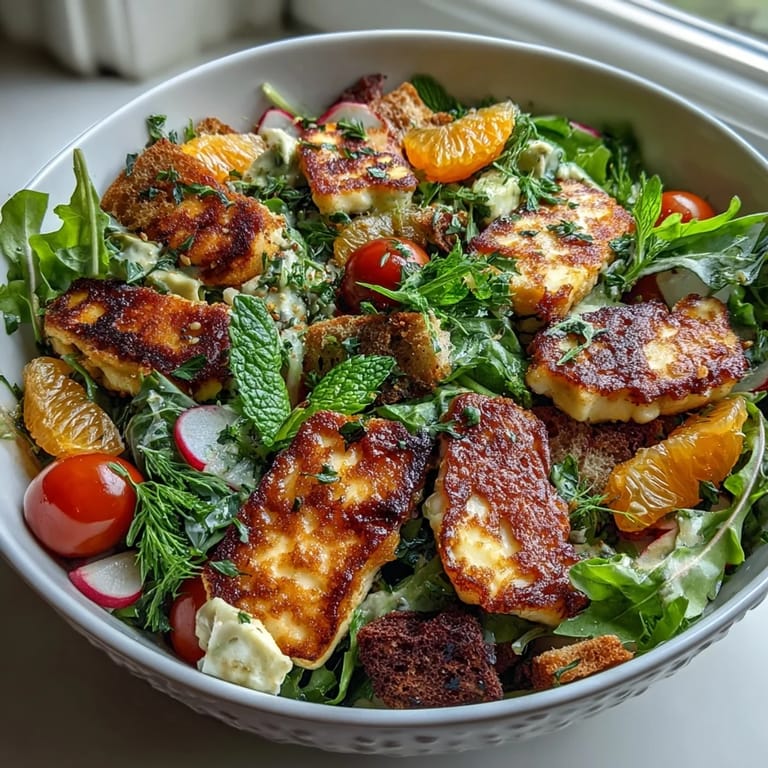
- Add the warm fried halloumi and crispy croutons to the salad bowl, then drizzle with your dressing and gently toss to combine—you're not trying to break up the greens or bruise the orange segments. The warm cheese will soften slightly as it mingles with the cool salad, creating these little pockets of richness.
- Serve immediately while the halloumi is still warm:
- The contrast between warm cheese and cool greens is what makes this salad sing, so don't let it sit around. Serve right away and watch people react to the combination of flavors and textures.
 Save to Pinterest
 There's something almost meditative about building this salad, watching how the different colors and textures come together under your hands. My partner walked into the kitchen while I was mid-toss and said it looked too pretty to eat, which I think is the highest compliment a salad can receive.
Why Blood Oranges Matter Here
Blood oranges have this deeper, almost wine-like flavor that regular oranges don't quite manage—they're sweeter but also more complex, which is why they don't get lost when you combine them with salty halloumi and a tangy dressing. If you can't find them, pink grapefruit segments work beautifully, though you might want to taste the dressing first and dial back the lemon juice slightly since grapefruit brings its own tartness. The point is that the citrus needs to be bright enough to stand up to the fried cheese without getting overpowered.
The Halloumi Question
Some people think halloumi is an acquired taste, but I think it's more that it needs to be treated with respect—it should be sliced thick enough that it stays creamy inside while developing a crust, not thin enough that it becomes rubbery throughout. Medium heat is your friend here; too hot and the outside burns before the inside warms, too cool and it releases all its moisture and gets sad. The squeaking sound it makes when you bite into it isn't just a gimmick; it tells you the cheese has the right structure and will give you that satisfying contrast between crispy edges and soft center.
Making This Your Own
I've added everything from toasted pistachios to pomegranate seeds to crispy chickpeas, depending on what I have and how I'm feeling. The frame of fried halloumi, blood orange, and sumac dressing is solid enough that it can handle variations without falling apart. Here are some directions to explore:
- Toast some pistachios or walnuts and scatter them over the top for added crunch and nutty depth that complements the fruit beautifully.
- Add pomegranate seeds if you want a burst of tartness and that jewel-like color that makes the salad feel festive.
- Serve alongside crisp white wine like Sauvignon Blanc, which echoes the tartness in the dressing and palate-cleanses between bites of rich cheese.
 Save to Pinterest
 This salad taught me that the most memorable meals often come from small discoveries and the willingness to try something new. Make this when you want to feel like you're eating somewhere beautiful, even if you're just at home.
Recipe Questions
- → Can I prepare the components ahead of time?
Yes, you can prepare the dressing and croutons up to a day in advance. Store them separately in airtight containers. The vegetables can be chopped a few hours ahead, but assemble and dress just before serving to maintain crisp texture.
- → What can I substitute for halloumi?
Paneer or firm feta work well, though they won't achieve the same golden crust. For a vegan option, try frying firm tofu cubes seasoned with extra salt, or use grilled vegetables like eggplant or zucchini slices.
- → Is pomegranate molasses essential?
While traditional, you can replace it with equal parts balsamic glaze or honey mixed with extra lemon juice. The flavor profile will shift slightly, but you'll still achieve that sweet-tart balance characteristic of the dressing.
- → How do I prevent the halloumi from becoming rubbery?
Use medium heat and avoid overcrowding the pan. Fry for just 2-3 minutes per side until golden—overcooking makes halloumi tough. Pat slices dry before cooking to ensure proper browning rather than steaming.
- → Can I make this gluten-free?
Absolutely. Replace sourdough croutons with gluten-free bread cubes, or add extra crunch with toasted nuts like almonds, pistachios, or walnuts. Verify that all other ingredients, particularly sumac, are certified gluten-free.
- → What's the best way to segment blood oranges?
Cut off both ends, then slice away the peel following the fruit's natural curve. Hold the orange over a bowl and cut between the membranes to release perfect segments. Squeeze the remaining membranes for extra juice if desired.