 Save to Pinterest
 My coworker Sarah kept showing up to meetings with these gorgeous layered jars, and I finally asked what she was eating instead of her usual sad desk lunch. She handed me one to try, and honestly, the moment that citrus-herb dressing hit the chickpeas, I understood why she'd stopped complaining about meal prep. Now I make four of these every Sunday, and somehow the flavors actually get better by Wednesday.
I brought these to a hiking trip last summer, and my friend Marcus was shocked that something this colorful and fresh came from a mason jar stuffed in a backpack. We sat at the overlook, shaking our jars like we were mixing cocktails, and he asked for the recipe right there on the trail. He's made them every week since, which somehow feels like the highest compliment.
Ingredients
- Extra-virgin olive oil: Use the good stuff here because it's doing the heavy lifting as your dressing base and protects everything from oxidizing.
- Lemon and orange juice: Fresh squeezed makes all the difference—the acidity keeps the vegetables bright and prevents browning.
- Dijon mustard: Just one teaspoon acts as an emulsifier and keeps the dressing from separating, which I learned after using too much and making it bitter.
- Garlic and fresh herbs: Mince the garlic fine so it distributes evenly, and don't skip the mint and parsley combo—they're what make this taste restaurant-quality.
- Chickpeas: Rinse them thoroughly to remove the can liquid, which prevents the jar from getting slimy.
- Cucumber, bell pepper, tomatoes, and carrots: Cut everything into roughly the same size so each bite feels intentional and balanced.
- Red onion and fresh dill: The onion's sharpness cuts through the richness, and dill on top keeps its flavor fresh until you're ready to eat.
Tired of Takeout? 🥡
Get 10 meals you can make faster than delivery arrives. Seriously.
One email. No spam. Unsubscribe anytime.
Instructions
- Make your citrus herb dressing first:
- Whisk the olive oil, lemon juice, orange juice, Dijon mustard, minced garlic, parsley, and mint together in a small bowl until it looks emulsified and smells incredible. Taste it and adjust salt and pepper—you want it bright and a little bold because the vegetables will soften those flavors.
- Start with the dressing at the jar bottom:
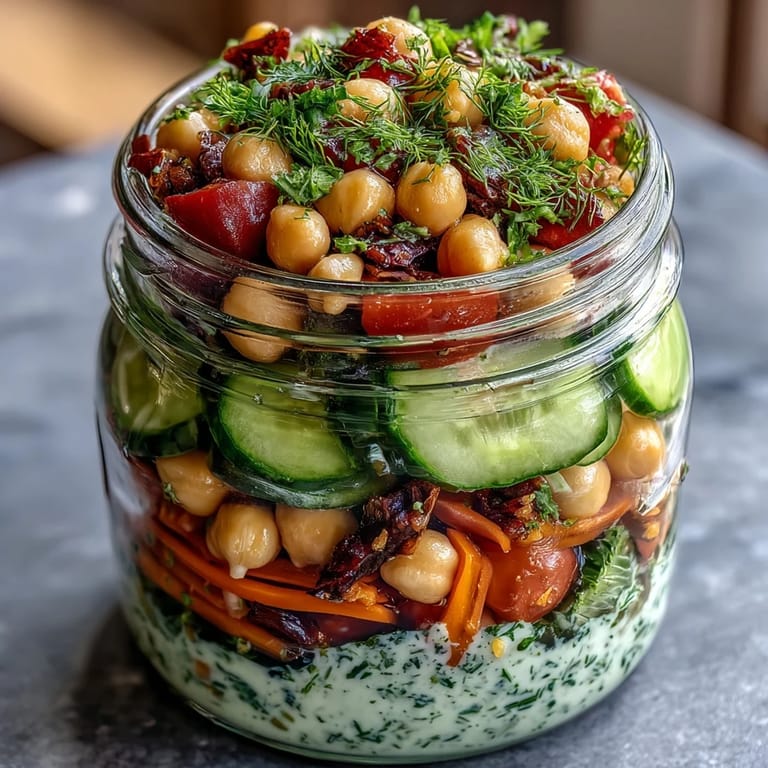
- Divide the dressing evenly among four wide-mouth mason jars, using about 1.5 tablespoons in each. This oily layer is your secret weapon against soggy salad.
- Layer in the chickpeas next:
- Add about half a cup of rinsed chickpeas to each jar, pressing them down slightly so they're sitting in that dressing. They'll absorb the flavors as the days go on.
- Build your vegetable layers:
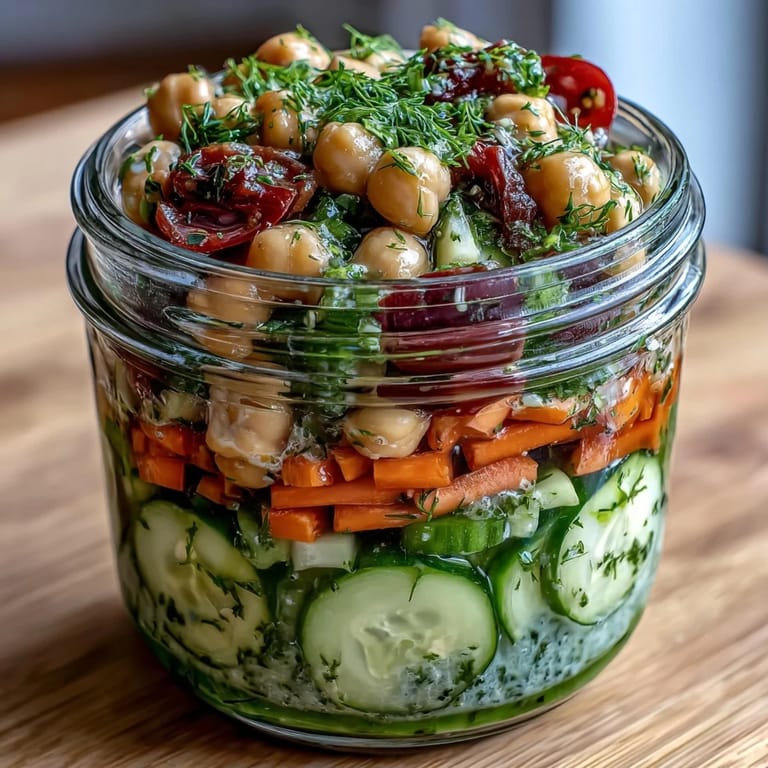
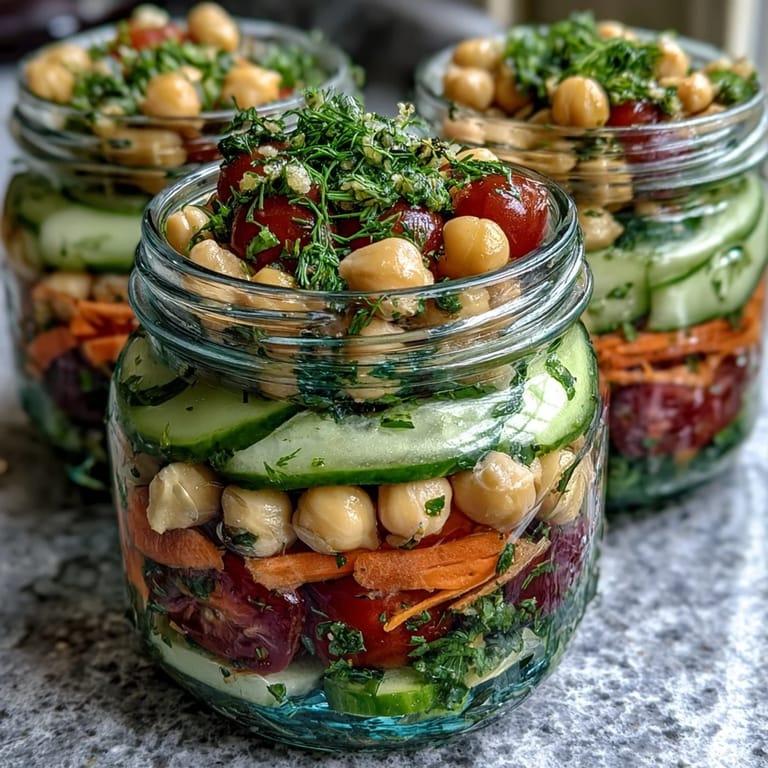
- Add cucumber, then bell pepper, then red onion, then cherry tomatoes, and finish with shredded carrots. The order matters less than keeping similar textures together so nothing gets crushed.
- Crown with herbs and cheese:
- Top each jar with fresh dill and parsley, then crumbled feta if you're using it. Screw the lids on tight and refrigerate.
- Shake and serve:
- When you're ready to eat, give the jar a good shake to coat everything with dressing, or pour into a bowl if you want to eat at a table without looking like you're mixing a salad in a jar.
 Save to Pinterest
 My daughter asked why I was making four identical jars one morning, and when I explained they were grab-and-go lunches for the week, she insisted on helping me layer them. We turned it into this oddly meditative kitchen moment where she was in charge of the chickpea distribution, completely serious about getting it even. Now when she sees these jars in my lunch bag, she acts like I'm bringing something she invented.
Why the Layering Matters
This isn't just for Instagram aesthetics, though these jars do photograph beautifully. The layering actually serves a purpose—heavier, sturdier vegetables like cucumber and carrots sit on top where they won't get crushed, while the tender herbs float at the very top and stay vibrant. The oil layer at the bottom creates a moisture barrier that keeps those chickpeas from absorbing too much liquid and turning mushy by day three.
Making It Your Own
I've made probably fifty of these by now, and the beautiful part is how flexible they actually are. One week I swapped the mint for basil because my garden was overflowing, and it shifted the whole flavor profile toward Italian rather than Mediterranean. Another time I added shredded beets because I had them on hand, which turned everything this stunning magenta color and made my coworkers think I'd discovered something completely new.
Storage and Longevity
These keep for four days in the refrigerator, which is genuinely game-changing for meal planning because you can make Sunday and still have fresh lunch on Thursday. The herbs stay brighter and the dressing keeps everything from oxidizing as long as you don't skip that oil layer. I once forgot to refrigerate one jar (left it on my desk after lunch), and it was completely fine the next day, which tells you something about how well-designed this system is.
- Always use wide-mouth jars so you can actually reach in and grab everything without picking just the top layer.
- If you're adding protein like grilled chicken or tofu, keep it separate and add it the morning you plan to eat it.
- The dressing gets thicker and more concentrated as the days pass, so shake harder on day four than you would on day one.
 Save to Pinterest
 These salad jars have genuinely changed how I eat during the week, turning lunch from something I dread into something I actually look forward to. There's something about opening your bag and having a complete, fresh, protein-packed meal waiting that just makes everything feel more manageable.
Recipe Questions
- → What ingredients create the dressing's flavor profile?
The dressing combines extra-virgin olive oil with lemon and orange juice, Dijon mustard, garlic, fresh parsley, and mint, balanced by sea salt and pepper for a zesty, herbaceous taste.
- → How do the layered jars help preserve freshness?
Layering places the dressing at the bottom and delicate veggies above, preventing sogginess and keeping each ingredient crisp until mixed.
- → Can this salad be prepared ahead of time?
Yes, assembling in jars allows it to be refrigerated for up to four days, making it convenient for meal prep and on-the-go lunches.
- → What alternatives are suggested for herbs used?
Basil or cilantro can replace parsley and mint to provide different aromatic notes while maintaining freshness.
- → Is this suitable for specific dietary preferences?
It is vegetarian, vegan (if feta is omitted), gluten-free, and dairy-free, accommodating many dietary needs without sacrificing flavor.