 Save to Pinterest
 There's something about the combination of carrots and oranges that caught me completely off guard one winter afternoon when I was trying to use up a pile of both from the farmers market. I'd grabbed them almost by accident, and as I peeled the carrots and squeezed the oranges side by side, the kitchen filled with this incredibly warm, citrusy smell that made me wonder why I'd never thought to cook them together before. That first bowl was pure discovery—silky, bright, and unexpectedly comforting in a way that felt both elegant and deeply nourishing.
My roommate at the time was going through a rough stretch, and I made this soup on an impulse one evening, letting the ginger steam rise while we sat at the kitchen table talking through things that mattered. She took one spoonful and the tension in her shoulders just softened—not because I'm a magical cook, but because something about the warmth and brightness seemed to land exactly when it was needed. That's when I realized this soup had become more than a recipe to me; it was a way of saying something without having to use words.
Ingredients
- Olive oil: Just a tablespoon to gently coax out the sweetness of the onions without letting anything brown or burn, which keeps the soup tasting fresh rather than heavy.
- Medium onion, chopped: This is your flavor foundation—don't skip this step or rush it, because those few minutes of sautéing transform the raw onion into something naturally sweet and mellow.
- Garlic cloves, minced: Two cloves give enough presence to make you notice it without overpowering the delicate carrot and orange notes.
- Carrots, peeled and sliced: About 600 grams (roughly six medium ones) provide that gorgeous natural sweetness and creamy texture when cooked down, plus beautiful color that makes the soup glow.
- Fresh ginger, grated: Two tablespoons of freshly grated ginger add a sharp, warming zing—the kind that clears your sinuses and wakes up your palate, so please don't use powdered if you can help it.
- Vegetable broth: 750 milliliters of good quality broth is the gentle base that lets everything else shine; if yours is heavily salted, go easy on adding extra salt later.
- Coconut milk: 250 milliliters creates that silky, luxurious finish, and an extra splash for garnish adds a professional touch that feels like you know what you're doing.
- Freshly squeezed orange juice: From 2 to 3 oranges, added after cooking keeps the brightness alive and prevents that cooked-out flavor that happens when citrus simmers too long.
- Ground coriander: One teaspoon of this warm spice brings an understated sophistication that bridges carrots, ginger, and orange in a way you won't be able to name but will definitely taste.
- Ground cumin: Just half a teaspoon rounds out the spice profile with earthiness, balancing the sweetness without taking over.
- Salt and black pepper: Season gradually throughout cooking and adjust at the end, because coconut milk can mellow out seasoning in unexpected ways.
- Fresh coriander leaves and orange zest: These optional garnishes aren't just decoration; they add a final hit of brightness and herbaceous notes that complete the whole experience.
Tired of Takeout? 🥡
Get 10 meals you can make faster than delivery arrives. Seriously.
One email. No spam. Unsubscribe anytime.
Instructions
- Warm your aromatics:
- Heat that tablespoon of olive oil in your large pot over medium heat, then add the chopped onion and let it soften for 3 to 4 minutes, stirring occasionally so it turns golden and sweet without catching on the bottom. You'll know it's ready when your kitchen smells suddenly different—warmer, almost caramelized.
- Build the spice base:
- Stir in the minced garlic and freshly grated ginger, cooking for about one more minute until the rawness fades and the aromatics bloom. This is when you know all the flavors are about to wake up.
- Toast your spices gently:
- Add the carrots, ground coriander, cumin, and a pinch of salt, stirring for about 2 minutes so the spices toast slightly and infuse into the oil. This step is easy to skip, but it transforms those powdered spices from flat to genuinely alive.
- Simmer until carrots surrender:
- Pour in the vegetable broth, bring everything to a boil, then reduce the heat and let it simmer uncovered for about 20 minutes until the carrots are so tender they practically fall apart when you touch them. This is a good moment to step away and do something else—the soup doesn't need hovering.
- Add brightness after heat:
- Once you take the pot off the heat, stir in the orange juice and coconut milk, letting them gently incorporate without boiling (boiling citrus turns it bitter, and we want that sunshine feeling to stay intact). The color will deepen slightly and the aroma will become almost floral.
- Blend until velvety:
- Use an immersion blender right in the pot, working it smoothly through the soup until it reaches that luxurious, creamy consistency, or carefully transfer everything to a standard blender in batches. An immersion blender saves you from the dangerous dance of transferring hot soup, which I've learned the hard way.
- Warm through and taste:
- Return to gentle heat if needed, then taste carefully and adjust your salt and pepper, remembering that coconut milk sometimes masks seasoning. Go easy—you can always add more, but you can't take it back.
- Serve with intention:
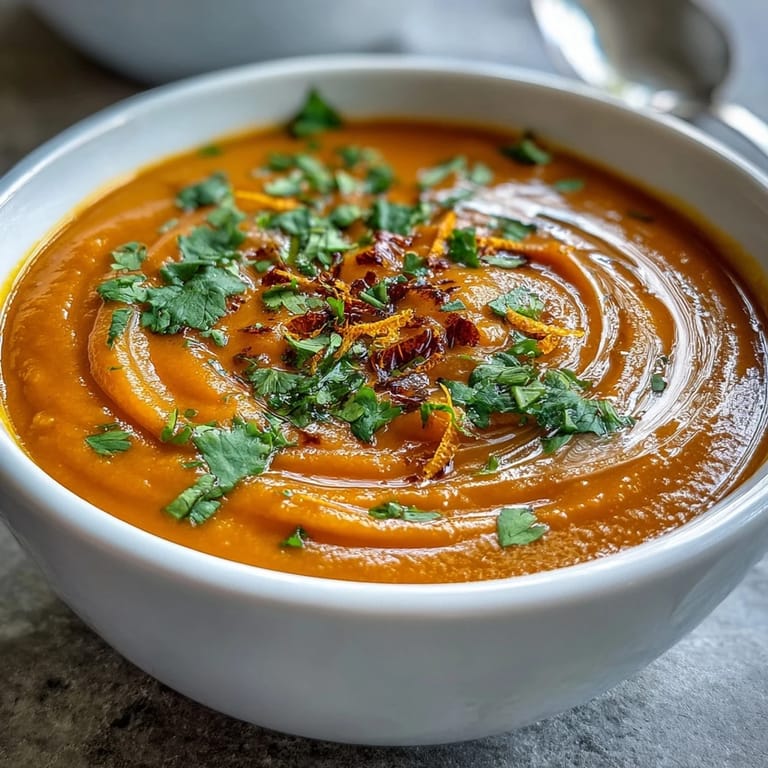
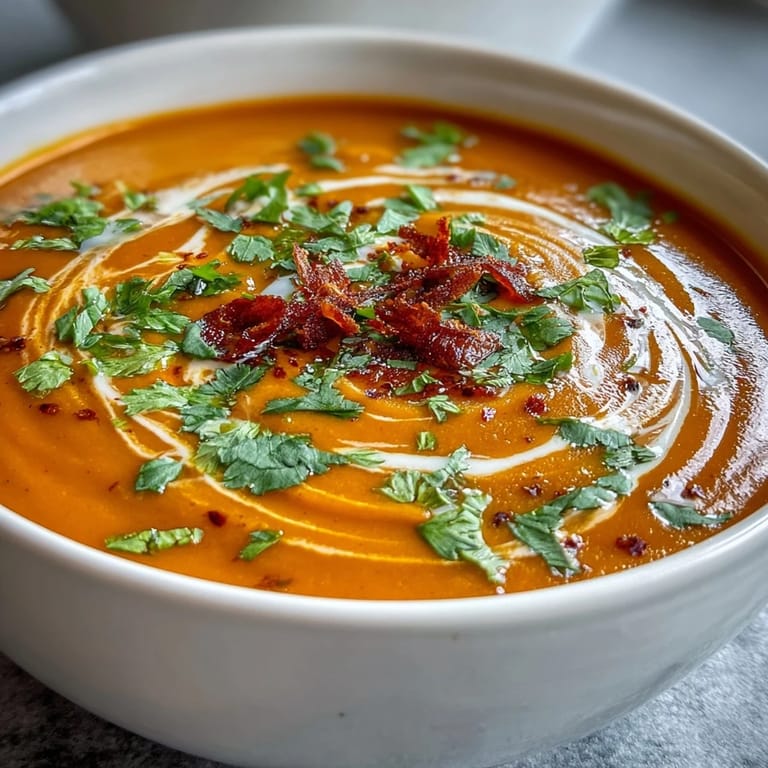
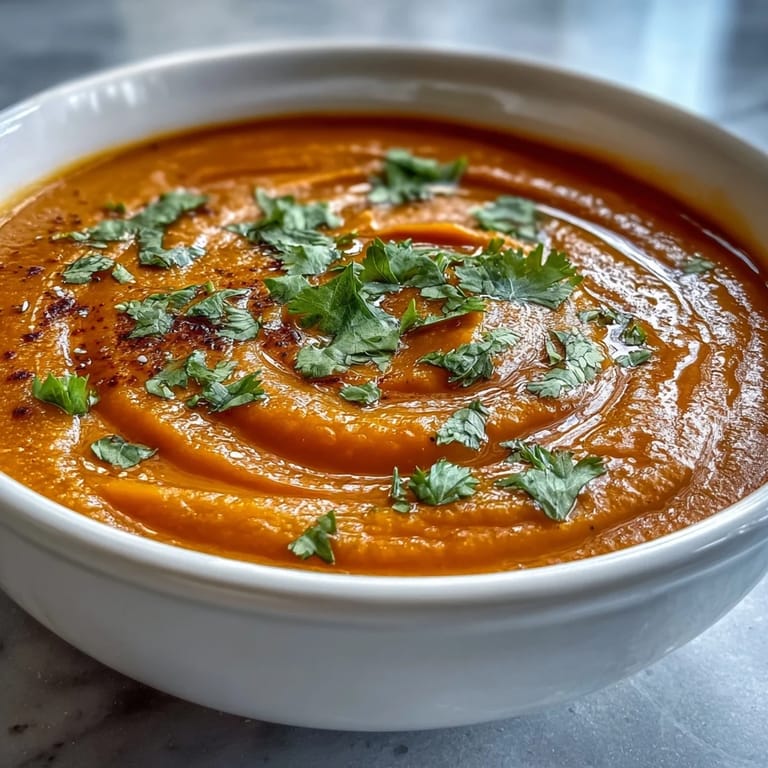
- Ladle into bowls, drizzle a little extra coconut milk on top, and scatter with fresh coriander leaves and a fine grating of orange zest if you have them. Even without garnish, this soup knows it's beautiful.
 Save to Pinterest
 I've made this soup for dinner parties where someone mentioned being vegan, for quiet lunches when I needed comfort wrapped in a bowl, and once for a friend who was getting over a cold and needed something both nourishing and gentle on a tired palate. It never fails to feel special, which might be the truest test of any recipe worth keeping.
When Spice Becomes Personal
The beauty of this soup is that it responds beautifully to your own heat preferences without losing its identity. If you like a slow burn rather than just warmth, a small pinch of chili flakes stirred in with the coriander and cumin adds a lingering tingle that makes you feel alive without overwhelming the delicate carrot and orange balance. I've had friends who swear by it, and others who prefer the soup exactly as written—there's no wrong answer, just different versions of the same bowl that all taste distinctly good.
Playing with Citrus
One evening I was out of oranges and reached for limes instead, thinking I'd made a mistake, but that tangier, more acidic version turned into something completely different and equally magnetic. The lime adds a sharpness that makes the ginger pop in a different way, almost like a whisper becomes a shout—still pleasant, just louder. If you ever find yourself with limes when you thought you had oranges, don't worry; you've just discovered your own variation of this soup.
Beyond the Bowl
This soup pairs effortlessly with warm, crusty bread for tearing and dipping, or serves as an elegant starter before something like roasted fish or a grain-based main course. It's also wonderful chilled on a warm day, though you'd want to thin it slightly and serve it in small portions as a refreshing appetizer rather than a full bowl. A drizzle of extra coconut milk and a few coriander leaves elevates it from everyday to special occasion without any additional fuss.
- Make it ahead and reheat gently on the stove, stirring often so the coconut milk stays creamy and doesn't separate.
- Freeze leftovers in portions for those moments when you need something nourishing that tastes like you spent hours in the kitchen but only took minutes.
- Serve in mugs on cold afternoons when you want something warm but not necessarily a full meal.
 Save to Pinterest
 This soup has become my quiet answer to so many kitchen moments—when I want something that tastes alive and warm, when I'm cooking for someone who matters, or when I simply need to remember that the best meals are often the ones that come together when you're paying attention to what you're actually making. Make it once, and I think you'll find yourself making it again.
Recipe Questions
- → How do I achieve a smooth texture for the soup?
Use an immersion blender or a countertop blender to puree the cooked ingredients until silky and creamy.
- → Can I adjust the spice level in this dish?
Yes, adding chili flakes during cooking enhances the heat for a spicier flavor.
- → What can I substitute if I don’t have fresh ginger?
Ground ginger can be used, but fresh ginger offers a brighter, more pronounced zing.
- → Is coconut milk necessary for the final texture?
Coconut milk adds a silky, creamy finish and subtle sweetness, complementing the citrus and spice.
- → How should I garnish to enhance presentation and flavor?
Drizzle extra coconut milk and add fresh coriander leaves with finely grated orange zest for freshness and color.