 Save to Pinterest
 My aunt always made candied yams the same way—butter melting into brown sugar while the kitchen filled with cinnamon and nutmeg smoke—but it wasn't until I tried toasting the pecans separately that the dish actually clicked for me. That crunch against the soft, glossy yams changed everything, and suddenly I understood why she'd guard this recipe like a secret. Now when November rolls around, I'm the one making it, and people always ask what I do differently.
I made this for a potluck once, and someone actually came back for thirds, which honestly never happens with side dishes. The funny part was watching everyone take a little taste first—like they were suspicious of something so simple—then going back for a full spoon. That's when I realized this dish bridges the gap between fancy holiday food and the kind of thing you'd eat just because.
Ingredients
- Yams: The 1/2-inch thickness matters because thinner slices cook unevenly and thicker ones won't soften in time; aim for consistency and you'll notice the difference.
- Unsalted butter: You need the real thing here—it emulsifies into the sugar and creates that silky glaze texture that plant-based butter struggles with.
- Light brown sugar: Packed down as it should be, this gives you molasses depth without being heavy or making the dish taste like dessert.
- Pure maple syrup: A tablespoon is enough to add complexity; the corn syrup imitation won't give you that subtle warm flavor.
- Ground cinnamon and nutmeg: Freshly ground if you have it—pre-ground spices lose their punch, and you'll taste the difference in every bite.
- Kosher salt: Just enough to make the sweet flavors pop without announcing itself.
- Pecan halves: Toast them yourself; the oil keeps them from sticking and brings out their natural richness in minutes.
Tired of Takeout? 🥡
Get 10 meals you can make faster than delivery arrives. Seriously.
One email. No spam. Unsubscribe anytime.
Instructions
- Set your stage:
- Preheat to 375°F and grease your baking dish so nothing sticks to the sides later. A 1-quart dish is key—too much space and the glaze spreads thin, too little and the yams steam instead of bake.
- Toast the pecans:
- Warm them in a skillet with just a touch of oil over medium heat, stirring every few seconds so they don't burn. When they smell toasted—really fragrant, not charred—move them to a plate; they'll cool down there and get crunchier.
- Layer the yams:
- Arrange your slices in a single layer, slightly overlapping if needed, so heat can reach every piece. This is where patience matters, even though it takes two minutes.
- Make the glaze:
- Melt butter gently, then whisk in brown sugar, maple syrup, cinnamon, nutmeg, and salt until smooth and just starting to bubble. Don't walk away—this takes about three minutes and burns easily if you're not watching.
- Coat and cover:
- Pour the glaze over yams and toss gently—rough handling breaks them apart. Cover tightly with foil so steam stays trapped and cooks them evenly.
- The reveal:
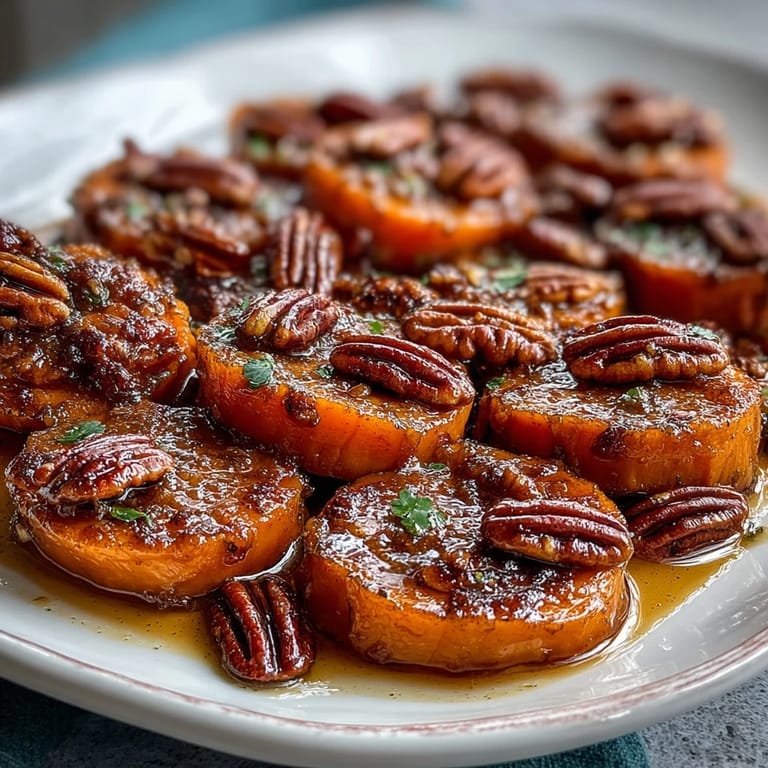
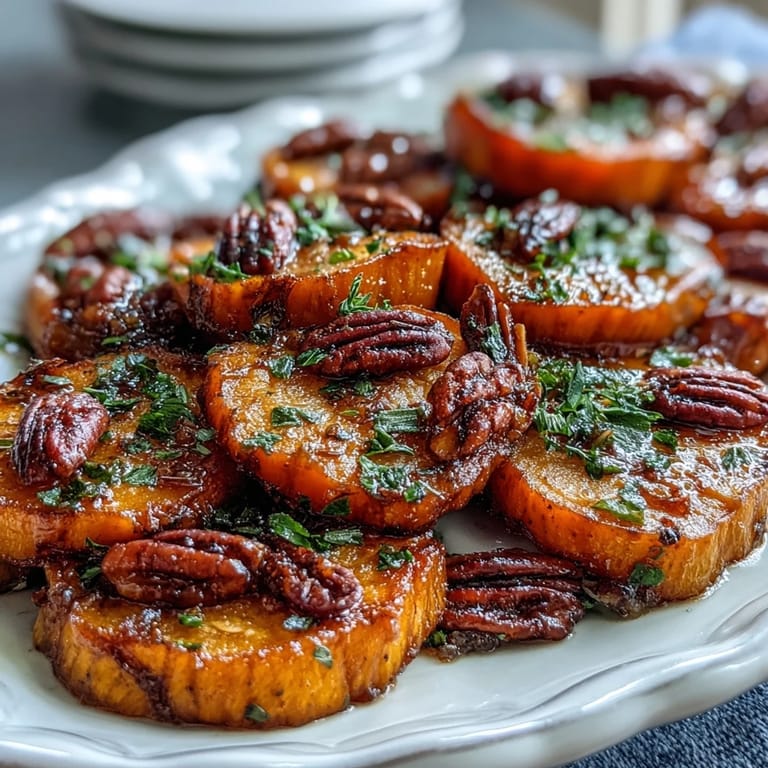
- After 25 minutes, remove the foil, give everything a gentle toss, and bake uncovered until yams are fork-tender and the glaze thickens to a glossy coat. This last stretch is when the magic happens.
- Top and serve:
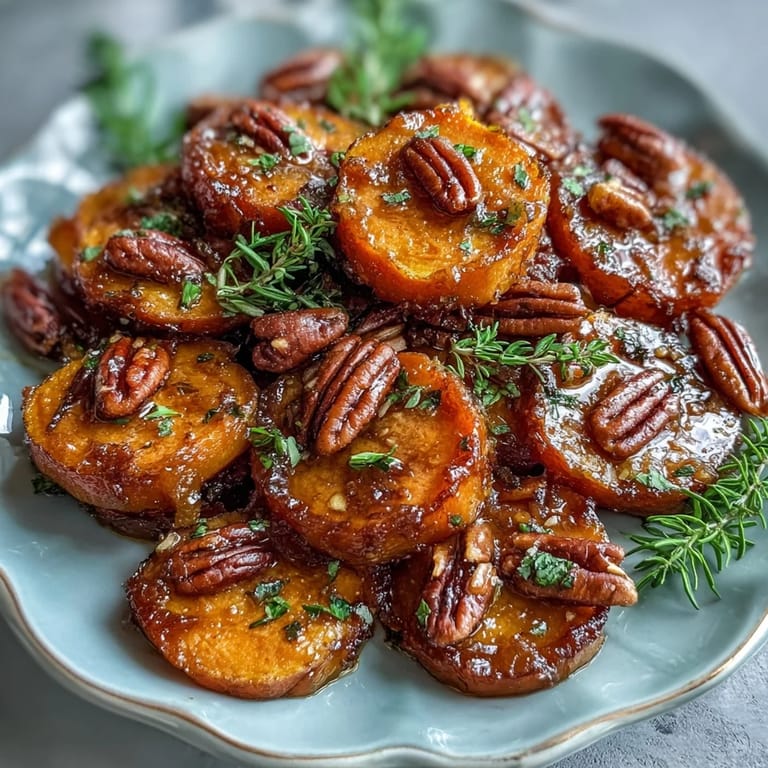
- Scatter toasted pecans over the warm yams right before serving so they don't get soft. The contrast is what makes this dish worth making.
 Save to Pinterest
 This dish became special to me the year my partner's family finally asked me to bring it instead of something store-bought. That moment meant more than it probably should have, but there's something about feeding people something you made yourself that changes how they see you in the kitchen.
Why the Glaze Makes All the Difference
The real secret isn't the ingredients—it's letting the butter and brown sugar do their job without interference. Too many recipes overcomplicate this step with marshmallows or extra sweeteners, but when you keep it simple, the maple syrup and spices shine through. Your oven does the work; you just need to trust the process.
Serving and Pairing Ideas
This works beautifully next to roasted turkey, ham, or even grilled chicken if you want something lighter. It's rich enough to stand on its own but humble enough not to compete with your main course. I've also served it at room temperature as part of a holiday spread, and people still came back for it.
Small Changes That Matter
If you want to experiment, a pinch of orange zest wakes everything up—the brightness plays against the warm spices beautifully. Sweet potatoes work in a pinch if yams aren't available, though the flavor will be slightly earthier. The beauty of this recipe is that it's forgiving but also responsive to small tweaks.
- Toast your pecans the moment before serving to keep them as crispy as possible.
- If your yams are particularly thick, slice them thinner so they cook through evenly.
- This reheats gently in a 350°F oven covered with foil if you need to make it ahead.
 Save to Pinterest
 This recipe has taught me that sometimes the simplest dishes are the ones worth mastering. It's the kind of side that reminds you why you cook in the first place.
Recipe Questions
- → How do I toast pecans properly?
Toast pecans in a skillet over medium heat with a bit of vegetable oil for 2–3 minutes, stirring frequently until fragrant and lightly browned.
- → Can I substitute yams with sweet potatoes?
Yes, sweet potatoes can be used in place of yams for a similar texture and sweetness, adjusting cooking time if needed.
- → What is the best way to ensure the glaze thickens?
After baking covered, remove the foil and bake uncovered to allow the glaze to reduce and thicken over the yams.
- → Can I prepare this dish ahead of time?
You can assemble it in advance and refrigerate before baking, but bake just before serving for best texture and flavor.
- → Are there any allergen considerations?
This dish contains tree nuts and dairy; plant-based butter can substitute to make it dairy-free, but pecans cannot be replaced if avoiding nuts.